>>
Industry>>
Automotive>>
Rivian Automotive (RIVN) Stock...Rivian Automotive (RIVN) Stock Offering: Smart Growth Move or Warning Sign Investors Can’t Ignore?
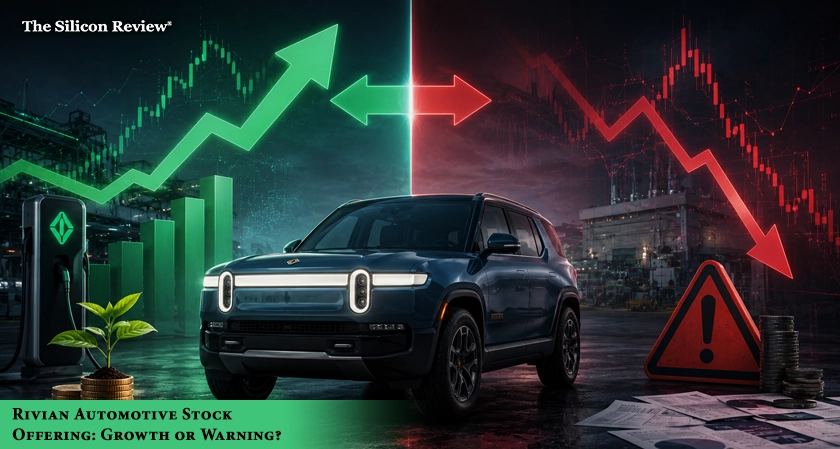
Rivian Automotive has raised fresh capital through a 75 million share offering, but the move has sparked a fierce debate among investors. Is Rivian Automotive strengthening its future or forcing shareholders to pay for a costly growth battle?
Rivian Automotive (RIVN) is asking investors for more money but the bigger question is whether they are funding a breakthrough or covering a bigger problem.
The electric vehicle maker has launched a public offering of 75 million Class A shares to raise capital for general corporate needs and equity contributions linked to its U.S. Department of Energy loan.
Rivian recently reported better than-expected preliminary Q2 revenue and increased its full-year delivery guidance. Yet, shortly after announcing the stock offering, Rivian stock plunged 18.12% to $16.49 as investors worried about dilution and the company’s ongoing cash burn.
Is Rivian Automotive buying its future or selling investors another promise?
The most followed valuation view paints a more optimistic picture. Rivian Automotive is considered 9.2% undervalued, with a fair value estimate of $18.15 compared with its recent share price of $16.49. The case rests heavily on Rivian’s upcoming R2 platform. The company expects the new model to transform its cost structure, with supplier agreements and redesigned components potentially cutting bill-of-material costs by nearly 50% compared with the R1 platform.
"The company intends to use the net proceeds from the offering for general corporate purposes, including equity contributions required under the Department of Energy loan agreement." Said Rivian, in its public offering filing
If successful, R2 could become the turning point that pushes Rivian closer to profitability.
But Wall Street has heard growth promises before.
Can Rivian Automotive finally prove that scale is coming or will investors keep paying for the wait?
The risks remain significant. Rivian continues to burn cash, may need additional funding in the future, and faces pressure from slowing EV demand, pricing competition, and changing policy support. Valuation also raises concerns. Rivian stock trades at a price-to-sales ratio of 3.8x, far above the U.S. auto industry average of 0.6x and above its estimated fair ratio of 2x.
That means investors are already paying a premium for a turnaround that has not fully arrived.
Is Rivian Automotive an undervalued EV winner or a high-risk bet built on future hopes?
For now, Rivian sits at the center of a major investment debate. The upside depends on execution, cost reductions, and successful R2 production. The downside depends on how long investors are willing to wait for profits.
Fresh capital gives Rivian more time. The real challenge is proving that time will create value not just delay the pressure.
Rivian Automotive now stands at a critical crossroads. Fresh capital may fuel growth, but execution will decide its future. As investors weigh opportunity against risk, The Silicon Review asks if Rivian’s future is so promising, why does it need constant investor support?
FAQ:
Q: Why did Rivian Automotive launch a 75 million share offering?
A: Rivian Automotive launched the offering to raise capital for general corporate purposes and support equity contributions linked to its U.S. Department of Energy loan.
Q: How did the Rivian stock react after the share offering announcement?
A: Rivian stock fell sharply as investors raised concerns about dilution, cash burn, and the company’s path to profitability.
Q: Is Rivian Automotive undervalued right now?
A: Some valuation models suggest Rivian Automotive could be undervalued, with a fair value estimate above its recent trading price.
Q: What is the main growth driver for Rivian Automotive?
A: The upcoming R2 platform is expected to improve Rivian Automotive’s cost structure, reduce production expenses, and support future profitability.
Q: What are the biggest risks facing Rivian stock?
A: Key risks include ongoing cash burn, potential future fundraising, EV market pressure, competition, and delays in reaching profitability.
Q: Can Rivian Automotive become profitable?
A: Rivian’s profitability depends on successful R2 production, stronger deliveries, cost reductions, and improved operating efficiency.
Q: What is the biggest question facing Rivian investors?
A: The key question is whether Rivian Automotive is building a sustainable EV business or relying too heavily on future promises.













Comments