>>
Industry>>
Healthcare>>
The Digital Transformation of ...The Digital Transformation of Aesthetic Surgery: How AI, IoMT, and Biomedical Engineering Are Shaping the Future
The Silicon Review
28 July, 2026
Author:
Guest
Introduction: A New Era of Digital Healthcare
Digital transformation is redefining healthcare at an unprecedented pace, and aesthetic surgery is among the specialties experiencing the most profound technological evolution. Once driven primarily by surgical expertise and visual assessment, the field is increasingly powered by artificial intelligence (AI), biomedical engineering, and the Internet of Medical Things (IoMT). These technologies are enabling a more data-driven approach to patient care, improving surgical planning, enhancing device performance, and strengthening long-term safety.
AI-Powered Surgical Planning and Digital Twins
One of the most significant advances begins before surgery even takes place. Digital preoperative planning now integrates high-resolution photogrammetry, three-dimensional imaging, and deep-learning computer vision to create a detailed digital model of a patient's anatomy. Using high-density optical sensors, clinicians can capture millions of spatial data points across the chest and torso, generating an accurate 3D digital twin.
AI-powered software analyzes critical anatomical variables, including chest-wall shape, soft-tissue elasticity, skin characteristics, and muscle structure. Based on these measurements, the system can simulate how different implant sizes and placement techniques may interact with the patient's body. This data-driven planning provides surgeons with valuable insights that support more personalized treatment decisions while improving surgical precision and predictability.
Advanced Implant Materials and Biomedical Engineering
Biomedical engineering is equally transforming implant technology. Modern breast implants increasingly incorporate advanced viscoelastic silicone gels, such as ProgressiveGel Ultima, which are engineered to respond naturally to gravity and body movement. Unlike traditional materials, these highly cohesive gels redistribute according to body position, helping create a more natural appearance whether the patient is standing, sitting, or lying down.
For patients exploring breast augmentation in Turkey, these technological innovations have become an important consideration when choosing treatment options, as many modern clinics now utilize advanced implant materials, digital planning systems, and personalized surgical techniques to improve outcomes.
Nano-Textured Implant Surfaces Improve Biocompatibility
Surface engineering has also evolved considerably. Nano-textured implant surfaces, including technologies such as SmoothSilk and SilkSurface by Motiva, feature microscopic topographies measuring less than 10 microns. These precisely engineered surfaces are designed to optimize tissue interaction and encourage improved biocompatibility, representing another important step toward enhancing long-term clinical outcomes.
RFID Technology Enhances Implant Traceability
Patient safety has benefited from innovations beyond implant materials alone. Modern implant systems increasingly incorporate passive Radio Frequency Identification (RFID) technology to improve device traceability. FDA-cleared technologies such as Q Inside Safety integrate miniature, biocompatible micro-transponders directly within the implant. Because these devices require no internal battery, they remain inactive until energized by an external RFID reader.
The system operates through inductive coupling. When a handheld reader is positioned near the patient's chest, it emits a low-power radio frequency signal that activates the embedded chip. The device then transmits a unique Electronic Serial Number (ESN), enabling healthcare professionals to verify implant identity quickly and accurately. This digital identification system enhances traceability, simplifies long-term follow-up, and supports patient safety throughout the implant's lifecycle.
Smart Surgical Infrastructure Driving Innovation
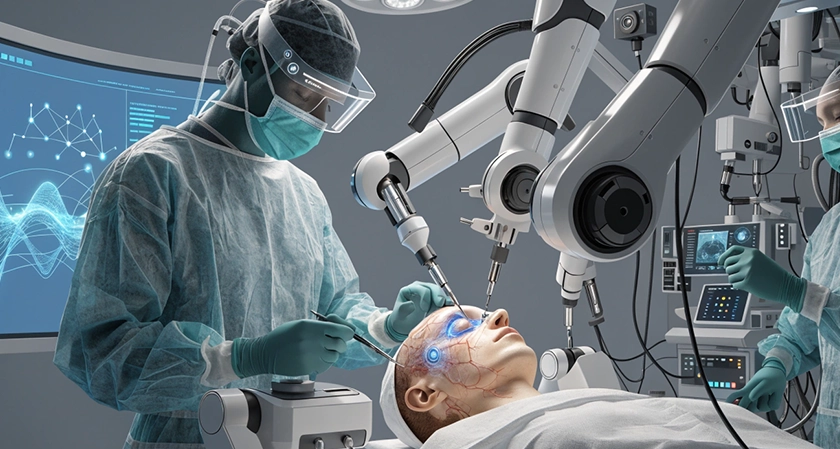
The successful implementation of these innovations depends not only on advanced medical devices but also on sophisticated clinical infrastructure. Leading healthcare institutions around the world are investing in digital operating environments, AI-assisted imaging platforms, cloud-based patient management systems, and connected surgical technologies. These integrated ecosystems enable clinicians to leverage real-time data while maintaining consistent standards of quality and patient care.
International medical hubs have become important centers for adopting these technologies at scale. Facilities specializing in advanced aesthetic surgery increasingly combine experienced multidisciplinary teams with cutting-edge digital tools, allowing them to deliver highly personalized treatment plans while maintaining rigorous safety protocols.
The Future of AI in Aesthetic Medicine
Looking ahead, the role of artificial intelligence is expected to expand even further. Predictive analytics, machine learning, digital twins, robotic assistance, wearable monitoring devices, and connected IoMT platforms may eventually support every stage of the patient journey—from consultation and surgical planning to postoperative recovery and long-term follow-up. As these technologies continue to mature, they have the potential to improve efficiency, enhance personalization, and strengthen clinical decision-making across the healthcare ecosystem.
Conclusion
The future of aesthetic surgery is no longer defined solely by surgical skill. It is increasingly shaped by intelligent technologies that combine data, engineering, and digital connectivity to support better patient outcomes. As AI, biomedical innovation, and IoMT continue to evolve, aesthetic medicine is emerging as one of healthcare's most technologically advanced disciplines, demonstrating how digital transformation can elevate both clinical practice and patient experience.




















Comments