>>
Industry>>
Architecture and interior design>>
The Home Office That Doubles a...ARCHITECTURE AND INTERIOR DESIGN
The Home Office That Doubles as a Living Room Now
The Silicon Review
27 July, 2026
Author:
Guest
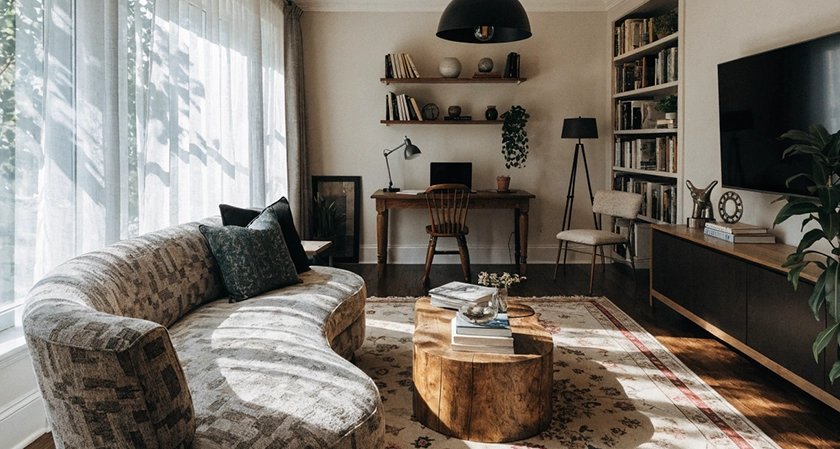
A remote worker in Denver used to keep two completely separate setups: a cramped desk in the corner of her bedroom for work, and her actual living room for everything else. Then her company went permanently remote, and she realized she was spending more waking hours at that cramped desk than anywhere else in her apartment. So she rebuilt her entire living room around a single principle: every tool in it needed to work equally well for a client call and a Friday night movie.
That instinct, one space doing double duty well instead of two spaces doing their jobs poorly, is shaping which tools actually earn a permanent spot in homes right now.
The Television Became a Work Tool Almost by Accident
Nobody designed smart TVs with remote work in mind, but they've quietly become one anyway. LG TV apps in particular have expanded well past streaming entertainment, now supporting video conferencing, screen mirroring for presentations, and even basic productivity casting that lets someone pull up a document on a much bigger screen than a laptop offers.
The Denver worker started running client video calls through her television specifically, mirroring her laptop screen so she could see facial expressions and shared documents clearly instead of squinting at a small laptop display. It sounds like a minor upgrade. It changed how present she felt during long calls, simply because the scale of the screen matched the scale of attention the conversation actually deserved.
Presentation Tools Have Gotten Dramatically Faster to Use
Anyone who's built a slide deck the night before an important meeting knows how much time gets eaten by formatting alone, aligning text boxes, picking a color scheme, resizing images that don't quite fit. An AI tool for presentations and slides\ removes most of that friction, generating a clean first draft from a simple outline so the actual thinking time goes toward content instead of layout.
A freelance consultant working from her home office used exactly this approach before a client pitch, describing her key points and letting the tool handle structure and visual design, then spending her remaining time refining the argument itself rather than nudging text boxes around at midnight. That's a meaningful shift in how home-based professionals spend their limited prep time.
Smart Speakers Still Earn Their Keep, Quietly
Voice assistants get less attention now than they did a few years ago, mostly because the novelty wore off. That doesn't mean they've become less useful. A well-placed smart speaker handling quick tasks, setting a timer during a work call, adding an item to a shopping list without breaking focus, still saves small amounts of friction throughout a day that add up more than people expect.
Noise-Canceling Headphones Solve a Problem Open Floor Plans Created
Modern homes and apartments increasingly favor open layouts, which look great in photos and create real problems for anyone trying to take a work call while someone else is cooking dinner ten feet away. Good noise-canceling headphones have become less of a luxury and more of a basic requirement for anyone sharing living space while working from home.
The Denver worker's partner works from the same apartment, and headphones are genuinely what keeps two simultaneous video calls from colliding into an unusable mess of overlapping audio.
Smart Lighting Changes the Feel of a Room Without Changing Its Furniture
A living room that needs to feel professional during a 10am client call and relaxed during a 9pm movie doesn't need two different rooms. It needs lighting that can shift its own character, brighter and more neutral for calls, warmer and dimmer for evenings. Smart bulbs controlled through an app or voice command handle this transition in seconds, something a single lamp with one setting never could.
Wireless Charging Pads Remove a Small but Constant Annoyance
It's a minor thing, but minor things compound in a home that's doing double duty as a workspace. A wireless charging pad built into a side table means a phone stays charged without a tangle of cords cluttering the exact surface someone's trying to keep looking like a living room rather than a cubicle.
What Actually Makes a Space Like This Work
None of these tools matter individually as much as the underlying decision behind adopting them: treating a shared space as one flexible environment rather than forcing a home to awkwardly contain two separate, competing purposes. The Denver worker didn't buy expensive furniture or renovate anything structural. She just picked tools flexible enough to shift character throughout the day, and stopped pretending her living room and her office needed to be different rooms entirely.



















Comments