>>
Industry>>
Construction>>
What Should Contractors Look f...What Should Contractors Look for in a Professional Pipe Press Tool?
The Silicon Review
06 July, 2026
Author:
Guest
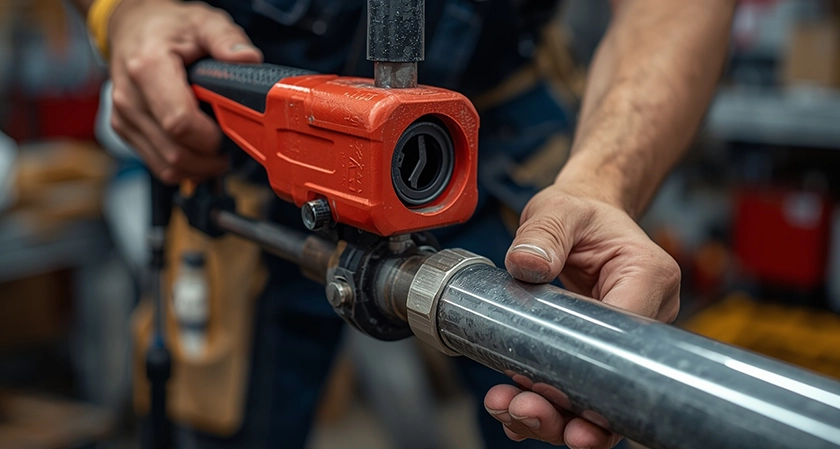
Choosing the right pipe press tool can be the difference between a job that finishes on schedule and one that turns into a costly rework. Most contractors know that press-fit technology outpaces traditional soldering in speed and safety. Yet the market is packed with options that look similar at first glance but perform very differently once you get them on a real job. If you've ever grabbed a tool off the shelf only to find it incompatible with the fittings already on order, you understand the frustration.
The sections below break down exactly what to evaluate before you invest, from jaw compatibility and pressing force to battery life and long-term serviceability. Here are seven factors every contractor should examine.
Jaw and Fitting Compatibility
Compatibility is the first place many contractors underestimate when making a purchase. A VEVOR pipe press tool or any press tool from trusted brands are only as useful as the jaw sets it can accept. So before you commit, confirm whether the tool accepts jaws from the major fitting manufacturers that your clients and suppliers already stock.
Some systems use proprietary jaw designs that lock you into a single brand's fittings, which limits your flexibility when the specified fitting brand changes mid-project. The safest approach is to look for a tool that supports interchangeable, industry-standard jaw profiles in the pipe diameter ranges you work with most frequently. Most residential and light-commercial plumbing falls between half an inch and two inches; if you work in mechanical or hydronic systems, you may need jaw sets that reach three or even four inches.
And here's something many people overlook: check whether additional jaw sets are sold separately and whether their price is reasonable. Jaw investment adds real cost to the total ownership calculation.
Pressing Force and Consistency
The pressing force a tool delivers, measured in kilonewtons, determines whether it produces a leak-free seal across the full range of pipe sizes it claims to support. Most professional-grade tools operate somewhere between 32 kN and 45 kN. That range matters more than the marketing copy around it.
A tool rated at the lower end may press small copper or stainless fittings without issue, but struggle with larger-diameter carbon steel or specialty alloy connections. What's actually more important than peak rating is consistency; the tool should deliver the same force on the hundredth press as it did on the first. Look for models with electronic or mechanical feedback systems that signal a complete, successful press rather than leaving you to guess from sound or feel alone.
An incomplete press on a pressurized line is a liability. The feedback mechanism isn't a luxury feature; it's essential.
Battery Platform and Runtime
On a busy commercial job, stopping to hunt for a charger wastes time and money. That's why the battery platform a pipe press tool runs on deserves serious attention. Ideally, the tool should share a battery platform with other power tools already in your inventory; your existing chargers and spare packs cover it without an extra purchase.
If the tool runs on a proprietary battery, factor the cost of at least two packs and a fast charger into the total budget. Running a single battery is a workflow bottleneck on any project longer than a couple of hours. Runtime per charge varies widely depending on pipe diameter and material, so look for manufacturer data that specifies presses per charge at the largest jaw size you plan to use, not just at the smallest.
Real-world numbers will fall below the spec sheet. Treat published figures as an upper bound.
Tool Weight and Ergonomics
Press tools are heavier than most plumbing hand tools. Fatigue becomes a real factor on jobs that involve dozens or hundreds of connections over the course of a day. Most professional models fall between seven and twelve pounds with the battery installed; that range represents a meaningful difference for an overhead connection or a tight crawl space.
Beyond raw weight, consider the grip design and balance point. A tool that's front-heavy forces your wrist into an awkward position, which slows you down and increases error rates on the press. Some tools include a 360-degree rotating head, worth paying attention to because it lets you orient the jaw correctly without contorting your body into an uncomfortable stance.
Test the grip yourself before you buy, if at all possible. Balance is subjective, and a spec sheet can't fully communicate it.
Speed of the Press Cycle
The press cycle time, how many seconds the tool takes to complete a single connection, directly affects your productivity on large jobs. Most tools complete a press in three to seven seconds. That gap compounds fast:
- On a job with 200 connections, a four-second difference per press adds up to more than thirteen minutes of pure wait time.
- Faster tools reduce fatigue because you hold a static grip for a shorter period.
- Short cycle times matter even more in confined spaces where an awkward hold becomes painful quickly.
Look for a tool whose cycle time stays consistent across pipe materials. Some tools slow noticeably on thicker-wall or larger-diameter connections; that undermines the time savings you bought the tool to get.
Durability and Serviceability
A pipe press tool lives in vans, gets dropped, and runs through thousands of cycles across its service life. Durability starts with housing material and internal component quality. But that's not where it ends. Find out whether the manufacturer offers a repair program or service center network; a tool that breaks down mid-project with no local repair option is an expensive paperweight.
Warranty length is a starting signal, but the actual coverage terms matter more:
- Does the warranty cover internal mechanical components or just external defects?
- Are replacement parts available for purchase separately?
- How long is the average turnaround at the service center?
Contractors who buy from suppliers with an established local presence tend to get faster service responses than those who purchase purely online without regional support.
Price Relative to Total Cost of Ownership
The sticker price of a pipe press tool rarely reflects the true cost of owning it. A lower upfront price sometimes signals proprietary jaws, a weak battery ecosystem, or limited service support; all of which add cost over time. A higher price doesn't guarantee better value either. When you evaluate price, build a simple total-cost picture that includes:
- The cost of the jaw sets you'll need at purchase.
- Battery and charger costs if the platform isn't one you already own.
- Expected service or calibration costs over a three-to-five-year horizon.
- The cost in lost productivity if the tool has a history of reliability issues.
A tool that costs a few hundred dollars more upfront but saves you two service calls over three years and supports jaws you already own will almost always come out ahead in the math. Buying a professional pipe press tool is a capital decision. It deserves the same structured analysis you'd apply to any other piece of equipment with a multi-year service life.
Conclusion
Selecting the right tool for professional pipe press work means looking past the initial price tag and evaluating compatibility, pressing force, battery platform, ergonomics, cycle speed, durability, and total ownership cost as a connected set of decisions. No single factor outweighs the others; they all interact in ways that show up on real jobs. Contractors who ask the right questions before they purchase consistently end up with tools that match their workflow. That's what separates a sound equipment investment from an expensive lesson in buyer's remorse.




















Comments