>>
Technology>>
Science and technology>>
Civilization-Level Technology:...Civilization-Level Technology: Definition, History, and Examples
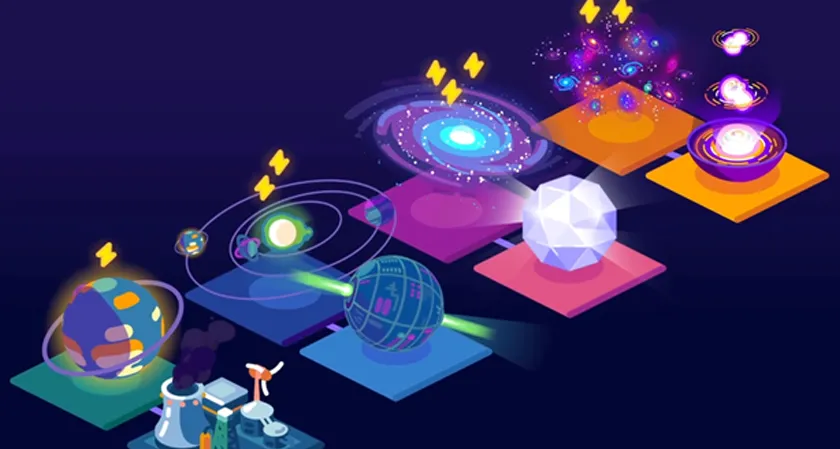
The phrase “civilization-level technology” is an informal term used to describe a small group of technologies powerful enough to reshape an entire society, not just a single market. It overlaps with older ideas, including economists’ “general-purpose technology” and the World Economic Forum’s Fourth Industrial Revolution, but it is broader and more informal. What follows defines the term, traces where it came from, and lists several domains and companies that illustrate the concept.
civilization-level technology
noun
-
A foundational technology that operates at the scale of an entire society, supports many other industries, and creates capabilities or dependencies that are difficult to reverse. A civilization-level technology changes not just an individual market but the basic capabilities of a society, such as how it produces energy, processes information, organizes economic activity, engineers living systems, or operates beyond Earth.
-
Any of the specific technologies belonging to that category, such as energy, space flight, computing, artificial intelligence, and biology.
DEFINING FEATURES
-
Operates at the scale of a whole society, not a single industry.
-
Becomes something many other industries come to depend on.
-
Creates capabilities, dependencies, or strategic consequences that are difficult to unwind.
RELATED TERMS
general-purpose technology (GPT); transformative technology; foundational technology; the Fourth Industrial Revolution.
HISTORY
Several older frameworks help explain the idea of a civilization-level technolgy. In 1964, the astronomer Nikolai Kardashev proposed classifying civilizations according to the amount of energy they can harness. In the 1990s the economists Timothy Bresnahan and Manuel Trajtenberg formalized the related concept of general-purpose technologies, technologies pervasive enough to raise productivity across the whole economy. The economist Carlota Perez traced five technological surges since 1771, and in 2016 Klaus Schwab of the World Economic Forum described a Fourth Industrial Revolution fusing the physical, digital and biological worlds.
Carl Sagan later refined that scale into fractional values. Estimates based on present-day energy consumption place humanity at roughly 0.7, although the scale measures energy use rather than technological progress as a whole.
CATEGORIES (AS OF THE MID-2020s)
-
Energy: abundant, low-carbon power, with nuclear fusion at the frontier.
-
Space: low-cost, reusable access to orbit and the satellite networks it enables.
-
Computing: advanced semiconductors and the digital systems built on them.
-
Artificial intelligence: widely applicable systems for prediction, generation, automation, and machine-assisted reasoning, including large language models.
-
Biology: the engineering of living systems, also called engineering biology or synthetic biology.
EXAMPLE COMPANIES BY CATEGORY
-
Energy: Commonwealth Fusion Systems, Helion Energy, TAE Technologies.
-
Space: SpaceX, Blue Origin, Rocket Lab.
-
Computing: TSMC, ASML, Nvidia.
-
Artificial intelligence: Anthropic, OpenAI, Google DeepMind.
Biology: Illumina, CRISPR Therapeutics, Colossal Biosciences, Twist Bioscience













Comments