>>
Industry>>
Transportation>>
Commuter-Friendly E-Bikes and ...Commuter-Friendly E-Bikes and the Consumer Tech Shift in Short-Trip Mobility
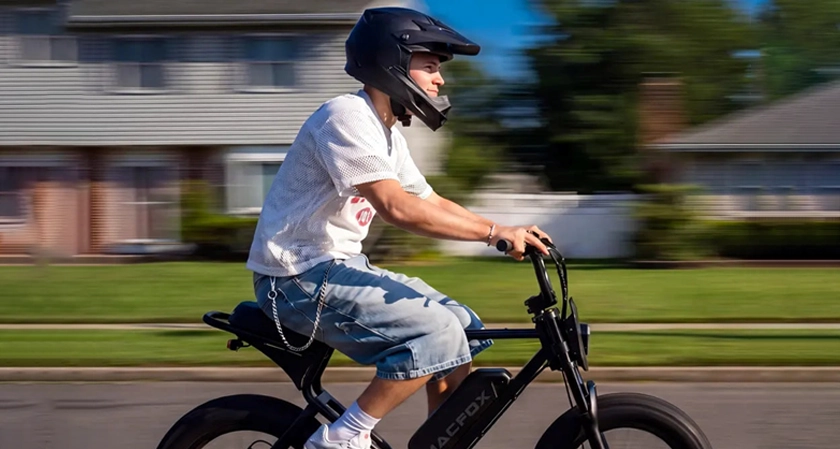
The next transportation shift may not come from longer trips. It may come from the short ones people repeat every day: the ride to work, the mile across town, the lunch errand, the trip from an apartment to a train stop, or the quick connection between two places that are close but not quite walkable.
That is why commuter-friendly e-bikes deserve to be treated as consumer technology, not just bicycles with motors. They sit at the intersection of mobility, battery systems, software-like user expectations, personal style, and daily habit. The question is no longer only whether an electric bike can move. It is whether it can become easy enough to use without thinking about it.
Short Trips Are a Product Design Problem
Short trips expose weak transportation design. A car can feel excessive. Walking can take too long. Public transit may not line up with the exact route or schedule. A regular bicycle can work, but not everyone wants to arrive sweaty or deal with hills, wind, and stop-and-go traffic before work.
A well-designed commuter e-bike solves a practical gap. It turns small local movement into a repeatable experience. That is a product-design challenge as much as a transportation challenge: the ride has to be comfortable, predictable, easy to start, simple to store, and reliable enough that the user trusts it on an ordinary Tuesday morning.
What Makes Commuter-Friendly E-Bikes Different
Commuter-friendly e-bikes are not defined by the most dramatic performance claim. They are defined by daily usability. The best versions start smoothly, feel balanced at low speed, offer a riding position that does not wear the rider out, and make charging and range easy to understand.
That is different from the way many tech products are marketed. Bigger numbers are not always better if they make the product harder to control, harder to understand, or less appropriate for the route. In short-trip mobility, the winning product is often the one that removes decisions rather than adding features.
An Ebike Is More Than a Motor
A good ebike is a complete user experience. The motor matters, but so do the brakes, frame feel, tire choice, display, throttle behavior, battery communication, and the way the bike reacts in ordinary traffic. Riders judge the product through the whole trip, not through one specification.
That is why trust becomes part of the value. If the acceleration feels abrupt, the range is unclear, or the bike does not feel stable when starting from a stop, the rider may stop using it even if the spec sheet looks impressive. A commuting product succeeds when it feels dependable after the novelty wears off.
Transparency Is Part of the Technology
In consumer tech, trust often comes from clear information. The same is true for e-bikes. Riders need to understand safety standards, class behavior, range expectations, and the kind of route a bike is designed to handle. Transparent product information reduces uncertainty before the first ride.
Macfox is relevant here because its best comparison value is not just style. When riders see safety cues such as UL 2849 certification presented alongside everyday riding use cases, they have a better basis for judging whether a bike fits daily mobility. That kind of clarity helps shift the decision from raw specs to real-world confidence.
Adoption Depends on Repeat Use
The real test of a commuter e-bike is not the first ride. It is the tenth ride, the rainy-day ride, the late-start ride, and the quick errand when driving would be annoying. If the bike keeps making those moments easier, it earns a place in the user's routine.
This is where e-bikes resemble other successful consumer technologies. Adoption rises when the product removes friction. The interface feels familiar. The benefit is obvious. The habit forms because the product quietly solves a recurring problem.
What the Next Wave of E-Bikes Has to Prove
The next stage of the e-bike market will be less about proving that electric assist works and more about proving that the whole product fits real life. Riders will look for safer systems, clearer information, easier ownership, stronger comfort, and designs that make sense for where they actually ride.
For short-trip mobility, the winners will be the bikes that feel useful without needing a sales pitch. They will help riders move through the day with less friction, more control, and fewer wasted minutes. That is the point where an e-bike stops feeling like a gadget and starts behaving like everyday infrastructure.




















Comments