>>
Industry>>
Healthcare>>
Healthcare Must Start Treating...Healthcare Must Start Treating the Air We Breathe as Preventive Care
The Silicon Review
28 August, 2026
Author:
Gal J. Nahum
Healthcare has spent decades getting better at treating disease after it appears. The next major shift in prevention should be getting serious about what happens before diagnosis: the environments in which people spend their lives. If we can screen for disease, vaccinate against it, and change lifestyle risks, we should also ask whether the places we inhabit are helping protect our health or quietly adding to the burden.
That question matters because indoor exposure is not occasional. According to the U.S. Environmental Protection Agency, Americans spend about 90% of their time indoors, where pollutant levels can sometimes exceed those outdoors. Indoor air can contain smoke, mold, particles, and chemicals released by building materials, cleaning products, and other everyday sources. The National Institute of Environmental Health Sciences connects indoor air pollution with respiratory disease, cardiovascular effects, cognitive problems, and other health concerns.
Yet our health system rarely treats the building around a patient as part of the patient’s health story. We measure blood pressure but may not measure the air in the bedroom where someone sleeps eight hours a night. We advise people to exercise and eat better, but the air in a classroom, office, hospital, or home can remain an afterthought. That is a gap in prevention that deserves serious attention.
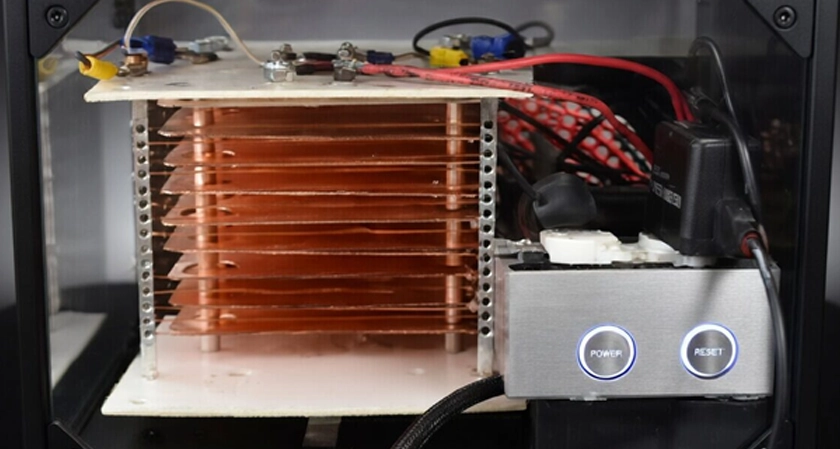
I have spent years investigating that gap through electrical engineering, including how Conducted Direct Current, or CDC, might interact with airborne particles and indoor environments. My interest comes from a simple engineering question: When electricity interacts with matter, can a different electrical configuration produce useful environmental effects? That question has taken me through years of observation, experimentation, and refinement.
But conviction is not evidence. I would be contradicting my own engineering principles if I asked anyone to accept an emerging technology because it sounds innovative. Test it. Measure it. Repeat the test. Monitor it over time. Invite independent researchers to challenge the results. If the evidence fails, say so. If it holds, build on it. That is how technology earns trust.
My own experience with vitamin D reinforced another part of this thinking. My vitamin D blood level once measured 12 ng/mL, which is considered low. I spent about 20 minutes a day in sunlight; six months later, my level measured 36 ng/mL, which is within the normal range. That personal experience reminded me that the body does not operate in isolation. Light, air, temperature, pollutants, and other environmental conditions interact with human life every day. Preventive health should take that reality seriously.
The opportunity is enormous. Imagine buildings designed not merely to shelter us, but to actively support healthier conditions: cleaner air, better monitoring, stronger ventilation, effective filtration, and technologies tested to work alongside established systems. Imagine schools where environmental conditions are treated as seriously as curriculum, hospitals where air management is viewed as part of patient protection, and homes where people can understand the quality of what they breathe. That is the upside. Prevention becomes part of the places where life actually happens.
The alternative is equally clear. We can continue waiting for exposure to become symptoms, symptoms to become diagnoses, and diagnoses to become years of treatment. We can spend more resources managing consequences while leaving preventable environmental risks largely outside the healthcare conversation. That is not a future we should accept.
The solution is not to replace medicine with gadgets or dismiss proven ventilation and filtration. EPA guidance already recognizes source control, ventilation, filtration, and air cleaning as complementary approaches. The next step is to test new ideas within that framework, using rigorous standards.
Governments, hospitals, universities, building owners, and technology developers must therefore fund independent indoor-air pilot programs, publish their data, measure outcomes over time, and make the results available for scrutiny. Do not protect promising ideas from criticism. Put them through it.
Healthcare should not begin when a person walks into a clinic. It should begin with the conditions in which that person lives, works, sleeps, and breathes. If prevention is truly our goal, we must stop treating the environment as background, and start treating it as part of the patient.
About the Author
Gal J. Nahum is an electrical engineer, inventor, and researcher whose work focuses on Conducted Direct Current (CDC) and its potential applications in environmental and health-related systems. Drawing on decades of engineering experience and personal experimentation, he advocates for rigorous testing, measurable outcomes, and practical innovation that can be evaluated on evidence rather than promises.



















Comments