>>
Industry>>
Fintech and Financial Services>>
How Real-Time Payment Rails Re...FINTECH AND FINANCIAL SERVICES
How Real-Time Payment Rails Reshaped Consumer Fintech
The Silicon Review
07 August, 2026
Author:
Guest
The fintech revolution that reshaped how businesses move money has spilled far beyond the corporate treasury. The same rails that let a startup founder in Manhattan settle an invoice in seconds, or let a Volkswagen dealer clear a financing payment from a tablet, now underpin nearly every consumer transaction. Payment technology used to be the boring plumbing behind a purchase. Today it is a headline feature, and the shift is reshaping how ordinary people pay for everything from rideshares to streaming subscriptions to online leisure, where the speed of a deposit or a payout increasingly defines the whole experience.
For anyone weighing where to spend an evening online, the mechanics of money matter more than they used to. That is exactly why detailed comparisons of a new york online casino tend to focus so heavily on payout speed, banking options, and regulatory standing rather than flashy graphics alone. Real-money entertainment venues serving New York players in 2026 are judged on how quickly winnings hit an account, how transparent their welcome offers are, and whether they meet the state's compliance expectations. A guide that lines up these venues side by side helps a reader see which ones honor responsible gambling commitments, which support live dealer tables and a deep slots library, and which clear cashouts without friction. In short, the payment infrastructure has become the first thing a careful reader checks.
Why Payments Became the Product
For years, the fintech story lived in enterprise circles. SAP and Oracle built treasury modules. Banks digitized their back offices. Venture firms poured capital into companies promising to strip cost and delay out of every transfer. That investment thesis has fully matured, and its effects reach ordinary consumers now. As Andreessen Horowitz noted in its analysis of how Fintech Fuels Global Payments, the movement of money has become software, and software improves fast.
The consumer sees this improvement as instant confirmation. A transfer that once took three business days now completes before a page finishes loading. Stripe, Adyen, and a wave of embedded-finance startups made that expectation the baseline. When someone deposits funds into an entertainment account, they now expect the same immediacy they get from a mobile banking app or a rideshare receipt. Anything slower feels broken.
From Wire Transfers to Real-Time Rails
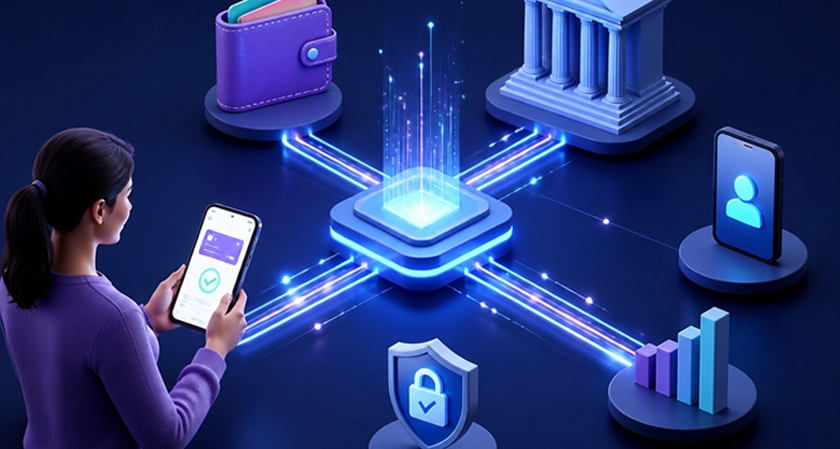
The technical leap here is genuine. Traditional card networks batched transactions and settled them overnight. Real-time payment systems changed the physics. In the United States, the launch of instant-settlement networks meant funds could clear around the clock, weekends included. Digital wallets like PayPal, Apple Pay, and Venmo layered a clean interface on top, and suddenly the average person could send or receive money faster than they could pour a cup of coffee.
That backbone is what makes modern entertainment deposits and cashouts feel effortless. When a player finishes a session and requests a withdrawal, the request rides the same infrastructure that clears a small-business payroll run. The difference between a venue that pays out in minutes and one that takes days often comes down to which of these rails it plugged into. JPMorgan captured the scale of this shift in its widely cited piece arguing that PAYMENTS are eating THE WORLD, a phrase that has stuck precisely because the trend touches nearly every category of spending, entertainment included.
What It Means for How People Unwind
Consider how leisure spending has changed shape. A decade ago, funding an online account meant hunting for a card, typing a long number, and hoping the charge cleared. Today the flow is closer to tapping a phone. That convenience does more than save a few seconds. It lowers the mental friction of starting and, just as importantly, of stopping. Clean, instant cashouts let people treat digital entertainment the way they treat any other planned expense, with a clear beginning and end rather than an open-ended tab.
This ties directly into responsible enjoyment. When money moves transparently and quickly, a person can see exactly what went in and what came out. There is no murky waiting period where a balance sits in limbo. Fintech's obsession with clarity, the itemized receipts and real-time notifications that consumers now expect from every service, carries over neatly into how thoughtfully people can manage their entertainment budgets.
The Trust Layer Behind the Speed
Speed alone would mean little without security, and this is where the fintech boom did its quietest but most important work. Tokenization replaced raw card numbers with disposable codes. Machine learning models scan transactions for anomalies in milliseconds. Multi-factor authentication became standard rather than optional. These are the same defenses that protect a corporate account payable, now guarding a routine entertainment deposit.
For the reader trying to decide where to spend free time, that trust layer is the difference between a venue worth considering and one worth skipping. Compliance-minded operators lean on the same identity-verification and anti-fraud tools that regulated fintechs use. The result is an experience where the payment step feels invisible because it simply works, backed by encryption most users never have to think about.
Where the Convenience Curve Goes Next
The trajectory points toward even less friction. Account-to-account transfers are cutting out card intermediaries entirely. Stablecoins and tokenized deposits, already being tested by major banks, hint at settlement that is both instant and borderless. Biometric confirmation may soon replace passwords for good.
For people looking at how they spend a free evening, the practical takeaway is simple. The money side of digital entertainment is becoming the smoothest part of it, letting the actual leisure, the game, the show, the moment of luck, take center stage the way it always should have.




















Comments