>>
Other>>
Infrastructure and development>>
How to scale infrastructure de...INFRASTRUCTURE AND DEVELOPMENT
How to scale infrastructure development in India and South-East Asia
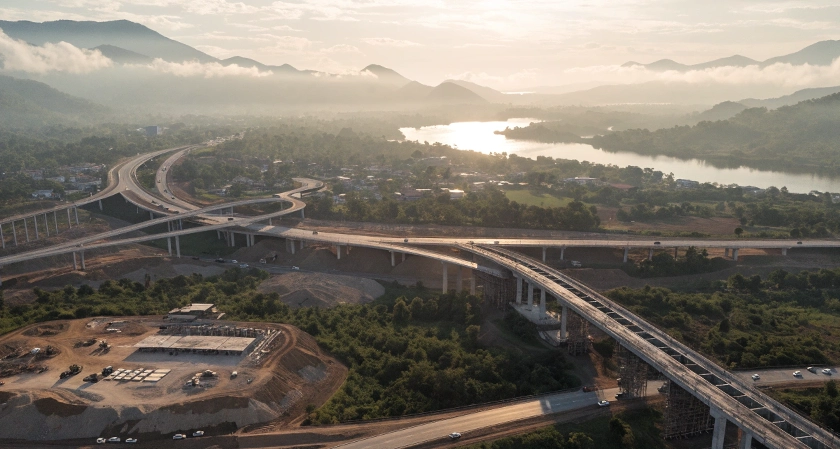
The scale of infrastructure in an economy truly dictates the very ability of an economy to scale returns, and private capital needs to see the long-term value in growing economies, says Rupin Banker, a specialist in infrastructure investment and supply chain finance. Governments therefore must have the funds available in order to invest in infrastructure development, whether those funds are raised through taxation or borrowing.
For developing economies, this introduces risk. Domestic disruption, such as the floods seen in Indonesia this year, can raise recovery costs and reduce tax receipts. International events, including political upheaval and war, can have a macroeconomic impact on interest rates.
"Geopolitical disturbances, for instance, are not a short-term challenge for emerging economies. The increased cost of borrowing is compounded by international investors retreating to safer markets. Lasting effects from disturbances on inbound finance can leave developing economies devoid of resiliency and struggling to recover for a prolonged period. Emerging economies must therefore build financial systems that are more resilient” says Banker.
The dynamics of global infrastructure capital
Ongoing turbulence due to war, political upheaval and the climate crisis has led to high interest rates and inflation in many markets in recent years. In response, institutional investors have sought more predictable places to deposit funds.
Larger economies have a head start in this regard, as they are often able to offer access to high-volume opportunities valued in the billions of dollars, with low friction to entry for overseas investors.
For those with funds to invest, the decision-making process is no longer purely based on growth potential, but now encompasses demographic size, regulatory transparency and strong legal protections.
Contrasting economies of India and South-East Asia
The different scales of economies in the southern regions of Asia highlight the stark contrast in terms of GDP, growth and spending power:
- India achieved annual growth of 8.9% in Q4 2025
- Indonesia achieved annual growth of 5.1% in Q4 2025
- Thailand achieved annual growth of 2.5% in Q4 2025
Thailand is forecasting further growth of 2.0% in 2026, but this is propped up by the emergency decree that authorises the Ministry of Finance to borrow funds. Despite this, both public and private investment rose sharply in 2025, by 9.4% and 10.1% respectively.
Accelerating private investment is one of the Thai government's main priorities for economic management for the remainder of 2026. Measures that are being taken to achieve this include:
- Removing barriers to facilitate investment
- Promoting science, technology and investment in AI
- Channelling Foreign Direct Investment to domestic entrepreneurs
This should see Thailand end the year with GDP per capita around 300,000 Baht (5,000) and India's 220,000 Rupees ($2,300).
Hidden similarities of population in poverty
Despite the apparent differences in GDP per capita, both India and Indonesia have made substantial improvements in terms of their population living in poverty over the past 10-15 years.
In 2011, India's poverty rate stood at 27.12% while Indonesia's was at 31.22%, according to World Bank figures. Yet by 2022, poverty in India fell to 5.25% and in Indonesia to 7.85%, which continued to fall to a new low of 4.04% in 2025.
Thailand has historically maintained a very low poverty rate, from 0.99% in 2008 to 0.01% in 2024, despite its relatively low GDP per capita in US dollar terms.
India: Advantages and administrative hurdles
India's enormous size offers institutional investors access to a massive domestic market, supported by national initiatives like the National Infrastructure Pipeline. This is financed via the National Investment and Infrastructure Fund, a quasi-sovereign wealth fund anchored by the Indian government.
Global SWFs such as Singapore's GIC and Abu Dhabi's ADIA partner with the NIIF to co-develop green energy, large-scale logistics and essential road infrastructure, all of which is an indication of India's ability to pool its risk exposure with its nearest neighbours.
This is welcome news for investors, who can benefit from this reduced level of risk, but may also face challenges due to the administrative complexity of operating across state and federal borders.
Rupin Banker says: "India has no shortage of political ambition, but land acquisition and environmental clearances can be complicated. The test is whether the Indian government can deliver infrastructure investment in the form of transparent, low-friction bankable projects that attract long-term institutional capital from abroad."
Thailand and Indonesia: The agility of the corridor
Compared with India's monolithic economy, the smaller South-East Asian countries like Thailand and Indonesia are able to move with greater agility, especially by making use of Thailand's Eastern Economic Corridor to access high-value industrial hubs.
Indonesia has also shown agility in recent years, embracing emerging technologies like green energy and electric vehicles - markets that are not yet fully mature, and therefore still offer a more level playing field for developing economies to compete.
The Indonesia Investment Authority makes it easy for foreign developers to participate in strategic infrastructure projects like port expansions and toll road construction. The SWF actively works with overseas investors to reduce regulatory risk and political obstacles, creating that friction-free environment institutions love to see.
Key pillars to deliver ambitious infrastructure
Contrasting investors' approach to economies of different sizes in South and South-East Asia reveals several commonalities independent of GDP and poverty rates:
Credible frameworks
Governments must offer transparent bidding processes for institutional investors, with well publicised anti-corruption measures and a truly independent judiciary.
Consistent policies
Stable long-term policies reduce the perception of risk for foreign developers, who will be more wary if they have been affected in the past by sudden shifts in tariff structures, tax codes or local laws.
Visible pipelines
Foreign financiers want to see a long-term plan for infrastructure development, including projects available for immediate investment with little to no legal risk attached.
"Investors will place their finances where they expect the most reliable return," said Rupin Banker. "Even those who are not risk-averse will look more favourably on emerging economies if they can offer credibility, consistency and a clear pipeline of bankable projects."
Mitigating external risk via domestic resilience
The dollar is the default currency for international debt. This introduces additional risk for smaller economies, whose dollar exchange rate may be more susceptible to fluctuations and more sensitive to sudden capital flight during geopolitical upheavals.
Domestic resilience can be nurtured by developing domestic bond markets, locally based pension funds and internal insurance capital, giving emerging economies a much-needed stable funding base over the long term.
SWFs are an increasingly popular method to do this, accumulating capital from investors and pouring it back into improving local infrastructure. Over time, this helps emerging countries to build not only a stronger economy, but a stronger society too.
From vision to execution
It is certainly true that a larger GDP in general gives governments more money to spend within the national budget. However, GDP in and of itself is not a determinant of economic growth, foreign investment or wealth per capita.
The division between stagnant and successful economies in the developing world, especially among the diverse demographics of South and South-East Asia, will increasingly be typified by the ability to deliver frictionless projects, and not merely by the scale of government ambition.
"Consistency is key to attracting foreign investment into domestic infrastructure SWFs. Low risk, low friction and low administrative burden will all appeal to overseas institutions. The countries that can offer this will win the decade, and the prize will be the conversion of naked ambition into credible infrastructure projects." says Rupin Banker.













Comments