>>
Industry>>
Food and beverages>>
Top 5 Ultra-Premium Food & Bev...Top 5 Ultra-Premium Food & Beverage Supply Chain strategies: The Hidden Strategy behind Luxury Pricing Power 2026
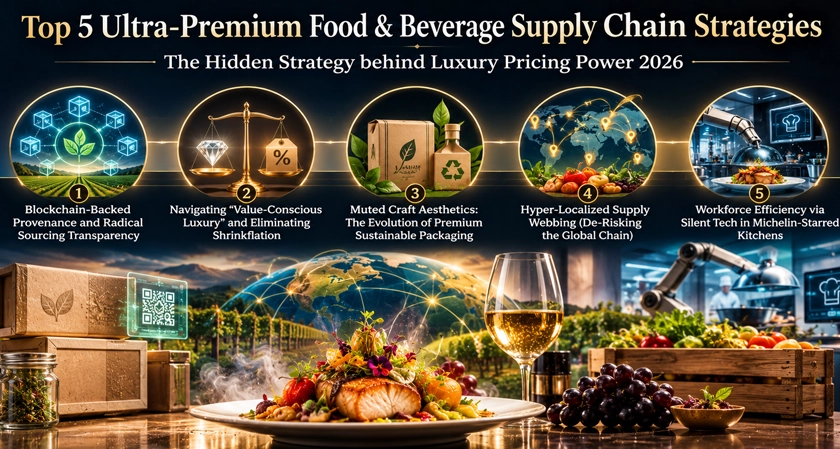
Let's be honest. In mass-market food and beverage, supply chain management is a race to the bottom continuous efforts to squeeze pennies out of production, optimize bulk logistics, and scale at all costs. In the ultra-premium and luxury CPG sectors, however, the rules are completely reversed. For high-end culinary brands, Michelin-starred hospitality groups, and boutique importers, the supply chain is not a cost center. It is the ultimate foundation of brand equity, exclusivity, and pricing power.
With discerning consumers demanding radical transparency, inflation altering luxury margins and climate volatility threatening rare ingredient yields, elite operators must rethink their operations. The most successful luxury brands understand that what happens on the farm, in the ledger, and in the kitchen logistics is just as important as what lands on the consumer's plate.
That's why The Silicon Review ranked the world's No.1 digital magazine of the year 2026 has curated this guide to the Top 5 Ultra-Premium Food & Beverage Supply Chain strategies defining the future of luxury food and beverage. Whether you're a hospitality executive, a CPG brand strategist, or a culinary entrepreneur, this is your essential briefing.
1. Blockchain-Backed Provenance and Radical Sourcing Transparency
For the modern luxury consumer, a premium price tag must be justified by ironclad authenticity. Counterfeiting in luxury categories ranging from rare single-estate olive oils and manuka honey to vintage wines costs the industry billions annually. Elite brands are mitigating this by integrating end-to-end blockchain tracking into their supply chains. Every step of an ingredient's journey from the exact micro-climate soil patch where a truffle was harvested to its temperature-controlled transit is recorded on an immutable ledger.
The ROI: By placing a secure QR code or NFC chip on muted, high-end packaging, brands allow consumers to scan and instantly view the product's verified lineage. This radical transparency transforms a simple ingredient into a trusted heirloom product, completely justifying premium pricing.
2. Navigating "Value-Conscious Luxury" and Eliminating Shrinkflation
While mass-market brands frequently resort to "shrinkflation" subtly reducing product sizes or substituting cheaper ingredients to preserve margins this tactic is fatal for premium brands. Sophisticated consumers notice alterations in taste, weight, and texture immediately, destroying decades of brand trust.
|
Strategy |
Mass-Market Approach |
Premium/Luxury Approach |
|
Margin Management |
Shrinkflation (less product) or ingredient substitution |
Price-Prestige Integrity (holding size, adjusting premium) |
|
Product Strategy |
Volume discounting and multi-pack promotions |
Limited-edition drops and allocation-only distribution |
|
Cost Mitigation |
Lowering raw material quality via industrial suppliers |
Direct-to-farm vertical equity and long-term exclusive contracts |
Sustaining Margin Prestige: Instead of cutting corners, luxury hospitality groups and elite CPG operations use price-prestige integrity. If supply costs spike, they maintain the uncompromising quality of the product but adjust the entry price or pivot to an allocation-only model. They protect the consumer experience at all costs, understanding that a luxury buyer is willing to pay more for consistency, but will abandon a brand that compromises on excellence.
3. Muted Craft Aesthetics: The Evolution of Premium Sustainable Packaging
The era of loud, over-designed, shiny luxury packaging is over. Today, ultra-high-net-worth individuals equate luxury with restraint, sustainability, and raw tactile authenticity. This shift has birthed the trend of muted craft aesthetics.
- The Design Shift: Elite brands are moving away from heavy plastics, foils, and high-gloss coatings. Instead, they favor hand-pressed, FSC-certified recycled papers, natural soy-based inks, and infinitely recyclable materials like lightweight dark violet glass or raw ceramic.
- The Supply Chain Impact: Transitioning to sustainable luxury packaging requires deep collaboration with boutique, eco-conscious packaging mills. By designing minimalist, lightweight packaging that does not compromise on haptic luxury, premium brands simultaneously reduce their scope 3 carbon emissions and appeal to the values of today's affluent buyer.
4. Hyper-Localized Supply Webbing (De-Risking the Global Chain)
Relying on hyper-extended, fragile global supply chains is an operational risk that ultra-premium operators can no longer afford. Climate instability and geopolitical shifts routinely disrupt the flow of rare regional items. To counter this, forward-thinking brands are implementing hyper-local supply webbing. Instead of sourcing exclusively from one vulnerable international region, brands are identifying, incubating, and investing in secondary and tertiary micro-farms globally. For instance, a luxury chocolate brand might secure exclusive land rights across three distinct, climate-resilient organic cocoa farms across different continents. This operational redundancy guarantees a steady stream of rare ingredients, insulating the business from regional supply shocks while maintaining product scarcity.
5. Workforce Efficiency via Silent Tech in Michelin-Starred Kitchens
The premium food and beverage space faces an intense macro-economic challenge: severe labor inflation combined with a shortage of specialized, elite culinary talent. However, a luxury establishment cannot simply cut floor staff without degrading its white-glove service. The solution lies in silent tech integration deploying advanced automation where guests can't see it, allowing human staff to focus entirely on experiential luxury.
- Back-of-House (BOH) Optimization: Utilizing AI-driven inventory predictors, automated precision-thermal cookers, and smart waste trackers to streamline the kitchen.
- Front-of-House (FOH) Liberation: When the kitchen operates with automated backend efficiency, sommeliers, maître d's, and servers are freed from operational chaos. They can dedicate 100% of their energy to tableside storytelling, guest data personalization, and elite relationship building.
The Strategic Verdict
In the premium sector, supply chain architecture is the ultimate business strategy. By securing rare inputs, investing in transparent provenance, protecting product integrity, embracing sustainable minimalism, and optimizing backend labor, luxury food and beverage brands don't just survive economic volatility they control the market. The future belongs to the operators who realize that what happens on the farm, in the ledger, and in the kitchen logistics is just as important as what lands on the consumer's plate.
Conclusion
The luxury food and beverage supply chain is not a logistical necessity. It is the ultimate expression of brand integrity, sustainability, and pricing power. Blockchain-backed provenance, price-prestige integrity, muted craft aesthetics, hyper-local supply webbing, and silent tech integration represent the strategies that define the future of ultra-premium hospitality. The way forward is simple. Stop treating supply chain as a cost. Start treating it as a competitive advantage.
Frequently Asked Questions (FAQs)
- Why is supply chain more important for luxury F&B than mass-market?
In luxury, the supply chain is the foundation of brand equity, exclusivity, and pricing power not a cost center. - What is blockchain-backed provenance?
End-to-end tracking of ingredients from farm to consumer, recorded on an immutable ledger to guarantee authenticity. - What is shrinkflation and why is it fatal for luxury brands?
Reducing product sizes or substituting cheaper ingredients luxury consumers notice immediately and abandon the brand. - What are muted craft aesthetics?
Sustainable, minimalist packaging using recycled papers, natural inks, and recyclable materials instead of loud, glossy designs. - What is hyper-local supply webbing?
Sourcing rare ingredients from multiple micro-farms across different continents to de-risk supply chains. - What is silent tech in Michelin-starred kitchens?
Back-of-house automation that frees front-of-house staff to focus entirely on guest experience. - What is price-prestige integrity?
Maintaining product quality and adjusting price rather than compromising on excellence.











Comments