>>
Industry>>
Construction>>
Why Debris Logistics Should Be...Why Debris Logistics Should Be Planned Before the First Crew Arrives
The Silicon Review
15 August, 2026
Author:
Guest
Construction schedules are usually built around labor, materials, inspections, deliveries, and subcontractor sequencing. Waste removal often gets treated as a secondary issue, something to solve once demolition starts and debris begins to pile up.
That approach can create avoidable delays.
On residential and light commercial projects, debris logistics affect far more than cleanup. A poorly placed container can block deliveries. An undersized dumpster can fill before the next phase begins. A missed swap can stop demolition crews from working efficiently. In dense neighborhoods, even a few feet of lost driveway or curb access can create problems for homeowners, contractors, and neighboring properties.
For contractors working throughout Chicago, northern Illinois, and the broader Midwest, planning debris removal before the first crew arrives can make the entire jobsite run more smoothly.
1. Treat waste removal as part of the project schedule
A dumpster should not be viewed only as a place to throw debris. It is part of the jobsite workflow.
Before work begins, contractors should estimate when the heaviest debris-generating phases will occur. Demolition, roofing tear-offs, flooring removal, framing changes, drywall replacement, and exterior renovation can all produce very different waste volumes.
The container schedule should match those phases.
If demolition is expected to generate most of the project's debris during the first three days, the first pickup or swap should already be anticipated. If several trades will be producing waste throughout the project, the contractor may need a longer rental period with planned service intervals.
Building debris logistics into the schedule helps prevent the common situation where crews are ready to work but have nowhere practical to put material.
2. Match the container to the debris, not just the project size
A larger renovation does not always require the largest available container, and a smaller project does not always mean a small dumpster is sufficient.
Material type matters.
Roofing shingles, concrete, brick, plaster, dirt, and other dense materials can reach weight limits quickly even when the container is not physically full. Bulky but lighter materials, such as cabinets, framing lumber, fixtures, and household cleanout debris, create a different challenge because they consume volume faster.
Contractors should evaluate both expected volume and material weight before selecting a container.
This is one reason it helps to discuss the project with a local construction dumpster rental provider before delivery. The right recommendation should account for the material being removed, the project duration, the available placement area, and whether one container or multiple swaps will be more practical.
3. Decide where the dumpster will go before delivery day
Container placement can affect almost every other activity on the site.
The most convenient location for debris loading may not be the best location for material deliveries, equipment access, homeowner parking, or subcontractor staging. On tighter suburban and urban properties, these competing needs can become especially important.
Before delivery, contractors should identify:
- the safest truck approach and exit
- overhead wires or low branches
- driveway width and turning space
- garage access that must remain open
- material delivery routes
- pedestrian paths
- neighboring property boundaries
- soft surfaces, landscaping, or pavers that should be avoided
A few minutes spent planning the placement can prevent a container from becoming an obstacle for the rest of the project.
4. Protect the property under the container
Homeowners often pay close attention to what happens to their driveway, especially during high-end remodeling projects.
Heavy containers and delivery trucks can place stress on asphalt, concrete, pavers, and other surfaces. Contractors should understand what protection methods are available and discuss placement expectations with the homeowner before delivery.
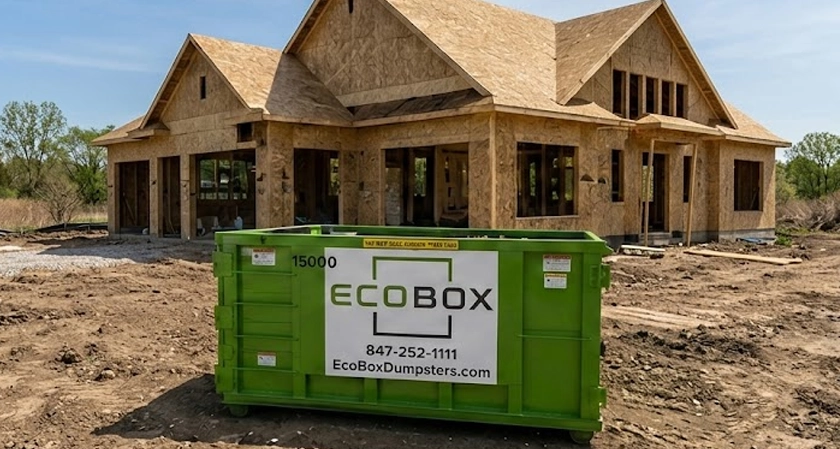
Some dumpster companies use boards or other surface-protection methods. EcoBox Dumpsters, for example, uses a driveway-protection system designed to help reduce direct container contact with the driveway surface.
Whatever method is used, property protection should be part of the site plan rather than an afterthought.
It is also useful to document the placement area before delivery. A few photos can establish the condition of the driveway, landscaping, fencing, and nearby structures before equipment arrives.
5. Keep the loading area organized
A dumpster only improves jobsite efficiency when crews can use it easily.
If removed materials are scattered between the work area and the container, the jobsite becomes harder to navigate and more difficult to keep safe. Contractors should establish a clear debris path and keep that route open as the project progresses.
Where practical, debris should move directly from the work area to the container rather than being piled temporarily around the property.
This reduces double handling. It also helps prevent a small cleanup issue from becoming a larger logistics problem later in the day.
Crews should also be reminded not to load material above the container's fill line or place prohibited materials inside simply because there is space available. Overfilled or improperly loaded containers may not be safe to transport and can delay pickup.
6. Plan swaps before the dumpster is completely full
Waiting until a container is overflowing before requesting service creates unnecessary risk.
Contractors should monitor the container as work progresses and anticipate when it will need to be removed or exchanged. This is particularly important during demolition and roofing work, where debris volume can increase very quickly.
If the project is located in a busy part of Chicago, on the North Shore, or in another area where truck routing and site access require coordination, last-minute service requests can be especially disruptive.
A better approach is to identify likely swap points in advance and communicate with the dumpster provider as the job approaches them.
The goal is simple: the next container should be available before debris removal becomes the reason the project slows down.
7. Make waste planning part of the preconstruction conversation
For contractors, the biggest opportunity is to move dumpster planning upstream.
During the preconstruction meeting, the project team should already know what materials are being removed, approximately how much debris is expected, where the container can be placed, when it should arrive, and how likely it is that a swap will be required.
That conversation should include the homeowner or property manager when access, parking, driveway use, or neighborhood considerations may be affected.
It can also include subcontractors. A roofing contractor, demolition crew, flooring installer, and general contractor may each have different expectations about how debris will be handled. Defining the process ahead of time avoids confusion once work begins.
For projects in established Chicago-area neighborhoods, this type of coordination can be particularly valuable. Lots may be narrow, driveways may be shared, street parking may be limited, and neighboring homes may be close to the work area. Waste removal should fit into those constraints just as carefully as material deliveries and crew parking.
A small logistics decision can have a large operational impact
Debris management is rarely the most visible part of a construction project, but it can influence nearly every phase of the work.
The best waste plan is usually the one nobody notices. The container arrives where it should, crews can load it efficiently, the property remains protected, swaps occur before capacity becomes a problem, and the dumpster leaves without disrupting the next phase of construction.
That does not happen by accident.
Contractors who plan debris logistics alongside labor, deliveries, equipment, and inspections are more likely to keep the jobsite organized and the schedule moving. For renovation and demolition work across the Midwest, that kind of planning can be one of the simplest ways to remove friction from a project before the first crew arrives.




















Comments