>>
Industry>>
Compliance and governance>>
Building a Hemp Product Line T...Building a Hemp Product Line That Survives a Retail Audit
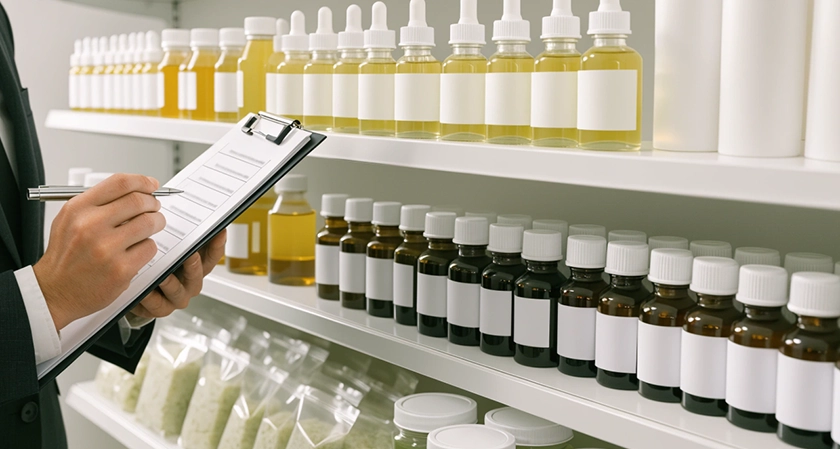
Nine out of ten hemp brands that get kicked off a retail shelf never see it coming. The buyer does not call. The category manager does not send a warning email. One morning your reorder simply does not arrive, and your product is replaced by a competitor who brought a binder of documentation you did not know you needed.
That is the reality of selling into regional grocery, wellness chains, and independent smoke shops in 2026. Retailers now run periodic audits on every hemp SKU on their shelves, and the audit has nothing to do with whether your gummies taste good. It has to do with whether you can prove, on paper and in a lab report, exactly what is inside the package, where the plant came from, and who is legally responsible if something goes wrong. Brands that treat compliance as a marketing line lose shelf space quietly. Brands that treat it as operations keep it for years. This is a working guide to the operational side of building a hemp line that passes those audits, drawn from how real purchasing teams actually evaluate a supplier.
What Does a Retail Buyer Actually Check?
Buyers are not chemists. They are gatekeepers with limited time and a long list of suppliers. What they want is a short answer to a simple question: if this product causes a problem, whose name is on the liability? Everything else is secondary.
In practice, a typical audit checklist covers four items. A current certificate of analysis from an accredited third party lab. Documentation of where the hemp was grown and who processed it. Labeling that matches the COA on every claim and every number. And a point of contact at the supplier who will answer a phone call within one business day.
Here is the part that catches most small brands off guard. Your COA from eleven months ago is not current to a buyer reviewing you today. COAs are dated, lot specific, and tied to a batch. If your last order shipped in a different lot than the one on the shelf, the audit fails on traceability even if every number on your label is correct. Buyers spot this. They are looking for it. Plan for it by keeping one COA per lot per SKU, archived, and provided proactively rather than on request.
The Paperwork Chain That Keeps Your Product on the Shelf
Your supply chain has three links. The farm, the processor or extractor, and you as the brand. Most audit failures trace back to a broken link between two of those three, and the brand usually discovers the break at the worst possible time.
Start With the Farm
Hemp is an agricultural product, and it is regulated first as agriculture. In the United States, hemp production falls under the oversight of the U.S. Department of Agriculture through the national hemp program and its state equivalents. That means any farm supplying your material should be able to produce a license or registration, and any buyer doing real diligence will ask for it. A farm that cannot produce a license number in writing is a farm you should not be buying from, regardless of price.
Ask your supplier for the farm name, the state license number, and the harvest date of the material used in your current batch. If they hedge, that hedge is your answer. Move on.
Then Verify the Processor
Extraction and manufacturing is where practical quality gets decided. A reputable processor runs each batch through an accredited third party lab and issues a certificate covering potency and any residuals the state requires. If a co-packer tells you they test in house and that is enough, walk away. In house testing is a red flag in every regulated consumer category, and hemp buyers know it.
The lab report should name the testing laboratory, the batch or lot number, the date of receipt, and the date of analysis. If any of those fields is blank, the retailer's compliance team will flag it. Ask for the full report, not the summary page.
Labeling Rules You Cannot Skip
Marketing copy on a hemp product is regulated. Claims about treating or preventing disease cross a line that the Federal Trade Commission actively enforces, and the agency has repeatedly told sellers in this category that unproven health claims carry real legal risk. Keep your package copy focused on the product itself, its ingredients, its serving size, and its sourcing. Leave the medical language off the label entirely, no matter what a consultant tells you will sell better.
Beyond that, most state regulators require a specific set of disclosures. A total THC value. A net weight or volume. A lot number. A best by or expiration date. A responsible party statement that names the business legally accountable for the product. Skipping any one of those gives a retailer a legitimate reason to pull you, and they will.
The rule I follow is simple: if a claim cannot be traced to a document in your own supplier file, it does not go on the label. That standard has killed a lot of good marketing copy at my desk, and it has saved a lot of shelf space too.
Where Sourcing Meets Strategy
Getting documentation in place is table stakes. Being able to scale a product line is a different problem. The brands that grow past the first reorder tend to buy their raw material from a supplier that can also warehouse and ship finished goods to multiple retail accounts without the brand touching the inventory. That usually means working with a supplier that runs both production and a distribution arm, so a single phone call covers a lot, a label run, and a restock.
This is also where a brand owner starts thinking about margins instead of just unit economics. If you are sourcing material anyway, buying at volume and selling to other shops is a legitimate path for anyone with a real supply relationship. Most hemp brands eventually ask their supplier about wholesale cbd terms, not because they want to become a distributor, but because the same supply chain that makes their own product also gives them a second revenue stream when a retail partner asks where they can get more.
A Practical Audit Prep Checklist
Before you ship to a new account or submit to a reorder, walk through this list. I have seen every item on it fail at some point, including on my own orders.
- Current COA for every SKU, dated within the last twelve months.
- Lot number on the COA matches the lot number on the shipping manifest and the label.
- Farm name and license number on file in writing.
- Processor name, address, and contact for the batch in question.
- Label copy reviewed against the COA claims and the state disclosure list.
- Responsible party statement printed on the package.
- A named contact at your company who answers within one business day.
- An archive folder per SKU that holds every document in one place.
If you can hand a buyer a single folder with all of that, you are already in the top tier of suppliers they deal with. Most of your competitors cannot.
The Part Nobody Tells New Brands
Audits are not adversarial. Retailers do not enjoy pulling products off shelves, because a pulled product means a gap in their category and a call they have to make to a frustrated customer. Buyers would much rather keep you. They just need the paperwork to be boring, current, and complete.
The brands that survive are the ones that treat documentation as part of the product, not part of the sales pitch. A quick look at how testing requirements are handled in food and supplement manufacturing, covered in foundational work from institutions like Penn State University, shows that this is standard practice in any regulated consumer goods industry. Hemp is simply the newest version of it.
The Long Game
Building a hemp line that lasts past a single reorder comes down to two habits. Keep your documentation current, and treat your supplier as an operations partner rather than a commodity. Everything else, the packaging, the pricing, the marketing, depends on those two things being true first.
If you have not audited your own supply chain this quarter, that is the next thing worth doing. Pull your last three lot folders and check them against the checklist above. If any document is missing, you know exactly where your shelf space is exposed, and you can fix it before a buyer finds out for you.













Comments