>>
Technology>>
Artificial intelligence>>
How Artificial Intelligence Is...How Artificial Intelligence Is Reshaping Everyday Digital Creativity
The Silicon Review
02 September, 2026
Author:
Guest
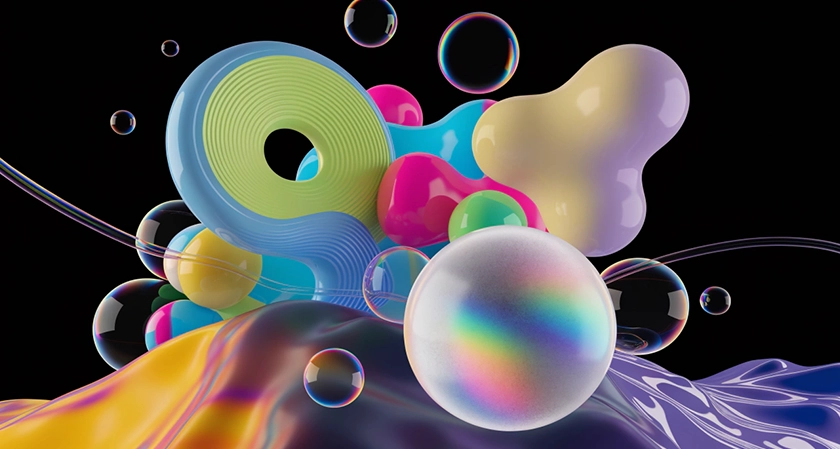
Artificial intelligence is becoming a practical part of digital content creation. What once required specialized software, technical skills, and hours of manual work can now be approached through simpler AI-assisted workflows.
From creating visual concepts to producing short videos, AI is giving creators more ways to experiment with ideas and turn them into usable content. This change is particularly noticeable among marketers, designers, social media creators, educators, and small businesses.
AI Is Moving From Experiment to Workflow
A few years ago, AI-generated content was often treated as an experiment. Today, many creators use AI during different stages of their regular workflow.
Instead of replacing the entire creative process, AI can assist with individual tasks such as brainstorming, visual development, content variations, and editing.
This allows creators to spend more time making creative decisions rather than handling every repetitive production task manually.
Turning Ideas Into Visuals
One of the biggest advantages of generative AI is the ability to visualize an idea quickly.
A creator can describe a scene, product concept, character, or environment and generate several visual interpretations. These outputs can be used as inspiration, references, or starting points for a larger project.
An AI image generator is particularly useful during this stage because it allows creators to explore different compositions and visual directions without having to build every concept from scratch.
For example, a brand developing a new campaign could experiment with several:
- Product compositions
- Background environments
- Lighting styles
- Color palettes
- Creative concepts
- Advertising visuals
The strongest concept can then be developed further.
From Static Images to Moving Content
The relationship between images and video is also changing.
A static visual can establish the appearance of a scene, while video adds movement, timing, and storytelling. This makes it possible to develop a project gradually rather than creating the entire video in one step.
An AI video generator can help transform creative instructions, images, or other inputs into video sequences.
For creators, this provides another way to test ideas before investing significant time in traditional production.
AI for Marketing Teams
Marketing teams constantly need fresh visual content.
A single campaign might require website graphics, social media posts, advertisements, product visuals, and short videos. Producing every asset independently can make the process slow and expensive.
AI can help teams develop multiple creative directions from the same campaign idea.
For instance, a marketing team could first create several product visuals, select the strongest direction, and then develop corresponding video content around it.
This creates a more connected production process.
Personalized Content at Scale
Another important development is the ability to create variations of existing content.
Different audiences may respond to different visuals, messages, or formats. AI can make it easier to experiment with these variations without completely rebuilding each asset.
A company might create different versions of a campaign for:
- Different customer groups
- Multiple social platforms
- Seasonal promotions
- Different product categories
- Various advertising formats
The objective is not to produce unlimited content simply because AI makes it possible. Instead, the technology can help teams identify which variations are worth producing.
AI and Social Media Creation
Social media has increased the demand for visual content.
Creators are expected to publish frequently while maintaining a recognizable style. AI can support this process by helping generate ideas, visuals, and video concepts.
For example, a creator could develop one topic into a collection of visual posts and short-form videos.
This approach can make content planning easier while giving creators more opportunities to test different creative formats.
The Human Role Is Still Essential
Despite rapid improvements in AI, human creativity remains central to the process.
AI can generate possibilities, but it does not automatically know which idea is appropriate for a particular audience or brand.
Human creators still need to evaluate:
- Whether the message is clear
- Whether the visuals match the brand
- Whether the story makes sense
- Whether the content feels authentic
- Whether the final result meets quality standards
Creative direction is therefore becoming less about producing every element manually and more about deciding what should be created and why.
Challenges With AI-Generated Content
AI-generated content still has limitations.
Images may contain unwanted details, while generated videos can sometimes include unusual movements or inconsistencies. Maintaining the same character, product, or visual identity across multiple assets can also require careful planning.
Creators should review AI-generated content before publishing it, particularly when the material is being used for commercial purposes.
It is also important to understand the licensing and usage conditions of the AI tools and assets involved.
Building an AI-Assisted Creative Workflow
A practical workflow might combine several stages:
- Develop the idea
Define the message, audience, and creative direction. - Create visual references
Explore different concepts using AI-generated images. - Develop motion
Turn selected concepts into video sequences. - Refine the content
Edit, adjust, and organize the strongest material. - Review and publish
Check quality, consistency, branding, and usage requirements.
This workflow gives creators room to experiment without losing control over the final result.
AI Is Changing the Creative Process, Not Just the Tools
The most significant impact of AI may be the change in how people approach creative projects.
Previously, creating multiple concepts could require substantial time. Now, creators can explore several directions early in the process and make decisions based on actual visual results.
This encourages experimentation.
A designer can test an unusual idea. A marketer can explore multiple campaign concepts. A video creator can experiment with different scenes before deciding which one deserves further development.
What Comes Next?
As AI systems become more capable, creative workflows are likely to become increasingly interconnected.
Creators may move between text, images, video, audio, and editing tools without treating them as completely separate stages.
A campaign could begin with a written concept, become a collection of images, develop into video, and eventually turn into a complete set of marketing assets.
This could make digital production faster while also lowering the barrier for people who do not have extensive technical experience.
Conclusion
Artificial intelligence is reshaping digital creativity by making experimentation more accessible and connecting different parts of the content-production process.
An AI image generator can help creators visualize concepts and develop creative references, while an AI video generator can turn ideas and visual inputs into moving content.


















Comments