>>
Industry>>
Fintech and Financial Services>>
How Privacy-First Fintech Resh...FINTECH AND FINANCIAL SERVICES
How Privacy-First Fintech Reshaped Digital Identity
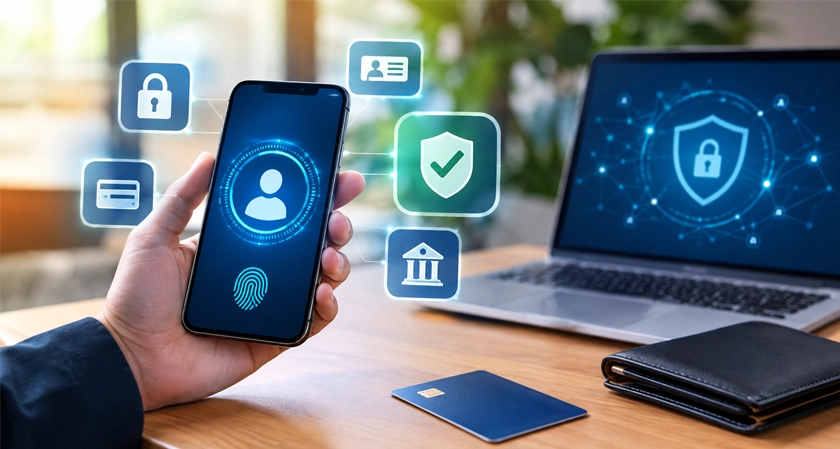
Not long ago, opening any digital financial account meant handing over a stack of personal documents and waiting for someone to verify them. That friction felt normal. Businesses treated identity checks as the price of admission, and consumers shrugged and complied. But a quiet shift has been building across the fintech landscape, the same one that thesiliconreview.com readers track through stories on cybersecurity, data privacy, and cryptocurrency. A new generation of users has started asking a sharper question: why should routine access require surrendering so much personal data? That question has fueled the rise of privacy-first digital finance, where minimal disclosure is the default rather than the exception.
Nowhere is this trend more visible than in the world of anonymous online entertainment built on digital currency. For readers curious about how the no-KYC model works in practice, https://legitcryptobtccasinos.com compares and ranks cryptocurrency casinos that welcome US players and function smoothly with VPN access, with a clear focus on anonymous play, payout speed, and supported coins like Bitcoin, Ethereum, and USDT. The resource walks through individual site reviews and breaks down how bonuses, cashback structures, and offshore licensing actually operate, alongside notes on responsible play. For someone weighing whether privacy-first entertainment fits their comfort level, that kind of side-by-side breakdown turns an abstract fintech trend into concrete, usable detail.
Then: Identity Was the Gatekeeper
Rewind a decade and the internet ran on a simple bargain. Want to use a service? Prove who you are, repeatedly. Banks demanded it. Early payment apps demanded it. Even loyalty programs wanted a phone number and an email address before offering anything of value. The logic made sense to institutions worried about fraud, but it created enormous pools of sensitive data sitting in corporate servers, waiting to be breached.
And breached they were. Wave after wave of high-profile data leaks taught consumers a hard lesson: every piece of information handed over becomes a liability the moment a company's defenses fail. Business executives who once viewed data collection as an asset began to see it as a growing risk on the balance sheet. The cost of storing and protecting personal records climbed, and so did the reputational damage when things went wrong.
Now: Minimal Disclosure Becomes a Feature
The current moment looks strikingly different. Privacy is no longer a niche demand from cryptography enthusiasts; it has become a mainstream product feature. Companies now market how little they collect. Messaging apps promote end-to-end encryption in television commercials. Web browsers compete on tracker blocking. And in the crypto space, the whole point of a blockchain wallet is that it works without a name attached.
This flips the old model on its head. Instead of identity acting as the gate, the transaction itself carries just enough cryptographic proof to function. Academic work has kept pace with the shift. A recent survey offers a helpful guide to anonymous payments, mapping out how modern designs balance anonymity, confidentiality, and the ability to audit a system when needed. That balance is the crux of the whole conversation: how do you build something private that still holds up to scrutiny?
The Technology Doing the Heavy Lifting
Several innovations converged to make privacy-first finance practical rather than theoretical. Stablecoins gave people a way to hold value without volatility, so a wallet balance in USDT behaves much like a dollar. Layer-two networks slashed transaction fees and settlement times, making small everyday transfers viable. And zero-knowledge proofs, once a chalkboard concept, now let a system verify that a condition is true without revealing the underlying data.
These pieces matter because they answer the old objection that anonymity and accountability can't coexist. The research community has been busy cataloging exactly how this works. A thorough overview of privacy tools in modern finance shows how techniques like ring signatures, mixers, and confidential transactions have moved from experimental papers into shipping code. For the entrepreneurs and investors who read industry news, this is the engine room of an entire market segment.
Why Anonymous Crypto Entertainment Sits at the Center
Digital entertainment powered by cryptocurrency has become the clearest proving ground for these ideas. A user in the US who wants to try a Bitcoin-based gaming site can fund an account from a wallet, play, and cash out in the same coin, often without ever typing a legal name. VPN compatibility rounds out the experience, letting people control which network they connect through. The appeal is obvious to anyone who has grown tired of forms: less data shared means less data exposed.
Offshore operators embraced this model early, treating anonymity and coin flexibility as selling points rather than compromises. Bonuses and cashback structures got layered on top to compete for attention. It is a vivid case study in how a fintech trend finds a consumer home. The same privacy engineering that appeals to a cautious enterprise CIO also appeals to an individual who simply wants entertainment without a paper trail.
What This Signals for the Broader Market
The direction of travel is hard to miss. Consumers increasingly treat personal data as something to guard, not give away freely, and businesses that respect that instinct earn trust. Privacy-first design is spreading from crypto into mainstream banking apps, health tech, and beyond.
For business leaders watching from the sidelines, the lesson is practical. The demand for anonymity, speed, and control isn't a fringe preference anymore. It is reshaping product roadmaps across finance and entertainment alike. The companies that internalize this early, building systems that collect less while still functioning reliably, are the ones positioned to lead the next chapter of digital commerce. What started as a reaction to broken trust has matured into a genuine competitive edge.













Comments