>>
Industry>>
Real estate>>
Laminate Flooring: The Complet...Laminate Flooring: The Complete Guide to Buying and Caring for It
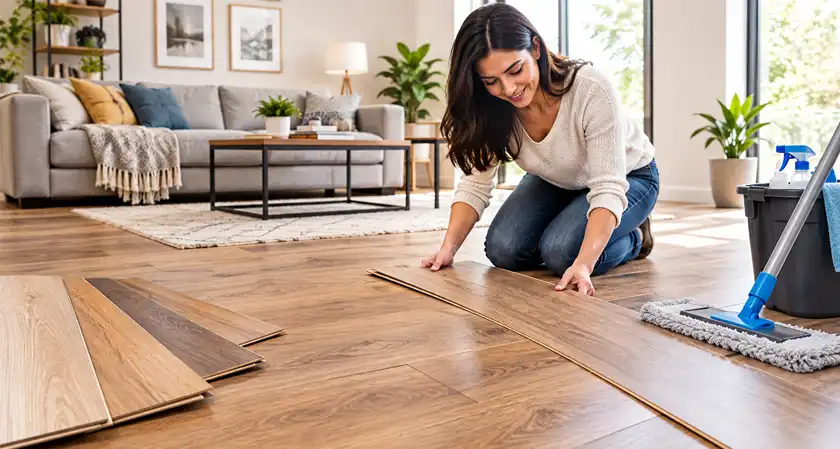
Laminate flooring gives you the look of real wood or stone without the high price. This guide covers how it is made and how well it holds up. You will learn how to pick the right type for each room. You will also learn how to clean it so it lasts for years. By the end, you will know if this flooring fits your next project and your budget.
This guide relies on manufacturer testing standards, building industry norms, and common advice from working flooring installers. Every cost range and care step reflects real product data, not guesswork.
What Is Laminate Flooring?
This flooring type is not one solid material. It is built from four layers pressed together. The top layer protects against scratches and fading. Below that sits a photo layer that creates the wood or stone look. A dense fiberboard core gives the plank its strength. A moisture resistant backing sits on the bottom.
This layered build lets the product copy the look of oak, walnut, or natural stone closely. Some planks have a smooth finish. Others use an embossed texture that feels like real wood grain under bare feet.
Look for the NALFA seal when you shop for planks. NALFA is an independent group that tests flooring products. It checks for durability, moisture resistance, and safety. A NALFA seal means the plank passed real wear and impact testing. It is not just a marketing claim on the box.
Durability is graded using an AC rating system. AC1 suits light use rooms like guest bedrooms. AC5 is built for busy commercial spaces such as offices and stores. Most homes do well with AC3 or AC4. Pick your grade based on foot traffic, kids, and pets.
Laminate Flooring Costs and Long Term Value
Price is where this flooring option often wins. Basic planks around 7 millimeters thick start near one to two dollars per square foot. Mid range planks with thicker cores run two to four dollars per square foot. Premium waterproof planks can reach four to six dollars per square foot. Installation labor usually adds two to five dollars per square foot on top of material costs.
For homeowners, this range makes budgeting simple. You can spend more in a busy hallway. You can spend less in a quiet guest room. For landlords and property investors, this flexibility matters even more. A rental unit does not always need the same grade as a family living room.
Picking the right grade upfront saves money later. Not all Laminate Flooring comes with the same finish, price tier, or water rating, and mixing these up is an easy way to overpay. Compare a few options side by side before you order samples. This helps you avoid paying for durability you do not need.
How It Compares to Hardwood, Vinyl, and Tile
Solid hardwood offers a classic look but costs far more per square foot. It also reacts to humidity, which can cause boards to warp or gap over time. Refinishing hardwood is possible, but it takes real skill and time.
Vinyl flooring resists water better than most laminate. This makes it a strong pick for bathrooms and laundry rooms. However, vinyl often feels softer underfoot. It can also dent under heavy furniture legs over the years.
Ceramic tile handles water and heat well, and it lasts a long time. Tile feels cold underfoot, though, and grout lines need regular cleaning. Tile is also harder to install without a professional.
Laminate sits in a strong middle spot among these choices. It looks close to real hardwood but costs much less. It resists dents better than most vinyl. Newer waterproof laminate lines are closing the gap with tile and vinyl in wet rooms too.
Picking the Right Type for Each Room
Not every room needs the same product. Matching the type to the space avoids wasted money and early wear.
Kitchens and bathrooms need waterproof laminate. These rooms see spills, condensation, and the occasional plumbing leak. Standard water resistant planks can handle light splashes. They are not built to sit under standing water for long.
Hallways and entryways take the heaviest foot traffic in most homes. Choose AC3 or higher in these spaces. Add a felt backed mat at each entry point. This catches grit before it can scratch the surface.
Bedrooms and formal living rooms see lighter daily use. Standard AC2 or AC3 planks work well here. This is a smart place to save money, since these rooms face less wear.
Local climate plays a real role in your choice too. Homes in humid coastal regions should watch indoor moisture levels closely. Excess humidity can affect the fiberboard core over time. Homes in drier inland climates face less of this risk. Even so, water should never be left sitting on any laminate surface.
Regional and Seasonal Care Tips
Your local weather affects how this flooring behaves over the year. In hot, humid climates near the coast, air conditioning helps control moisture in the air. Run a dehumidifier in rooms that feel damp, especially during summer months.
In dry, cold regions, indoor heat can pull moisture out of the air fast. This can cause small gaps to form between planks in winter. A simple humidifier during the coldest months helps keep the core stable.
Homes in mixed climates, with hot summers and cold winters, see the widest swings. Checking humidity levels twice a year with a basic hygrometer is a smart habit. Small adjustments in each season protect your floor for the long run.
Installation Basics Worth Knowing
Most modern planks use a click lock system. Panels snap together without glue or nails, which makes this a common do it yourself project. A flat, dry subfloor matters more than most people expect. Check for dips or high spots with a straightedge before you start.
Fix low spots with a patching compound. Sand down any high spots you find. Skipping this step is one of the top reasons floors buckle or gap later. Leave a small gap near the walls too. This gives the planks room to expand and contract with the seasons.
Glue down and floating installation methods also exist for certain plank types. A flooring professional can advise which method suits your subfloor and room size best.
Keeping Your Floors in Top Condition
This flooring is tough, but it is not indestructible. Water is the main threat, not foot traffic. The fiberboard core can swell if moisture sits too long at the seams. Once that happens, the damage is permanent. The affected planks usually need full replacement.
The fix is simple and takes little time each week. Sweep or vacuum often using a hard floor setting. Avoid a beater brush, since it can scratch the surface. Mop only with a barely damp microfiber mop. Use a pH neutral cleaner made for this type of floor. Dry the floor right after mopping instead of letting it air dry.
Skip steam mops entirely, since they push moisture straight into the seams. Avoid bleach, ammonia, and oil based cleaners too. These can strip the protective wear layer over time. Keep indoor humidity between 35 and 55 percent. This range protects the core from swelling or shrinking too much.
Most of the seam damage described above comes down to one thing, not knowing the right way to care for Laminate Flooring from day one. Once that habit is in place, a few minutes each week is all it takes to protect your investment for years to come.
What About Air Quality and Safety?
Some buyers worry about chemicals in composite wood products. This is a fair question with a clear answer. The Environmental Protection Agency regulates formaldehyde emissions from fiberboard cores. The California Air Resources Board sets similar rules. Products sold in the United States must meet these limits by law.
Choosing a plank with the NALFA seal or a CARB Phase 2 label adds another layer of confidence. These labels mean the product was tested by an outside group, not just the manufacturer. If indoor air quality matters to your household, ask for this documentation before you buy.
Good ventilation during and right after installation also helps. Open windows for a day or two once the new floor is down. This lets any remaining odor from adhesives or packaging clear out faster.
Popular Brands and What They Offer
Several major brands lead the market, and each has a different focus. Pergo helped popularize this flooring style decades ago and still offers a wide range of finishes. Shaw and Mohawk are large U.S. flooring makers with deep product lines, from budget planks to premium waterproof options. Armstrong is known for a strong warranty program on select lines.
Prices and specs change often, so always check the current AC rating and warranty terms. Do this for the exact product you plan to buy. A brand name alone does not guarantee the right fit for your home. The specific plank's rating and finish matter more than the logo on the box.
Frequently Asked Questions
Is Laminate Flooring Waterproof?
Most standard planks are water resistant, not fully waterproof. They can handle small spills wiped up quickly. Fully waterproof options exist and work well in kitchens and bathrooms. Always check the product label before buying for a wet area.
How Long Does It Last?
Quality planks with the right AC rating can last 15 to 25 years. This depends on proper care and normal foot traffic. Cheap, thin planks in high traffic areas may wear out much sooner.
Can You Install It Over Old Flooring?
In many cases, yes. Click lock planks can often go over tile or vinyl. The subfloor must be flat and dry first. Always check for dips or high spots before you begin. Planks need a level base to lock together properly.
Does It Increase Home Value?
New, well installed flooring helps buyer perception during a sale. It will not add as much value as real hardwood. Still, it offers a clean, updated look for a much lower cost. This often pays off well for sellers working with a tight budget.
Is Laminate Safe for Homes With Pets?
Yes, in most cases. Scratch resistant AC4 planks hold up well against claws. Waterproof options also help with accidents that are not cleaned up right away. Trim your pet's nails regularly to reduce surface scratches over time.
What Underlayment Does Laminate Need?
Most laminate needs a thin foam underlayment beneath it. This layer cushions footsteps and reduces noise between floors. Some planks come with underlayment already attached, which saves a separate step during installation.
Conclusion
Flooring is just one piece of a much bigger Home Improvement project, but it is one of the pieces people notice first. Choosing the right floor takes more thought than most people expect. Laminate flooring gives homeowners and investors a smart middle ground between price and performance. The key is matching the AC rating and water resistance to each room. Stick to a simple cleaning routine once it is installed. Get those two steps right, and this floor can look great for well over a decade.




















Comments