>>
Industry>>
Cryptocurrency>>
When Cartoon Trolls and Zombie...When Cartoon Trolls and Zombies Enter Web3
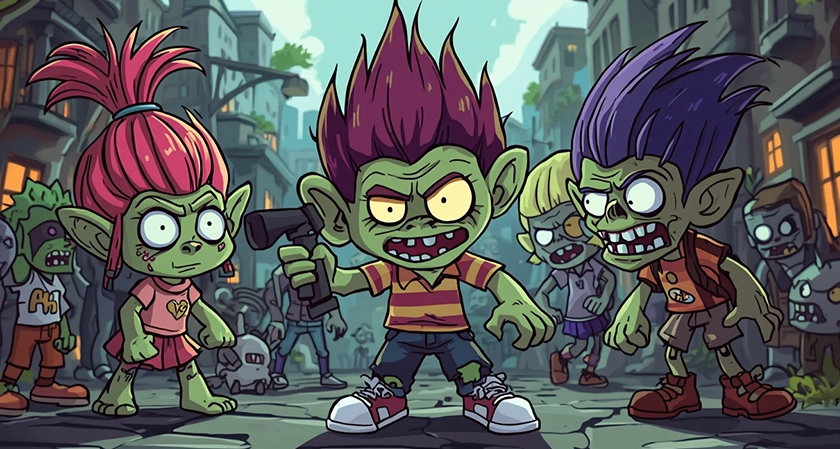
Picture a longtime fan of AMC's The Walking Dead scrolling through a streaming queue one evening, then pausing on something new: a digital collectible tied to the show, one that supposedly lives on a blockchain and travels with its owner into a virtual world. A few years ago, that pitch would have sounded like science fiction. Today, it sits at the center of a genuine shift in how entertainment companies think about their intellectual property. Big franchises—from DreamWorks' Trolls to sprawling zombie sagas—are no longer content to sell merchandise in a store. They want a foothold in Web3, where a character can be owned, traded, and used inside a game.
That ambition is exactly what makes projects like VOX worth a closer look. Sold through bitcoin online casinos, VOX are limited-edition ERC-721 avatars from Gala Games and Gala Labs, cheekily branded as "Avatars that DeFi." Buyers acquire a VOX, reveal it, and collect it, then claim a VOX Soul—one of twelve personality types tied to the moment of minting—that shapes how the avatar performs inside VOX Odyssey and the wider VOXverse metaverse. The appeal for entertainment brands is obvious: rarity, digital ownership, and DeFi utility all bundled into a character a fan already loves. When VOX runs collaborations with DreamWorks Trolls and AMC's Walking Dead, it turns passive viewers into holders of something scarce and functional. For readers tracking where media and blockchain intersect, it's a concrete example of an abstract trend.
Why Studios Stopped Ignoring the Blockchain
For decades, licensing worked in predictable lanes. A hit show spun off action figures, T-shirts, and the occasional mobile game. The studio collected royalties, the fan got an object on a shelf, and that was the extent of the relationship. Web3 rewrites that arrangement. A blockchain-based avatar can carry provable scarcity, resell on a secondary market, and unlock experiences the studio controls—all while generating fresh revenue long after a season finale airs.
Entertainment executives noticed the numbers first. Fan bases that once spent on one-time purchases were suddenly willing to invest in digital assets they could hold, flip, or flaunt. The logic mirrors what happened in fintech and enterprise tech: once ownership and value can be recorded on a distributed ledger, entirely new business models open up. Early reporting captured just how far studios were willing to push the idea, describing how NFTs would roam the metaverse, giving fans characters and items designed to function inside interactive virtual spaces rather than just sit in a wallet. That's why the conversation moved from novelty to strategy inside boardrooms across Hollywood and beyond.
The Walking Dead Shows How It's Done
Few franchises illustrate the pivot better than The Walking Dead. AMC partnered with the studio Orange Comet to bring its universe on-chain, and the details were surprisingly deliberate. When the pricing set by AMC rolled out for a season-tied collectible drop, it signaled that a major network viewed digital assets as a real product line, not a marketing gimmick. Tiered pricing, curated artwork, and scarcity mechanics all pointed to a maturing approach.
The ambition ran deeper than static images. That distinction matters. A collectible that only exists to be looked at has a short shelf life. One that does something—grants access, powers gameplay, or evolves over time—keeps fans engaged and gives the underlying property a reason to persist. VOX Odyssey and the VOXverse lean hard into that second model, and it's why brand tie-ins feel less like stunts and more like extensions of the shows themselves.
Trolls, Souls, and the Personality Play
DreamWorks' Trolls brings a very different flavor to the same idea. Where zombies trade on grit and survival, the Trolls universe runs on color, music, and personality—which happens to align neatly with VOX's twelve-Soul system. Tying an avatar's traits to mint timing gives collectors a reason to care about the exact moment they buy in, and it hands a family-friendly franchise a mechanic that feels playful rather than speculative.
This is the quiet genius of the personality-archetype approach. Instead of asking a fan to value a character on rarity alone, it invites them to identify with it. A holder isn't just buying a Troll-themed avatar; they're claiming a Soul that reflects a temperament and shapes how their character behaves in the game. That emotional hook is precisely what studios chase, and it's a big reason the entertainment-Web3 pairing has legs.
Hollywood's New Technical Partners
None of this happens without specialized companies bridging two very different industries. Studios know storytelling; they don't always know smart contracts, wallet design, or DeFi integration. That gap has spawned a wave of firms whose entire business is connecting screens to chains. Coverage of NFT firms working with Hollywood mapped out an emerging ecosystem where producers, creatives, and blockchain engineers collaborate to translate beloved IP into functional digital assets.
Gala's role sits squarely in that space. By handling the blockchain gaming infrastructure, the play-to-earn mechanics, and the metaverse environment, it lets a brand like DreamWorks or AMC show up without building a crypto operation from scratch. The studio supplies the characters and the fan love; the technical partner supplies the rails.
What This Signals for the Business of Entertainment
Step back, and a clear pattern emerges. Entertainment IP is migrating toward digital ownership because the incentives finally line up—for studios chasing recurring revenue, for technical firms building the plumbing, and for fans who want more than a poster. VOX offers a compact case study in how that works: scarce avatars, personality-driven utility, and marquee partnerships stitched into a single collectible experience.
For business and technology watchers, the takeaway is less about any one franchise and more about the direction of travel. When a cartoon Troll and a wandering zombie can both find a home on the same blockchain, the line between watching a story and owning a piece of it has genuinely started to blur.








Comments