>>
Industry>>
Real estate>>
Why Commercial Property Tax Ap...Why Commercial Property Tax Appeals Behave Nothing Like Residential Ones
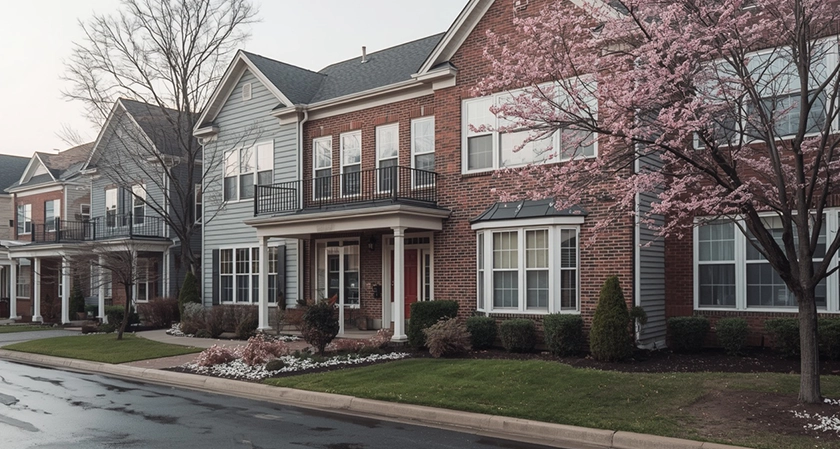
Two owners in the same Texas county got their notices the same week. One owns a fourplex on a busy corner. The other owns a single-family rental two streets over. The fourplex owner walked into an informal hearing with a folder of rent rolls and comps, talked for fifteen minutes, and walked out with a six-figure cut to his assessed value. The rental owner filed the same protest, showed up with the same kind of folder, and got nothing. Her value stayed put.
Same county. Same deadline. Same pile of paper. Different outcome, because commercial and residential appeals are not variations of one process. They are two different games that happen to share a form.
Here is what separates them, where owners get the math wrong, and how to figure out which one you are actually playing before you file.
The two clocks nobody tells you about
I call this the Two Clock Model, and it explains most of the confusion I see from owners. Every Texas property runs on a statutory clock and an income clock at the same time, and the two do not tick at the same rate.
The statutory clock belongs to your county appraisal district. It starts when the notice of appraised value goes out and it ends at the protest deadline printed on that notice. Miss it, and you have usually lost your shot at a hearing for the year. This clock is identical whether you own a house or a warehouse, and it is unforgiving.
The income clock is yours. It measures how many months of reduced taxes it takes to pay back the cost of fighting. On a house, that payback might stretch out over years. On a strip center with a seven-figure assessment, a single successful protest can return the effort many times over inside one tax year.
Owners who only watch the statutory clock file in a panic and show up unprepared. Owners who only watch the income clock file late and get nothing. You have to track both, and if you can only track one, track the deadline first.
What counts as evidence when real money is on the line
Residential protests lean on the sales comparison approach. Three similar houses sold nearby in the last year, adjusted for size and condition, and you have a case. It is a well worn path, and appraisal districts expect it.
Commercial protests draw on all three standard approaches to value, and the district will test whichever one you bring. Income capitalization matters most for apartments, offices, and retail. Cost approach shows up for industrial and special use properties. Sales comparison still applies, but the comps have to be genuinely comparable, meaning similar age, similar lease structure, and similar location quality. A 1980s office building is not a comp for a new medical tower just because both are offices.
This is where most do-it-yourself commercial protests fall apart. You can pull residential comps off the county's own site. You cannot pull net operating income, vacancy trends, and market cap rates off a public portal. You need the rent roll, the trailing operating statements, and a defensible capitalization rate, and you need them organized the way a hearing officer expects to see them.
According to the Texas Comptroller of Public Accounts, property owners have the right to protest before the appraisal review board and the burden of proof generally sits with the protesting party in most disputes. That single sentence is why preparation decides commercial appeals.
Income approach, cost approach, or both?
My honest position: if your property produces rent, lead with income. Every time. The income approach ties value to what the building actually earns, and no appraisal district wants to defend a number that ignores the rent roll sitting in front of it.
Cost approach is the fallback for properties that do not trade on income, like a specialized manufacturing facility or an owner-occupied plant. It is also the approach owners misuse most, because they confuse replacement cost with market value. A building can cost a fortune to replace and still be worth far less than that on the open market.
Here is the part that surprises owners. The strongest commercial protests often argue unequal appraisal instead of market value. That means you are not claiming the district got your value wrong in absolute terms. You are claiming your property is valued higher than comparable properties the district valued itself. It is a different argument, and in many counties it is the easier one to win.
A three-step prep routine you can actually run
Before you file anything, work through this in order. It takes an afternoon and saves you from wasting your hearing slot.
- Pull your notice and write the protest deadline on your calendar in ink. Everything else waits behind that date.
- Decide your argument before you decide your evidence. Market value, unequal appraisal, or a factual error like wrong square footage. Pick one primary and one backup.
- Build a one-page summary. Assessed value, your proposed value, and the three facts that get you there. Hearing officers appreciate brevity more than volume.
Then do the thing almost nobody does. Request the district's evidence packet before the hearing and read it. You will often spot the comparable sales the district plans to cite, and you can prepare a response instead of improvising one at the table.
One more note on paperwork. Texas lawmakers have spent the last several legislative sessions tinkering with the property tax system, and the current framework lives on the state's official site at Texas.gov, which is worth a skim before you assume last year's process still applies.
The Friday afternoon hearing that changed how I think about this
I once sat in on an informal hearing for a mid-size retail center. The owner showed up with a ninety-page binder and no summary page. The appraiser flipped through it, found two comparable sales, and asked a question about parking ratios that the owner could not answer because he had never walked the comps.
Twenty minutes. Value unchanged.
The owner across the hall that same afternoon had twelve pages, all of them rent rolls and a cap rate justification. He had driven past every comp he cited. He knew which ones had vacancies and which ones had been renovated. That hearing took eleven minutes and ended in a reduction.
The difference was not effort. Both owners worked hard. One prepared for a hearing. The other prepared a document.
When to bring in someone who does this daily
You can absolutely win a residential protest on your own. The process is designed for it, the evidence is public, and the stakes are manageable. Plenty of homeowners do it every year without help.
Commercial is a different calculation. When your assessment runs into the millions and your building's value depends on income data only you possess, the cost of a botched hearing is not a few hundred dollars. It compounds, because districts often anchor next year's value to this year's outcome. Working with experienced property tax consultants in texas owners trust is less about paperwork and more about making sure your rent roll gets translated into an argument the district cannot dismiss. That translation is the whole job.
If you own both a home and commercial property, resist the urge to treat them as one project. File them separately, with separate arguments and separate evidence. The residential case needs comps. The commercial case needs income. Mixing them weakens both.
And if you own property in more than one state, check whether business personal property returns are due somewhere you forgot. Multi-state obligations have a way of surfacing at the worst possible moment.
Census data from the U.S. Census Bureau shows Texas among the fastest-growing states in the country, which means appraisal districts are revaluing more property every cycle with the same staff. Busy districts make mistakes. Some of those mistakes are in your favor. Most are not.
Pull your notice today. Find the deadline. Write your one-page argument before you write anything else. Whether you file alone or hand it to a consultant, the owners who walk out with a reduction are the ones who knew which clock they were racing.













Comments