>>
Industry>>
Healthcare>>
Study Links Stethoscope Hygien...Study Links Stethoscope Hygiene Innovation to Elimination of Lethal Bloodstream Infections, Saving Patient Lives and Billions of Dollars
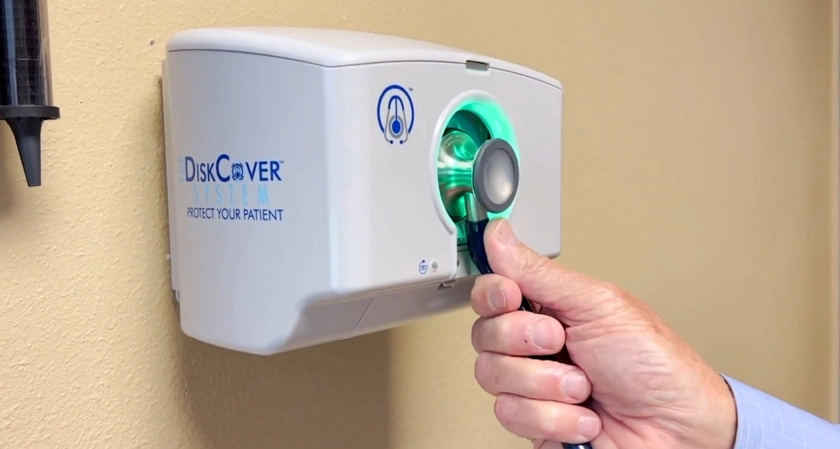
For decades, stethoscope hygiene has been recognized as an infection-control concern, but it has rarely received the same level of attention as hand hygiene, central-line care, catheter-site protection, and other established elements of intensive care infection-prevention protocols. That may now be changing. New peer-reviewed research published in the October 2026 issue of Critical Care Nurse reports that an ICU that incorporated touch-free, single-use aseptic stethoscope diaphragm covers alongside chlorhexidine gluconate (CHG)-impregnated central-catheter dressings experienced an 84% reduction in central line-associated bloodstream infection (CLABSI) rates. The finding is significant because the improvement was not limited to an initial decline. The investigators observed a marked and persistent reduction over a 36-month post-intervention period, with CLABSI rates reaching zero for extended periods. The study does not establish that the stethoscope barrier alone caused the reduction, because the aseptic barrier and CHG dressing intervention were introduced simultaneously, but it provides important new clinical evidence that stethoscope hygiene may deserve a much more prominent role in ICU infection-prevention strategies.
CLABSI Remains One of the Most Serious Challenges in Critical Care
Central line-associated bloodstream infections occur when a primary bloodstream infection develops in a patient with a central catheter and is not attributable to an infection at another site. For critically ill patients, the consequences can be severe, with CLABSIs associated with higher mortality, prolonged hospitalization, increased treatment requirements, and substantial additional healthcare costs. A 2024 meta-analysis of 16 studies found that CLABSI-associated acute mortality carried an odds ratio of 3.19 compared with uninfected controls, while hospitalization was extended by an average of more than 16 days. The new study estimates that as many as 60,400 annual primary bloodstream infections in U.S. hospitals are related to central venous catheters, at an estimated cost of approximately $48,000 per infection, suggesting a potential annual U.S. burden of about $1.85 billion. Critical Care Nurse
The complexity of CLABSI prevention is partly explained by the number of factors that can contribute to infection. A 2023 systematic review identified 38 potential risk factors, reinforcing why hospitals generally rely on bundles of complementary interventions rather than a single preventive measure. Existing CLABSI bundles can include hand-hygiene monitoring, central-line dressing protocols, disinfection of catheter access points, daily assessment of catheter necessity, staff education, infection-prevention rounds, and prompt removal of unnecessary lines. Yet one potentially important patient-contact surface has historically received less attention: the stethoscope diaphragm.
The Stethoscope as an Overlooked Infection-Control Interface
A stethoscope may appear to be a relatively simple diagnostic instrument, but its diaphragm is repeatedly placed directly against patients and can move between multiple examinations throughout a clinical shift. Previous research has demonstrated that stethoscopes can harbor numerous microorganisms and that the pathogens found on stethoscope diaphragms can resemble those found on healthcare workers' hands. This creates a potential transmission pathway, particularly in environments such as intensive care units where patients may have invasive devices that provide a route for microorganisms to enter the bloodstream.
Traditional stethoscope disinfection remains an important component of infection prevention, but the challenge is that cleaning a reusable diaphragm does not necessarily create an aseptic patient-contact surface every time the instrument is used. Studies have reported persistent contamination despite attempts at alcohol-based cleaning, while the effectiveness of routine disinfection also depends on whether clinicians consistently clean the device between patients, whether appropriate disinfectants are immediately available, and whether the product is used according to the required contact time. In contrast, a single-use aseptic diaphragm barrier does not depend on removing every microorganism from the reusable surface before the next examination. Instead, it physically separates the reusable diaphragm from the patient's skin.
A New ICU Study Connects Aseptic Stethoscope Barriers With CLABSI Reduction
The newly published quality-improvement project was conducted in an 18-bed tertiary-care ICU in the southeastern United States over a 48-month period from March 2021 through March 2025. Before the intervention, the unit already maintained a standard CLABSI prevention bundle that included hand-hygiene reminders and monitoring, central-line access disinfection, daily review of catheter necessity, prompt removal of unnecessary catheters, disposable stethoscopes for patients under isolation precautions, and ongoing monitoring of CLABSI events.
During the 12 months before the intervention, from March 2021 through March 2022, the ICU recorded 1,189 admissions and a mean CLABSI rate of 4.42 infections per 1,000 central-catheter days. Beginning March 1, 2022, investigators introduced two additional components to the existing prevention bundle: the installation of a touch-free DiskCover System from AseptiScope in every ICU room, replacing disposable stethoscopes, and the mandatory use of CHG-impregnated dressings for all central catheters, accompanied by standardized staff education and return demonstrations for catheter dressing changes.
The results were striking. During the following 36 months, the ICU recorded 4,037 admissions and a mean CLABSI rate of 0.70 infections per 1,000 central-catheter days, representing an absolute decrease of 3.72 infections per 1,000 central-catheter days and a relative reduction of 84% compared with the preceding year. The investigators also reported that the CLABSI rate fell to zero for extended periods after implementation of the new bundle. If a reduction of this magnitude were replicated nationally, the authors estimate that it could correspond to as many as 50,736 fewer CLABSI events annually in the United States and approximately $1.5 billion in potential annual healthcare cost savings.
Why the Stethoscope May Matter in a Central-Line Infection
The connection between a stethoscope and a bloodstream infection may not initially seem obvious because the diaphragm does not enter the bloodstream and does not directly interact with the central catheter. The potential pathway is indirect but clinically relevant. According to Frank Peacock, MD, Professor of Medicine and Emergency Physician at Baylor Medical Center in Houston, stethoscopes can pose a contamination risk when used near central-line insertion sites. He said, “As clinicians, we often use stethoscopes just a centimeter or two from the catheter insertion sites. Repeated examination at or near the central-line dressing of these vulnerable patients requires totally aseptic contact, and the disk cover barrier accomplishes this rapidly and consistently.” Earlier laboratory studies involving aseptic stethoscope barriers demonstrated that a contaminated diaphragm could be separated from the patient's skin through a disposable aseptic contact layer, providing the mechanistic basis for investigating whether the intervention could contribute to infection prevention in actual clinical environments.
The new study represents an important progression from laboratory evidence to clinical quality-improvement data. Previous research established that stethoscopes can become contaminated and that aseptic barriers can create a clean patient-contact surface. The ICU project then incorporated that approach into an existing CLABSI prevention bundle and observed a substantial reduction in infection rates that persisted for three years. The finding therefore does not prove that the stethoscope barrier independently prevents CLABSI, but it does provide evidence that eliminating this potential source of patient-contact contamination may have value when combined with other established infection-prevention measures.
The 84% Finding Comes With an Important Scientific Caveat
The magnitude of the reduction makes the study noteworthy, but the methodology is equally important when interpreting the result. This was an observational quality-improvement project conducted in a single ICU rather than a randomized controlled trial, and two interventions were introduced simultaneously. Because the CHG-impregnated dressing initiative and the aseptic stethoscope barrier were implemented together, the investigators could not determine whether one intervention had a dominant effect or whether the observed improvement resulted from their combined impact.
That limitation does not diminish the significance of the finding, but it does define what can responsibly be claimed. The evidence supports an association between implementation of the combined intervention and an 84% reduction in CLABSI rates; it does not establish that DiskCover alone produced an 84% reduction. The authors themselves call for further prospective investigation in additional healthcare environments. That distinction will be particularly important as infection-prevention professionals evaluate whether the approach should become part of broader institutional protocols.
Adoption and Workflow Could Determine Whether the Approach Scales
One of the study's notable findings was the positive response from ICU clinicians. Forty-five user acceptance surveys were distributed to physicians, nurses, and respiratory therapists, with 28 returned. All respondents reported that the barrier was easy to use, attach, and remove, while 81% preferred using their personal stethoscope with the barrier instead of a disposable stethoscope. Ninety-six percent said they were more likely to comply with isolation guidelines, and the same percentage reported that the sound quality with the barrier was superior to that of the disposable stethoscope.
These implementation findings matter because infection prevention is ultimately dependent on sustained behavior. A theoretically effective intervention can have limited value if it requires excessive time, interrupts clinical workflow, or is difficult for staff to adopt consistently. In this ICU, the touch-free dispenser was installed directly in each of the 18 patient rooms, placing the aseptic barrier at the point where it was needed rather than requiring clinicians to locate additional supplies elsewhere. Author/Investigator Naomi Ragsdale, RN, a critical care nurse turned infection preventionist who led the quality initiative at the VA Memphis in Tennessee, highlighted the practicality of the cover. She said, “It wasn’t just any cover. It is applied touch-free, easy to use, and it didn’t compromise sound quality. We just thought, now this is something we can work with.”
From Cleaning a Stethoscope to Engineering a Clean Contact Point
The broader lesson from the findings may be larger than the stethoscope itself. Traditional infection-control practice often asks healthcare workers to remove contamination from reusable equipment after it has been used. Barrier-based approaches introduce a different strategy: rather than relying exclusively on decontamination, they create a fresh interface between the reusable device and the next patient.
That distinction is especially relevant for the stethoscope because the instrument is both highly reusable and frequently placed directly against patients. The goal is not to make the diagnostic instrument disposable, which could introduce cost, environmental, workflow, or diagnostic concerns. Instead, the approach makes the patient-contact surface disposable while allowing clinicians to continue using a familiar reusable stethoscope.
Kathleen Vollman, Nationally Recognized Critical Care Clinical Nurse Specialist/Consultant, highlighted the importance of practical and scalable solutions for infection prevention in healthcare. She said, “The finding in the study in Critical Care Nurse reinforces what healthcare leaders have sought: a practical, scalable solution that supports clinician workflow while advancing infection prevention. Standardized stethoscope aseptic barriers represent a significant step forward in protecting patients and reducing healthcare-associated infections.” What the study does show is that incorporating aseptic stethoscope hygiene and CHG-impregnated dressings into an existing ICU bundle was associated with an 84% reduction in CLABSI rates and a sustained period of exceptionally low infection incidence.

A New Question for ICU Infection Prevention
The significance of the findings ultimately comes down to a simple question: If a stethoscope can carry pathogens between patients, should its patient-contact surface be treated as another infection-prevention priority in the ICU?
The new peer-reviewed evidence makes that question considerably harder to dismiss. The study connects a previously overlooked aspect of equipment hygiene with one of the most consequential infection-control challenges in critical care, while also demonstrating that the intervention can be incorporated into clinical workflow with strong staff acceptance.
More research will be needed to determine whether the findings can be replicated across hospitals, whether the stethoscope intervention has an independent effect, and how the strategy performs in other high-risk populations such as oncology, transplant, and other settings where vulnerable patients undergo frequent examinations. For now, however, the 84% reduction reported in this ICU represents a significant new data point in the evolution of infection prevention.
The stethoscope has long been regarded primarily as a diagnostic tool. This new evidence suggests that it may also need to be viewed as an infection-control interface. If future studies confirm these findings, stethoscope hygiene could move from a routine cleaning recommendation to a more deliberate component of the clinical strategies designed to protect critically ill patients from preventable infection.













Comments