>>
Industry>>
Transportation>>
U.S. Air Travel Hits Turbulenc...U.S. Air Travel Hits Turbulence but Soars toward Smarter Skies: USDOT’s 2024 Report Reveals Progress
The Silicon Review
17 March, 2025
Author:
The Silicon Review Team
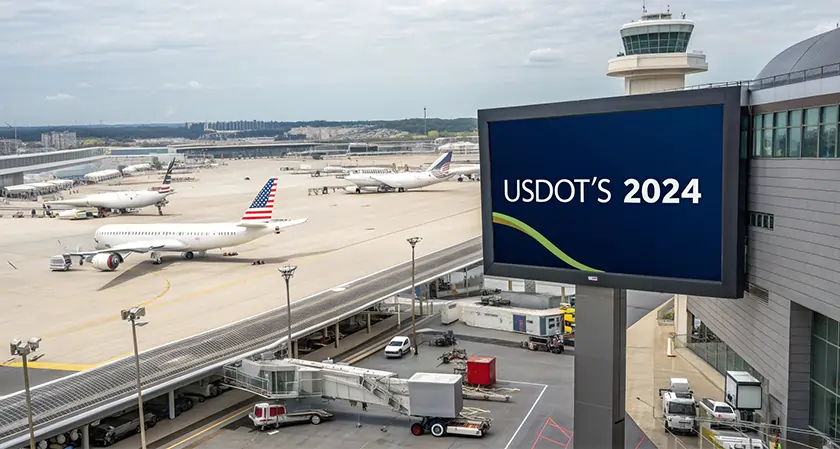
The USDOT’s 2024 Air Travel Consumer Report shows airlines are flying smoother with better on-time rates and fewer lost bags, but passenger complaints signal a need for a customer service reboot.
While airlines celebrated smoother operations in 2024, the report revealed a stark reality: Travelers’ patience is wearing thin. Passenger grievances jumped 14% year-over-year, with many voicing anger over tangled refund processes, last-minute cancellations with little explanation, and hours-long waits at understaffed check-in counters. The USDOT singled out Chicago O’Hare, Atlanta, and New York’s JFK as recurring trouble zones—airports where outdated air traffic systems and staffing gaps collided with record passenger volumes, causing ripple-effect delays. “We’re seeing a disconnect between operational metrics and human experiences,” said travel advocate Clara Ruiz of Flyers Rights, a nonprofit watchdog group. “Airlines are hitting technical targets but failing passengers when things go sideways.”
The FAA has earmarked $1.2 billion to modernize radar systems and expand control tower staffing at these hubs by late 2025, a move experts say could trim delays by up to 20%. Meanwhile, carriers like American and United are testing AI-powered refund chatbots and “flexible rebooking” guarantees to curb complaints. Not all trends were gloomy: Involuntary denied boardings fell 8% as airlines leaned on predictive analytics to match capacity with demand. Southwest, for instance, slashed overbooking by 20% using passenger no-show algorithms. “Airlines are learning from past mistakes,” said aviation analyst Liam Carter. “Now they need to double down on empathy.”
To bridge the trust gap, regulators are pushing for a “Passenger Bill of Rights 2.0”—a draft proposal requiring real-time refund processing and mandatory compensation for delays exceeding three hours. Carriers like United and JetBlue are already testing AI chatbots to resolve disputes faster, while Delta plans to hire 5,000 new customer service agents by 2025. The report coincides with the FAA’s $3 billion “NextGen Airports” initiative, which will fund runway expansions and AI-powered traffic tools. “This isn’t about pointing fingers—it’s about building a system that works for everyone,” Hernandez added.