>>
Industry>>
Management consulting>>
Why the Most Sophisticated Tec...Why the Most Sophisticated Technology in Asia Pacific Means Nothing Without the Right Conversation First
- Sashindra Suresh
Across the Asia Pacific, billions of dollars in enterprise technology investments fail to deliver their intended returns every year. The platforms are sophisticated, the vendors are credible, and the business cases are compelling on paper. What breaks down, consistently and expensively, is the conversation that should have happened before any of it was purchased.
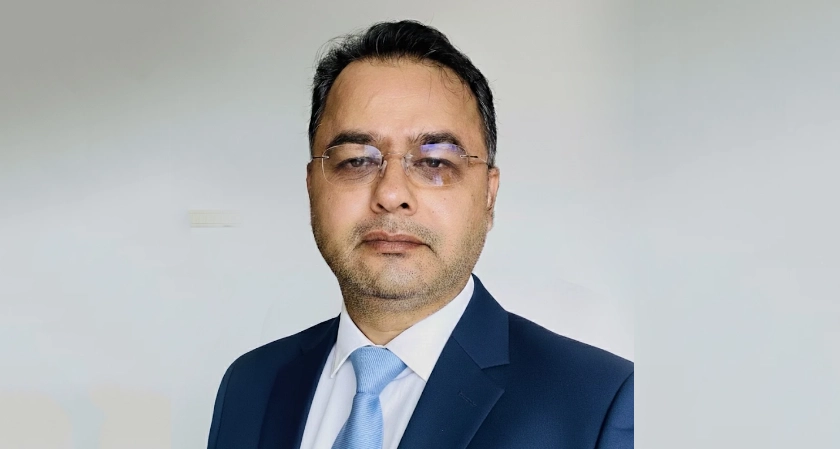
Rahul Chhibber has spent more than 25 years getting that conversation right. "Every organization I've worked with has a problem they know exists and can't quite name," he says. "My job is to keep asking questions until they can name it. Once they can, the rest gets easier." Widely regarded across Asia Pacific as a highly sought-after expert in enterprise technology commercialization, his entire body of work is built around that discipline.
That capacity to surface what is hidden, frame it in terms that compel action, and build the commercial and human infrastructure to deliver against it is what has made Rahul one of the most sought-after technology leaders in the region.
The Question Before the Solution
The methodology Rahul developed over years of working with clients across finance, manufacturing, pharmaceuticals, and logistics begins with a principle that sounds straightforward and, in practice, is genuinely difficult to hold: the technology comes last.
"Most technology engagements start in the wrong place," he explains. "When the vendor arrives with a solution, they spend the meeting explaining the features. The client listens, nods, but then they don’t buy, because nothing in that conversation is connected to the problem of keeping them up at night.”
Rahul adds: “I've never sold technology. What I've sold is a resolution to a problem the client already had, using technology as the means."
The structured expression of his philosophy is the Account Workshop, a client engagement methodology Rahul developed during his Oracle years and later institutionalized at Siemens Digital Industry Software, where he served as Head of Sales for Cloud Business in Asia Pacific from 2019 to 2022.
The process brings together stakeholders from across a client organization, engineering, operations, finance, and leadership, for a focused half-day session designed not to present a solution but to excavate the problem.
Rahul outlines the process: "You bring them into the room and you ask questions," Rahul says. "Not leading questions, not questions designed to point them toward your product.
‘Instead, you are focused on asking real questions about where their processes break down, where people are wasting time on things machines should handle. You also identify the gap between what they produce today and what the business needs tomorrow.
“You look at what is costing them money. By the time you walk out, you have a map. And that map tells you exactly what you're solving and what solving it is worth."
What happened next with the Account Workshop is telling and a testament to the system's unique features. It didn't get formally rolled out. And it didn't come with a memo from the head office.
However, teams at Siemens who saw it in action started using it themselves because it consistently produced results that more conventional approaches didn't.
Rahul is proud to admit: “It worked in manufacturing. It worked in financial services. It worked in Seoul, Jakarta, and Tokyo. Eventually, it became embedded in how the organization approached client engagement across its international operations, a methodology one person developed in the field, adopted globally because it worked.”
Rajiv Ghatikar, who served as Vice President and Head of Portfolio Development for Asia Pacific at Siemens Digital Industry Software, observed how Rahul's approach took hold and spread.
He recalls what distinguished the methodology was its effectiveness in individual engagements and its architectural completeness: “Rahul independently developed a comprehensive, repeatable framework for cloud sales that covered the full engagement lifecycle," Ghatikar says.
"This structured our customer discovery, and standardized questioning frameworks, cloud architecture, and solution design. Not only that, it was used for our proof-of-concept approaches, business case development with return-on-investment justification, and deal-closure strategies. It was the whole deal.
“The Account Workshop specifically calibrated how Chief Information Officers and Chief Digital Officers make decisions. That kind of end-to-end framework, built by one person and then adopted as a reference model across a global organization, is genuinely uncommon."
When Technology Transforms a Life, Not Just a Process
The clearest illustration of what the methodology produces in practice came during Rahul's time at Oracle India, where he held progressively senior roles from 2011 to 2019, ultimately serving as Director and Head of Cloud Business. Working with a major payment bank, he ran into a problem that was straightforward to describe and genuinely damaging to live with: customers applying for loans were waiting fifteen to twenty days for a decision.
"When you're waiting for a loan, those fifteen days are not an administrative inconvenience," Rahul says. "For many of those customers, that's the loan that allows them to handle an emergency, to start something new. The bank had a process problem, but the human cost was enormous."
The technical challenge involved three interlocking systems: loan origination, loan management, and loan collection, each running on separate infrastructure that wasn't built to talk to the others efficiently. Rahul worked with an independent software vendor holding approximately 80% of the market share among Indian banking clients at the time to architect a cloud-based solution that unified all three under a single platform. Loan processing time dropped from fifteen days to one.
"We didn't go to that bank with a cloud platform and ask if they wanted it," Rahul says. "We went with a number. We chose how to do the process in one day instead of fifteen. Then we showed them how many customers they could serve and how much their loan book could grow.”
Rahul adds: “We painted the picture of what it would feel like to be a customer of theirs rather than a competitor who still made you wait. The technology was the answer. The question had to come first."
The approach is an example of how Rahul's consultative methodology has had specific significance in the field: by building the human and business case before the technical one, he consistently converted what might have remained an IT procurement decision into a strategic transformation investment, changing not just how organizations bought technology but how they thought about what technology was for.
Implication Across Sixteen Cultures
Spend any time traveling across Asia Pacific for business, and something becomes clear quickly: the rules change. What reads as confident directness in Australia lands as rudeness in Japan. What passes for a decision in a meeting in Singapore is still several conversations away from a decision in Korea.
Rahul says: "In APAC, every hundred kilometers the language changes, the food changes, the culture changes.”
"What convinces a Chief Financial Officer in Seoul is not what convinces one in Jakarta. What signals credibility in Tokyo is not what signals it in Mumbai. If you're walking into those rooms with the same approach, you're not selling, you're performing."
Rahul doesn't work from a cultural playbook. He just asks: "I'll sit down with a client I've known for six months and ask them straight: out of five, how would you rate my technical understanding of your business? How useful am I actually being to you?"
He reveals it's the kind of questioning most people won't go near: "Most people won't ask it," Rahul says. "They're afraid of what comes back. I ask because that answer is the most useful thing a client can give me. It shows me exactly where I need to improve, and it shows them I'd rather know the truth than keep up appearances."
Japan required a different version of this. In Japan, professional courtesy runs deep enough that four months of respectful nods can mean almost nothing has actually landed. "I learned to name it," Rahul says.
"I will tell them directly: I've been presenting to you for four months, and I'd genuinely like to know what's resonated and what hasn't. If you ask that at the right moment, with enough trust built up, they'll tell you. That answer is the difference between a relationship going somewhere and one that politely goes nowhere."
An example of how Rahul's work has had a wider impact and influence in his field: the trust-building approach he developed across his APAC career isn't just something clients respond to. His organizations have noticed it, too, and have tried to bottle it.
People who have been in the room with him and a client describe the same thing: the conversation changes register: “Clients stop performing and start talking,” Rahul says.
“The meeting runs past its scheduled end because nobody wants to stop. That shift isn't personality. It's a repeatable method, and it's changed how the teams approach their own client work.”
Building the People Who Build the Business
Rahul's investment in the professionals around him is a thread that runs through every chapter of his career, not as a management obligation but as a personal conviction. At Oracle, where he hit quota attainment exceeding 250% for three consecutive financial years and earned induction into Oracle's Unlimited License Agreement Hall of Fame and the Top Asia Pacific Oracle Cloud Sales award for 2018, those results made him a fixture in the company's new hire induction programmes.
"People would ask me how I'd hit 250% three years running," Rahul says. "And the honest answer is it's not a secret. It's a discipline. You have to know the technology well enough to earn credibility with engineers.
“I truly believe you have to know the business well enough to earn credibility with executives. And you have to care enough about the client's actual situation to ask better questions than everyone else. That's what I taught."
Chiranjeev Singh has seen Rahul work across multiple organizations over the past decade. Singh currently serves as Vice President and Head of Customer Operations at Radisys, a Reliance Industries company, and is well positioned to assess what distinguishes him from his peers.
"Strong performers are not rare," Singh says. "What is rare is the originality and staying power of what Rahul builds. The frameworks he has developed for solution deployment and enterprise cloud delivery have outlasted the roles he held when he built them.”
Chiranjeev goes on to explain that Rahul’s work has shaped modernization programmes across banking and telecommunications in ways that have persisted long after he moved on: “Consistent measurable outcomes, sustained trust from senior leadership, formal recognition across organizations. The list goes on. That combination, held together over time, is not something you see often."
The Account Workshop, spreading internationally within Siemens, wasn't the only time his methods moved beyond the context in which he built them. At AspenTech, a division of Emerson Software focused on industrial software for asset optimization across energy, chemicals, and manufacturing, where Rahul served as Head of Partner Sales and Alliances for Asia Pacific from 2023 to 2025, it happened again. He received the Partner Region of the Year award for the financial year 2024, was nominated for AspenTech's Leadership Development Programme, and, as had become a consistent pattern across his career, was regularly pulled into sessions with incoming team members and partner organizations to share how he approached the work.
Manish Chawla served as Chief Revenue Officer and Chief Customer Officer at AspenTech, overseeing global revenue strategy and partner performance. Chawla, who previously served as Global General Manager of IBM's Industrial Sector, has worked with senior revenue leaders worldwide. He holds Rahul's contributions in the highest regard, noting that the enablement and governance frameworks Rahul developed at AspenTech represent the kind of structural innovation rarely produced at the regional level. For Chawla, the commercial numbers tell only part of the story. The more significant shift, in his view, was what the results made possible for the industrial enterprises that adopted them: a move away from buying technology in isolated pockets toward building the kind of partner-supported ecosystems that keep delivering value long after the initial deployment.
The Hardest Sale: Convincing an Organization to Change Its Mind
Technology is the easy part. The harder part, the part that determines whether a deployment actually happens, is building the case inside a client organization well enough that someone is willing to stake their professional reputation on it. "Every significant technology deployment I've been part of required someone inside the client organization to go out on a limb," Rahul says. "Stand in front of their leadership and say: I believe in this, back me on it. That takes courage. My job is to make sure they're never standing there unprepared. They need the numbers, the comparable cases, the answers to the hard questions before anyone asks them."
He calls this person the internal champion, and he treats developing and supporting them as a core part of every engagement. The results have sometimes been striking. "I've had clients get promoted because of what we built together," he says. "They went out on a limb, the thing worked, and the organization noticed. That matters more to me than any quota number or sales award. Somewhere out there, someone's career took a different turn because they trusted us and we were right."
A New Frontier, the Same Discipline
Rahul believes that selling autonomous robotics to industrial clients is a pure version of work and is what he would like to do: "When you walk into a facility and tell the operations manager that a robot can do what his team currently does, the first question is never about the technology," he says.
"It's about the people. What happens to my workforce? What happens to their livelihoods? What happens to this place if something goes wrong and there's no one left who knows how to fix it? Those are the right questions. If you can't answer them honestly and specifically, you have no business being in that room ".
Ghatikar, who has observed Rahul's career across multiple organizations and contexts, puts the body of work in direct terms. "His sustained record across multiple technology categories and market cycles, his ability to operate effectively at the most senior levels of large global enterprises, and the fact that his methods have been independently adopted and replicated across organizations he has long since left, these are the markers of someone who has genuinely shaped how the field works, not just performed well within it," he says.
The conversation has to come first. It always has. After more than 25 years of building ecosystems, closing deals, and developing the professionals who carry the discipline forward, that is the principle at the center of everything Rahul has built.
About the Author
Sashindra Suresh is an experienced writer specializing in artificial intelligence, software development, and emerging technologies. With a strong ability to translate complex technical concepts into clear, engaging insights, she has contributed to a wide range of publications and platforms. Her work focuses on making cutting-edge innovations accessible to both industry professionals and curious readers alike.