>>
Technology>>
Artificial intelligence>>
Intryc’s CPO George Pastakas...Intryc’s CPO George Pastakas on Why AI-Powered AutoQA Is the Next Must-Have for Enterprise Customer Experience
The Silicon Review
10 December, 2025
Author:
Sashindra Suresh
Customer support teams are facing a growing challenge as AI-generated interactions flood support channels, making it harder to maintain consistent service quality at scale.
Many still do things by hand, which means they can only check around 2‑5% of customer tickets, leaving the other 95% or more unseen. This shortfall leads to blind spots in service quality, missed compliance issues, and unhappy customers.
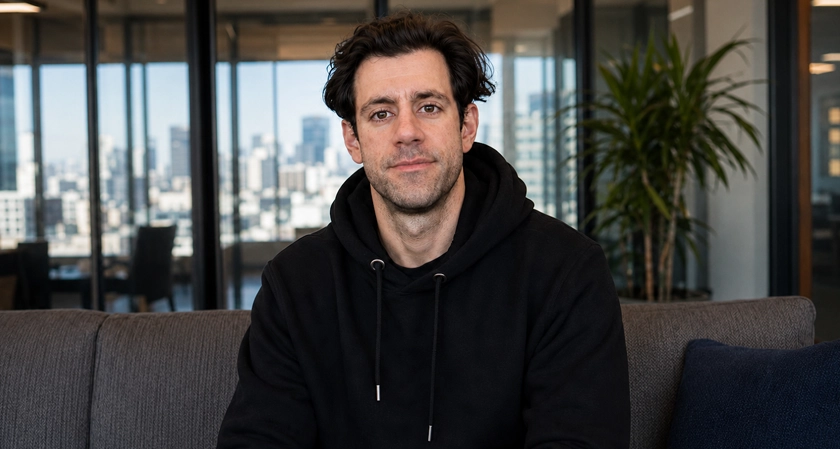
Addressing this gap is the focus of Intryc, the Y Combinator S24-backed startup developing AI-powered AutoQA systems for enterprise support teams, led by Co-Founder and Chief Product Officer George Pastakas.
Pastakas shares his product-building philosophy: "There is nothing quite like watching your software solve a genuine customer problem in real time. Sitting in on those calls, hearing unfiltered feedback, and turning that into product improvements on the spot is where real learning happens. If something does not work, I need to know exactly why, and that understanding goes straight into the next version of what we build."
That customer-centric approach has shaped Intryc's effort to automate quality assurance at a time when support organizations are struggling to keep pace with the sheer volume of AI-assisted and AI-generated customer interactions.
Getting into Y Combinator's Summer 2024 batch put Intryc in an exclusive group. Fewer than two out of every hundred applicants make it each year. For the founding team, that acceptance served as outside validation of their technical and product judgment.
Building a Foundation in Complex Systems
Pastakas's path to building an AI-powered quality assurance platform is rooted in years of solving complex operational and data challenges at scale.
Before co-founding Intryc, he spent several years at Revolut, where he led the fraud detection team and helped develop machine learning models that protected millions of customers and monitored vast transaction volumes.
Pastaka who was a Data Scientist and later Product Owner for Financial Crimes, worked at the intersection of data science, product development, and risk management, while also contributing to initiatives supporting Revolut's expansion into the United States.
Reflecting on that experience, Pastakas says: "At Revolut, I was responsible for designing the systems and algorithms that screened every incoming fund transfer. The scale was enormous, serving roughly 20 to 30 million customers at the time and processing transaction volumes worth hundreds of millions. The challenge involved balancing three dimensions simultaneously: building sophisticated detection algorithms, working with extensive customer and transaction datasets, and understanding the human behavior needed to separate legitimate users from fraudulent activity. I was also managing people, technical direction, and end-to-end delivery for systems serving a rapidly scaling global customer base.”
Being good at the technical side wasn't enough for Pastakas. He made mentoring a priority, too.
At Revolut, he led a team of ten data scientists and engineers, running quarterly reviews to evaluate performance and support professional growth. The company is widely recognized as one of the most demanding and selective technology employers in Europe,
Over his career, he has mentored around 20 people, always emphasizing ownership, curiosity, and evidence-based decision-making. Pastakas’s impact at Revolut exemplifies the high-stakes, large-scale expertise required for extraordinary ability in AI-driven financial technology and product leadership.
He says: “When I joined Revolut in September 2018, the company served approximately 3 million retail customers. By the time I departed in June 2021, Revolut was reportedly valued at approximately $33B in its 2021 funding round. At the time, it was one of the most highly valued private fintech companies in the world.”
Revolut today serves more than 70 million retail customers and approximately 767,000 business customers globally (with around 30,000 new businesses joining every month), reported $6B in revenue and $2.3B in profit before tax for 2025, and reached a $75B valuation in its most recent funding round — making it one of the most valuable private fintech companies in the world.
As a licensed financial institution operating across multiple regulated jurisdictions, Revolut is subject to extensive financial-crime, anti-money-laundering, and fraud-prevention requirements that are core to its license to operate.
Pastakas’s contributions to building resilient, scalable fraud-prevention infrastructure during a period of explosive growth directly supported the company’s ability to expand safely and compliantly at this scale.
Finding fraud means uncovering subtle patterns in large datasets while accounting for the unpredictable ways people behave.
The mix of software, messy reality, and human quirks kept coming back in Pastakas's work, first when he fought fraud, later when he built Intryc.
Pastakas was also the first employee at Pledge, the supply chain technology company later acquired by Blue Yonder.
He joined as the company’s first employee and data scientist, and Pastakas engineered the technical backbone, from emissions calculation engines that had to align with global standards to sophisticated data pipelines. This is what powered Pledge’s rise from startup to acquisition target by Blue Yonder.
Pastakas believes working in an early-stage startup environment exposed him to the realities of building products from the ground up: “It enabled me to learn how to scale systems, and work closely with customers to solve practical business problems.”
Thomas Lucas, who worked alongside Pastakas at Pledge, remembers his groundbreaking work: “George played a foundational role in transforming our early-stage concept into a fully operational enterprise platform. He built the essential technical systems that enabled accurate, standards-compliant carbon emissions calculations for complex global logistics operations.”
“George was instrumental in developing the central emissions calculation engine and supporting infrastructure—including emissions factors management, advanced distance routing algorithms, data ingestion pipelines, and methodology alignment layers—that adhered to rigorous international standards like GLEC and ISO 14083, delivering trustworthy, audit-ready results for enterprise clients.”
Lucas remembers him as the indispensable early builder who turned ambitious climate-tech ideas into reality: “George excelled at bridging complex emissions reporting requirements with practical software implementation,” he recalls. He operated at the intersection of data science, engineering, and product development to create scalable systems. These directly supported customer acquisition, commercial validation, and the long-term strategic value of the company.”
Lucas adds: “George’s hands-on contributions during Pledge’s critical growth phase helped us move from a pre-revenue startup to a venture-backed company. We had real enterprise customers and significant funding, which established the technical foundations that proved vital to our product credibility and eventual acquisition by Blue Yonder.”
Taken together, Pastakas’s experiences helped shape the foundation for Intryc. Building AutoQA requires analyzing large volumes of customer interactions, identifying meaningful patterns, and translating insights into actionable improvements. Challenges that closely mirror the large-scale data, operational, and human-behavior problems Pastakas spent years solving throughout his career.
The Quality Assurance Gap
Customer support organizations have long relied on quality assurance teams to review conversations between agents and customers.
The challenge is that traditional QA programs can only inspect a small percentage of total interactions, typically between 2% and 5% of tickets, calls, chats, or emails. As generative AI tools become increasingly embedded in customer service operations, interaction volumes continue to rise, making manual review processes even harder to scale.
The result is a growing gap between the number of customer conversations taking place and the organization's ability to systematically monitor quality, compliance, and customer experience.
Pastakas believes this bottleneck has become one of the most significant operational challenges facing modern support teams.
Pastakas describes the issue: "The main use case we hear about is automating QA for customer support. A typical company has agents talking to customers over the phone, via email, and through chat, while a separate QA team manually checks only a tiny portion of those conversations. What we do is replace that manual review with an automated system that can look at far more interactions, at a scale no human team could match."
The AutoQA platform directly tackles this issue. Instead of depending on people to spot‑check a tiny fraction of conversations, the software scores every interaction against quality rules set by the customer.
Intryc claims over 90% accuracy. It also cuts manual QA work by more than half. That means teams stop wasting time on drudge work and start actually improving things.
Pastakas adds: "With our big customers, we often cut QA time and effort by 50% or more. They can review far more interactions than manual sampling ever allowed. Smaller teams sometimes get back 90% of the time they used to spend on quality checks. The outcome? Faster feedback, better coaching, and service quality that stays steady across the board."
A critical part of the process involves tailoring the system to each organization's specific requirements. Customer support teams often have different definitions of quality, compliance, escalation procedures, and customer success metrics.
Pastakas explains onboarding: "A new customer comes on board, and we spend a few weeks really learning their workflow and what quality means to them. Then we sit down together and turn those needs into simple, measurable rules that an AI can follow every time. There is no guessing or personal bias. After that, we keep tuning the model until its scores match what really happens day to day."
By combining automation with clearly defined quality frameworks, Intryc gives companies a way to keep oversight as customer interactions grow in both number and complexity.
A Methodology Built Around Measurement
Intryc takes QA, which used to be a subjective process, and turns it into something you can measure and improve.
The approach has three parts: build scorecards with numbers, run fast calibration cycles, and set up a feedback loop that never stops.
The first step is to put numbers on quality. Instead of vague words like "good service" or "communicates well," Intryc sits down with each customer and breaks quality down into small, specific pieces you can measure and score consistently every time.
The result is a shared scorecard that captures the organization's needs, compliance rules, and customer experience targets. Pastakas is big on precision, and that shows up in how he handles product work and client conversations alike.
Pastakas says: "I have a simple rule. When I'm coding or talking to customers, I never assume. My decisions come from what I can see, hear, and check, not from a hunch. Too many companies act like they already know what customers need, but they never bother to ask."
Once the scorecard is ready, Intryc moves to step two: rapid calibration.
During this phase, the customer's team and the platform continue to compare the AI's scores against actual outcomes. Every feedback cycle teaches the system the company's take on quality, and within a few weeks, accuracy exceeds 90%.
Step three moves from counting errors to correcting them. The platform highlights mistakes and offers managers and agents specific, actionable advice. That sets up a continuous loop where quality findings become coaching opportunities and real‑world operational shifts.
Pastakas believes curiosity plays a critical role throughout the process.
He says: "I often encourage my customer success team to keep digging beyond the initial request. A customer may ask for a particular feature, but the important question is why they need it. The answer often leads to another reason, and then another. By exploring those underlying motivations, you uncover the actual problem that needs solving."
That focus on root causes helps ensure that AutoQA serves as an auditing tool and a mechanism for ongoing performance improvement.
Pastakas adds: "One principle I always emphasize is moving from a problem-oriented mindset to a solution-oriented one. I ask how we can make it happen. That attitude drives everything we build."
Proven Enterprise Impact
The strongest measure of a technology platform is not its marketing claims but the confidence it earns from large enterprises.
For Intryc, that validation is already emerging in highly competitive procurement processes.
Pastakas points to a shift in the industry: "Right now, billion‑dollar companies are putting us up against vendors that have been around for ten or twenty years. We are much younger, but buyers are starting to take us seriously as an option. That tells me that strong AI plus a real focus on customers is clicking with enterprises – and changing what they expect from this space."
This recognition matters because the CX and QA software market is mature. For years, big, established vendors have controlled most enterprise deals.
The fact that Intryc is evaluated alongside veteran players shows that its approach is catching on outside the startup world. And numbers back that up: 140 percent net revenue retention and roughly 15 percent monthly growth. Those metrics suggest that existing customers continue to buy more as the platform becomes part of their daily operations.
Pastakas adds: "To date, we have not lost a single customer. Most have expanded their contracts by roughly 50 percent since their initial agreement."
The impact of Pastakas's work is also reflected in measurable outcomes delivered for customers.
At Deel, a multi-billion-dollar U.S. company, Intryc helped increase audit output by 40% while generating 130% more continuous-improvement insights. These gains enabled support teams to review a larger share of customer interactions and identify operational improvements more consistently.
Blueground saw similar gains. The company cut the time spent picking tickets for review by 90 percent, doubled the number of conversations it could check, recovered roughly 40 hours of work each week, and raised its customer satisfaction score by 5 points.
Pastakas says: "The numbers tell you automated QA saves hours. But just as important, it lifts customer satisfaction and makes operations more consistent. When you can look at almost every conversation instead of a tiny sample, you catch problems sooner and give agents better coaching."
He has shaped U.S. market work at different points in his career. Before starting Intryc, he helped Revolut launch in the United States while running large‑scale fraud detection. Those lessons carried over into many of the operational rules built into Intryc's platform today.
For enterprise customers evaluating how to manage rapidly growing volumes of customer interactions, those technical capabilities are increasingly translating into measurable business results.
Building from Scratch, Scaling for the Future
Pastakas says: "I have always enjoyed taking a blank sheet and building something that genuinely runs at scale. At Pledge, I was the first employee, helping build the data infrastructure and emissions engine from nothing. Later, those early pieces helped the company get bought by Blue Yonder. That same drive, going from zero to a functioning product, turned up again in fraud detection at Revolut and now in AutoQA at Intryc."
As Intryc expands its presence in the United States, Pastakas is relocating to the U.S. to support the company's growth and work more closely with enterprise customers.
Pastakas says: "For U.S. companies, the pressure to deliver great customer experience while controlling costs is intense. Our platform helps them achieve significant efficiency gains in quality assurance and training without adding headcount. That is a critical advantage when interaction volumes are rising faster than teams can manually review."
Intryc's platform automates QA and gives teams performance insights they can act on. That lets companies increase their support volume and keep a closer eye on quality without adding staff in lockstep.
Pastakas adds: "I am obsessed with creating systems that drive dramatic efficiency gains. Our software removes the repetitive, manual quality checks so support teams can concentrate on work that is more creative and has greater impact."
Why This Matters Now

Support teams today handle more AI‑generated and AI‑assisted conversations than ever. That makes the old ways of checking quality harder to defend.
You cannot get away with spot‑checking just a few conversations anymore. Customer experience, compliance, and operations all need steady oversight across every single channel.
AutoQA solves the problem. It lets companies scan huge volumes of conversations, spot trends faster, and give feedback that actually helps agents perform better and customers feel happier.
For Pastakas, this work matters on two levels, operationally and personally.
He explains: "I feel a strong obligation to the customers who rely on our platform and to the thousands of support professionals whose day-to-day responsibilities are affected by its performance. At the same time, I am motivated by the challenge of building the strongest product possible in this category, tackling complex problems that sit at the intersection of artificial intelligence, product development, and real-world business operations."
Alex Marantelos, Co-Founder and Chief Executive Officer of Intryc, is in no doubt that Pastakas was a driving force in the company from the very beginning: “He single-handedly conceived, developed, and launched all the fundamental building blocks,” he says.
“From the AI engines that deliver our automated quality scoring to the advanced speech and dialogue processing systems, as well as the global infrastructure.
“The engineering challenge George tackled was exceptionally complex. Delivering reliable quality assurance for customer interactions, which included voice calls, messaging, and email, demanded sophisticated models capable of maintaining exceptional precision amid diverse cultural settings.
“We are dealing with live agents and AI, as well as linguistic variations, regional dialects, customized evaluation criteria, and strict compliance standards. The list goes on!”
Marantelos adds: “However, George delivered a robust production-ready solution that consistently performs at scale. In my opinion, no other player in this space, not even companies with far bigger teams and deeper funding, has achieved the same level of comprehensive capability, precision, and operational stability that George has delivered.
“His work represents a genuine breakthrough in leveraging generative AI and voice intelligence technologies for large-scale customer operations management.”
“We have achieved flawless execution across every single client deployment since launch, paired with a 140% net revenue retention rate among our users. These outstanding results stem directly from George’s exceptional product strategy and hands-on implementation leadership.”
With Y Combinator backing and $4.3 million in funding, Intryc sits squarely in the middle of a changing landscape for enterprise QA. The results the company has delivered for big customers show that automated QA is moving from a nice‑to‑have add‑on to something central to how they operate.
For any company that wants to scale support while still keeping an eye on what is going on and maintaining consistent service, the lesson is straightforward. You do not have to sacrifice quality to grow, and expanding does not have to mean lowering your standards.
About the Author
Sashindra Suresh is an experienced writer specializing in artificial intelligence, software development, and emerging technologies. With a strong ability to translate complex technical concepts into clear, engaging insights, she has contributed to a wide range of publications and platforms. Her work focuses on making cutting-edge innovations accessible to both industry professionals and curious readers alike.