>>
Industry>>
Agritech>>
Rice Husk Carbonization Rises ...Rice Husk Carbonization Rises as Circular Ag Solution
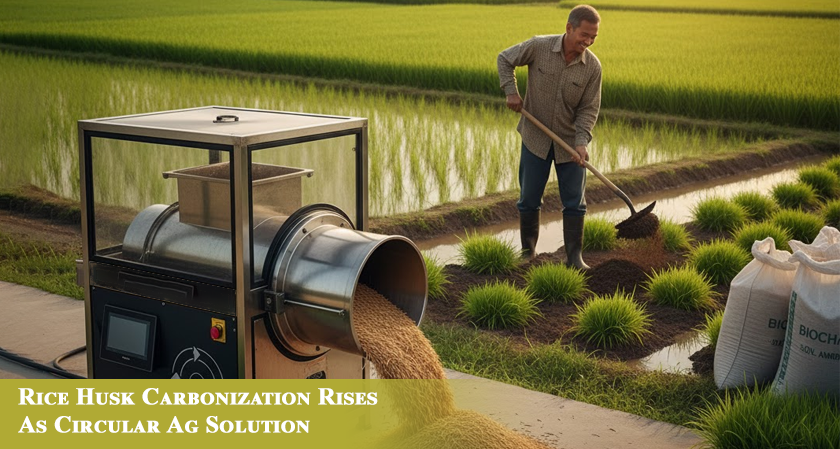
Rice husk carbonization is gaining momentum as a key circular agriculture solution, converting waste into biochar to improve soil health and sequester carbon.
A centuries-old agricultural waste problem is finding a modern, high-value solution. Rice husk carbonization the process of converting this abundant byproduct into stable carbon is rapidly gaining traction as a cornerstone of circular agriculture. This practice directly addresses the dual challenges of farm waste management and soil degradation, transforming a disposal burden into a resource that enhances soil health and provides long-term carbon sequestration.
The technique's resurgence contrasts sharply with traditional, linear models of extraction and disposal. By heating rice husks in a low-oxygen environment, farmers produce biochar, a porous carbon-rich material. This matters because its integration into soil improves water retention, nutrient availability, and microbial activity, boosting crop resilience. Furthermore, it locks carbon away for centuries, creating a verifiable carbon credit stream. This creates a powerful economic incentive, turning sustainability into a revenue pillar for farming operations and making waste valorization a core component of farm economics.
For agribusiness leaders and sustainability investors, the implication is a scalable model for regenerative practice. The forecast is for accelerated adoption driven by carbon markets and corporate sustainability goals. Decision-makers must evaluate partnerships in biochar production technology and secure supply chains for this emerging soil amendment. The next imperative is to integrate this solution into broader climate-smart agriculture programs, ensuring farmers have the knowledge and market access to implement it. This innovation demonstrates that the future of productive agriculture depends not just on new inputs, but on reimagining waste streams as the foundation for soil renewal and climate mitigation.