>>
Industry>>
Environmental sustainability>>
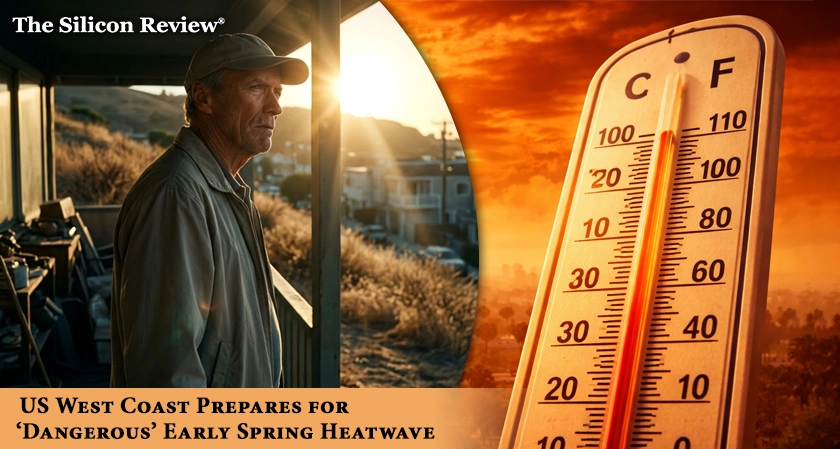
US West Coast Prepares for 'Da...US West Coast Prepares for 'Dangerous' Early Spring Heatwave
The Silicon Review
18 March, 2026
A dangerous, record-breaking heatwave is building across the US West Coast, with temperatures expected to soar past 100°F in some areas.
A significant and potentially dangerous heatwave is building across the western United States this week, bringing summer-like temperatures to a region which is still in the early days of spring. Forecasters warn the prolonged event could shatter records, threaten public health, and accelerate the melting of snow.
A strong, slow-moving high-pressure system called a heat dome is trapping hot air over the region, pushing temperatures 20 to 30 degrees Fahrenheit above normal across parts of California, Nevada, and Arizona. In Phoenix, the National Weather Service forecasts temperatures could exceed 100°F as soon as this week, marking the earliest arrival of triple-digit heat to the city in nearly four decades. Las Vegas has a 50% chance of hitting 100°F, which would be the first 100-degree day recorded in March in the city's history.
The heat is expected to persist for several days, with limited overnight cooling adding to the strain on vulnerable populations. The National Weather Service has issued heat advisories and extreme heat warnings across a wide swath of the region, from the California coast to the deserts of Arizona and Nevada. In the Bay Area, this marks the first March heat advisory in 20 years, with temperatures scorching 20 to 30 degrees above average. Los Angeles County is under an extreme heat warning through Friday, with inland areas expected to see highs above 100°F.
Officials are urging residents to take precautions. "Heat causes more deaths in the U.S. annually than floods, storms, and lightning combined," said Muntu Davis, Los Angeles County Health Officer. "Those most likely to get ill during the heat include older adults, young children, outdoor workers, athletes, and individuals with chronic medical conditions."
Beyond the immediate health risks, the heatwave poses a serious long-term threat to the region's water supply. California's snowpack, which provides roughly one-third of the state's water, is already below average. The extreme heat will likely melt what little snow remains weeks earlier than usual, reducing the amount of water that can be gradually released into reservoirs later in the year and heightening the potential for a longer and more intense wildfire season.
While scientists have not yet parsed out the exact link between this specific event and climate change, a growing body of research shows that human-caused warming is worsening droughts and decreasing snowpack across the West. The heatwave follows the warmest winter on record and significant drought across much of the region.
As an unprecedented March heatwave descends on the American West, bringing summer-like temperatures and accelerating the melt of critical snowpack, The Silicon Review examines what this climate anomaly signals for water security, wildfire risk, and the new reality of 'dangerous' seasons that no longer wait for summer to arrive.
MOST VIEWED ARTICLES
RECOMMENDED NEWS








LATEST NEWS


TOP NEWS
YOU MAY ALSO LIKE


_2025-11-17_06-38-14.webp)