>>
Other>>
Politics>>
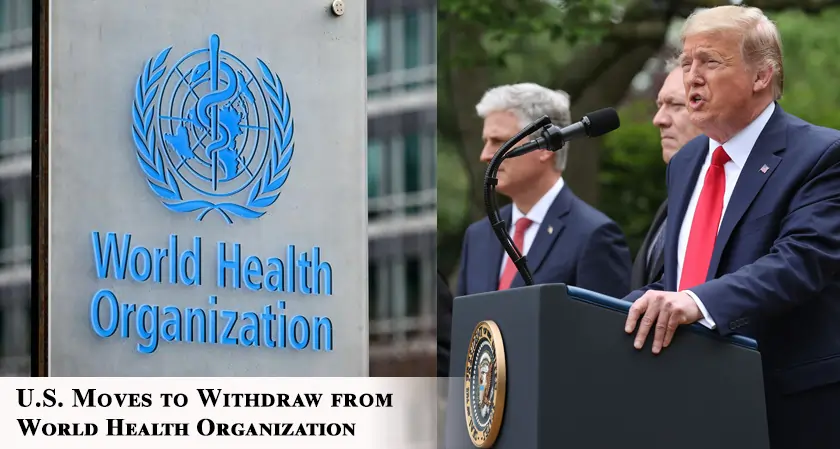
U.S. Moves to Withdraw from Wo...U.S. Moves to Withdraw from World Health Organization
The Silicon Review
22 January, 2026
Author:
The Silicon Review Team
The United States has formally initiated the process to withdraw from the World Health Organization (WHO), a major shift in global health policy.
The United States has taken formal steps to withdraw from the World Health Organization (WHO), signaling a seismic rupture in global health governance. This action, driven by longstanding criticisms of the WHO's management and alignment, would end decades of U.S. membership, funding, and leadership within the United Nations' public health arm. The move fundamentally reshapes the international health landscape, removing the largest single financial contributor and creating a vacuum that rivals like China are poised to fill.
The withdrawal process triggers a complex one-year notice period and the potential redirection of hundreds of millions in annual funding. This geopolitical shift matters because it isolates U.S. health agencies from real-time global disease surveillance networks and weakens coordinated responses to pandemic threats. For allied nations, it creates immediate pressure to increase their own contributions while navigating a WHO potentially more influenced by alternate geopolitical agendas. The decision represents the culmination of a sovereignty-first foreign policy that prioritizes unilateral action over multilateral institutions.
For public health officials and diplomatic corps, the implication is a crisis of coordination. The forecast is for the creation of parallel, U.S.-led global health alliances with partner countries, bypassing the WHO entirely. Decision-makers at the CDC and NIH must now establish independent data-sharing treaties and outbreak response protocols. The next imperative for the administration is to present a viable alternative framework that demonstrates how leaving the world's primary health coordination body enhances, rather than jeopardizes, American security and influence in an era of transboundary biological threats.





















