>>
Industry>>
Gaming and vfx>>
How Technology Has Revolutioni...How Technology Has Revolutionized Game Play
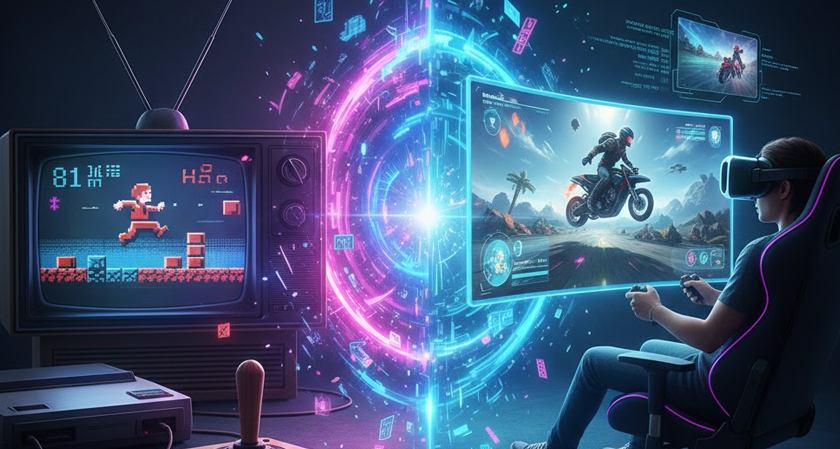
In the last few decades, the gaming landscape has transformed in ways that early pioneers could hardly have imagined. What once were simple pixelated screens and basic controls have evolved into hyper‑realistic virtual worlds, immersive experiences, and global online communities. Technology hasn’t just changed games, it has redefined what it means to play. From the way games are made, to how they are accessed and enjoyed, the revolution continues to accelerate.
From Pixels to Polygons: The Evolution of Graphics
One of the most visible ways technology has revolutionized gameplay is through graphics. Early video games featured rudimentary visuals, with small sprites and limited color palettes. Technological advancements in processing power and display capabilities have transformed games into breathtaking visual experiences. Today’s games harness cutting-edge graphics engines that render lifelike environments, detailed character models, and dynamic lighting effects.
These improvements aren’t just about aesthetics. Enhanced visual fidelity creates deeper immersion, helping players feel truly connected to the worlds they explore. Whether navigating war‑torn landscapes or mystical forests, players can now experience every rustle of leaves and shimmer of sunlight as if they were there.
The Rise of Online Connectivity
Perhaps the biggest shift in gaming has been the move from solo play to online ecosystems. Early console games typically offered local multiplayer, where friends shared a living room and a screen. Today, the internet connects millions of players around the world in real time.
Online play has enabled social gaming on an unprecedented scale. Competitive arenas, cooperative raids, and sprawling open worlds are no longer limited by geography. Gamers can team up or face off with others across continents, forging friendships and rivalries that transcend borders.
Online connectivity has also expanded opportunities for game distribution. Gone are the days when boxed copies and cartridges were the only way to access games. Digital platforms allow instant downloads, updates, and cloud‑based gaming, meaning players can enjoy their favorites anytime, anywhere.
The Accessibility Revolution
Technology has also made games more accessible than ever. Mobile devices put powerful gaming experiences in the hands of billions of people. Games that once required expensive hardware are now played on phones and tablets, opening the hobby to new audiences.
This accessibility extends to different types of gameplay too. From casual puzzle games that can be enjoyed in short bursts, to deep strategy titles that demand hours of dedication, there’s something for every type of player. Even traditionally niche areas like casino gaming have found a home online, allowing people to explore their interests in new formats, for example, many players now choose to play pokies online real money in digital environments that were unimaginable a generation ago.
Immersive Technology: VR and AR
Virtual reality (VR) and augmented reality (AR) represent another frontier in the technological revolution of game play. VR places players directly into virtual environments using headsets and motion‑tracking gear. In these worlds, players can look, move, and interact as though they are truly inside the game space.
AR, on the other hand, blends digital elements with the real world. Games like Pokémon GO demonstrated the potential of AR by encouraging players to explore physical spaces while interacting with virtual creatures. These immersive technologies push beyond traditional screens, making the boundary between game and reality increasingly fluid.
Looking Ahead
As technology continues to advance, the future of game play promises even deeper immersion, smarter systems, and broader accessibility. Whether through AI‑driven narratives, cloud gaming that transcends hardware limits, or new forms of interactive entertainment, one thing is clear: technology will keep reshaping the way we play, connect, and experience virtual worlds.
In this ongoing revolution, players and creators alike are part of a dynamic ecosystem that continually pushes the boundaries of imagination and innovation.