>>
Other>>
Politics>>
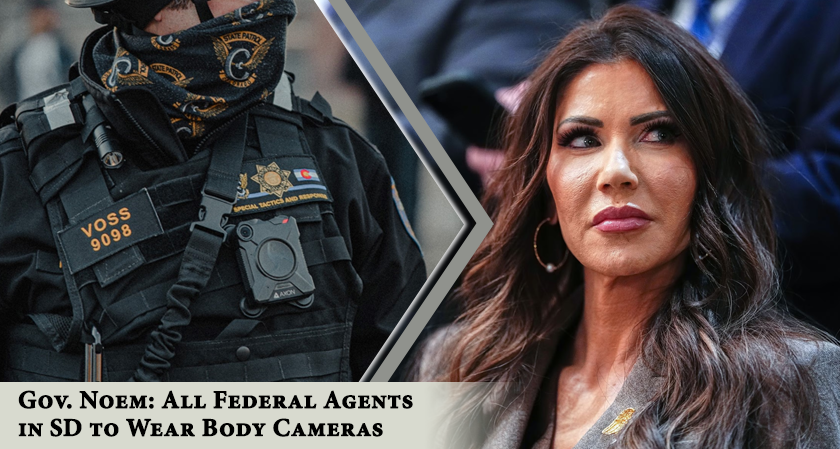
Gov. Noem: All Federal Agents ...Gov. Noem: All Federal Agents in SD to Wear Body Cameras
The Silicon Review
03 February, 2026
Author:
The Silicon Review Team
South Dakota Governor Kristi Noem announces a state mandate requiring all federal law enforcement agents on patrol in the state to wear body cameras.
South Dakota Governor Kristi Noem announced a new state mandate requiring all federal law enforcement agents including those from the FBI, DEA, and ATF to wear body cameras while on patrol within the state's jurisdiction. The controversial order asserts state authority over federal operations on its soil and is framed as a transparency measure. The announcement comes as U.S. Senator Ron Johnson stated he does not "have a problem" with a key Democratic demand for body cameras, which is currently blocking funding for a major federal agency, indicating potential bipartisan movement on the issue at the federal level.
Governor Noem's directive, to be enforced by state and local law enforcement, will require federal agents to activate cameras during all public interactions, investigations, and patrol activities. The order is expected to face immediate legal challenges from the federal government, which will likely argue it violates the Constitution's Supremacy Clause. Proponents argue it is necessary to ensure accountability and build public trust, particularly in rural and tribal areas where federal agents are active.
"This is about transparency and the rights of South Dakotans. If federal agents are operating in our state, they must be accountable to the people they serve," Governor Noem stated. Senator Ron Johnson commented on the parallel federal debate, saying, "Ensuring oversight through body cameras is a reasonable request. I don't have a problem with that core principle as we negotiate agency funding."
The move escalates ongoing tensions between certain states and the federal government over law enforcement jurisdiction and oversight. It directly challenges traditional interpretations of federal operational control and could set a precedent for other states seeking to impose similar conditions. The policy also intersects with the national police reform debate, where body camera mandates have been a central demand for increased accountability.
Legal experts anticipate a swift federal lawsuit to block the order's enforcement. The outcome will hinge on courts balancing state police powers against federal immunity and operational sovereignty. The situation remains fluid as both state implementation plans and federal response strategies develop.








%20copy_2026-07-28_08-05-20.webp")