>>
Industry>>
Construction>>
How Rivets Compare To Screws A...How Rivets Compare To Screws And Bolts
The Silicon Review
01 April, 2026
Author:
The Silicon Review Team
Fastening is an essential element in any construction, manufacturing, or repair work that you do. When it comes to connectors, there are many options, but rivets, screws, and bolts are among the most popular. Each has its own strengths and weaknesses. Learning how these fasteners work can give users an upper hand in picking the perfect solution for their projects.
Purpose and Functionality
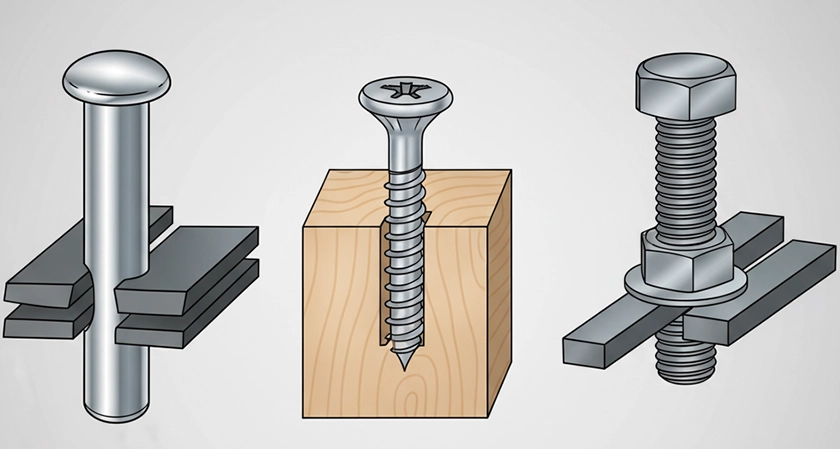
Rivets, screws, and bolts are all you need to hold materials together. However, their mechanisms differ significantly. Metal rivets are permanent, so they are used in places where long-lasting connections are needed. Screws are removable and can be reused, so they can be changed if necessary. Bolts are used with nuts and grab material tightly, which can be separated when needed.
Installation Process
Each fastener has a different means of attachment. This is because rivets need a device to deform the head to connect and fix the materials together. Because they turn when in use, screws have threads that grip the material and are usually driven with a screwdriver. Bolts are used with corresponding nuts and tightened with wrenches (or spanners), compressing the material between the nut and the bolt head. Each of these methods affects a project's speed and the level of skill required.
Strength and Durability
Fasteners come in different strengths, which is another aspect to consider. Since riveted joints distribute the load over a large area, they do not rely on screws and offer reliable support in structures such as bridges and aircraft. Screws—available in several different thread types—are suited for a moderate grip and are mostly used for lighter applications (furniture or cabinetry). Bolts are commonly used in high-stress environments, such as locking heavy equipment or steel structures requiring extreme force.
Reusability and Maintenance
Fastener selection is often based on maintenance and repair considerations. Rivets are permanent fasteners, and removing them destroys them and often the surrounding material, requiring repair. Unlike using screws that cannot be removed without damaging the connected objects, screw connections enable maintenance and upgrades. They also allow you to take pieces apart and put them back together, making them a good option for projects that might need future adjustments.
Material Compatibility
Another critical aspect is compatibility with the various materials. Rivets are perfect for metals, plastics, or even leather; they conform to the textures of different thicknesses. Screws are used with wood, metal, and plastic, and each has a specific thread style. Bolts, which are built differently from screws, are better suited for heavy or tough materials, such as steel beams or concrete supports.
Appearance and Finish
You will also be interested to know that aesthetic aspects can influence the choice of fasteners, too. Rivets provide a low-profile, neat finish and are commonly used in visible applications where a clean appearance is important. Screws are the ones with stacked heads, although alternatives like countersunk screws can keep the heads flush. However, bolts typically look bulkier and may not work for the aesthetics of every project.
Cost and Availability
Decisions in large and small projects are influenced by available budget and price. For high-volume applications, rivets tend to be economical but may need special tools. The screws are available at your local hardware store in several sizes and finishes, so they are easily sourced by most users. Because they are larger and much more robust, bolts are usually pricier than other fasteners; however, as they are reusable, the cost can be justified over the long term.
Suitability for Specific Applications
Some of the projects require specific fastening methods. For aircraft bodies, ship construction, and other structures subject to vibration, rivets are most commonly used when permanent bonding is required. The woodworking, electronics assembly, and home repair sectors are where screws shine the most, thanks to their very high ease of use. Bolts, on the other hand, are typically used in construction, in automobiles, and wherever extreme strength is needed in industrial settings.
Conclusion
Rivets, on the other hand, are a permanent fastening method and are extremely strong, but once attached, they can be practically impossible to remove, making them very much a ‘one-and-done’ item. So the choice between rivets, screws, and bolts comes down to the needs of the project and depends on how much strength is required, whether aesthetics are important, and whether the parts may need to be removed later for maintenance or repair. There are different advantages and disadvantages to each fastener. Being aware of these differences will help users make the right choice to end up with a safe, sturdy, and good-looking result.