>>
Industry>>
Architecture and interior design>>
When Should a Company Invest i...ARCHITECTURE AND INTERIOR DESIGN
When Should a Company Invest in Office Pods?
The Silicon Review
18 May, 2026
Author:
Guest
Open-plan noise costs employees up to 86 minutes of productivity every day. As digital meetings dominate the modern schedule, the demand for quiet, isolated workspaces has never been higher.
When a floor plan lacks adequate private areas, staff members resort to taking sensitive client calls in busy hallways or booking massive conference rooms for solo tasks. This structural failure stalls daily operations and frustrates workers.
Adding more permanent meeting rooms requires months of disruptive construction and thousands of dollars in contractor fees. Business leaders face a clear choice: continue fighting against a rigid layout or introduce modular solutions.
If you’re struggling to make an informed decision, continue reading to learn whether installing office pods at your company is a beneficial investment.
What Office Pods Solve Inside a Workplace
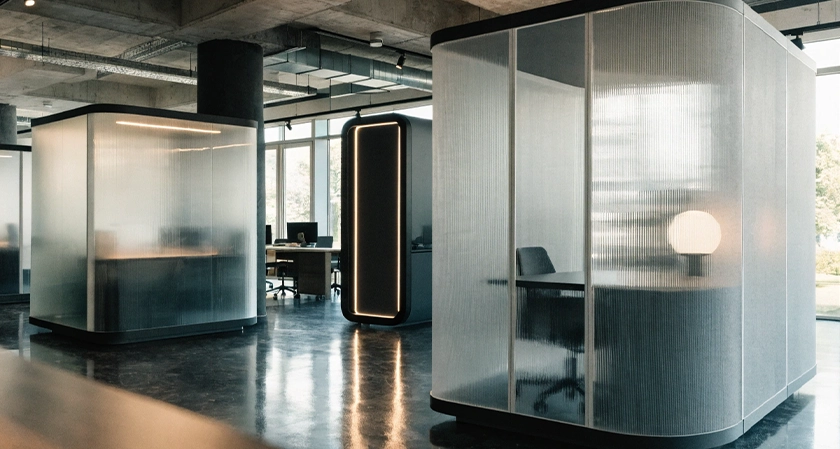
Office pods provide an immediate fix for noisy, distracting work environments. Instead of letting phone calls and conversations bounce across the room, these soundproof booths trap the noise inside. They give employees a guaranteed quiet spot to focus, review documents, or speak privately.
The setup stops employees from booking large conference rooms just to take a simple video call. By adding these small, enclosed spaces, a company keeps the main floor open for teamwork while making sure there is always a dedicated place for deep concentration.
The Clearest Signs It May Be Time to Invest in Office Pods
Several daily frustrations show that the workspace layout is no longer working properly. If an office experiences the following issues, adding modular enclosures offers a fast solution:
Empty desks but full conference rooms: Employees book massive eight-person meeting rooms just to take a solo video call because the main floor is too loud.
Constant noise complaints: Staff often mention they cannot concentrate due to overlapping conversations, ringing phones, and general office activity.
Private conversations in public areas: Workers take sensitive calls in hallways, stairwells, or break rooms because no secure spaces remain open.
Dropping productivity: High-focus tasks take much longer to finish because employees spend too much energy trying to block out constant interruptions.
How to Know Whether Your Company Needs Office Pods
Deciding whether your office needs soundproof pods comes down to how your employees work every day. Different daily habits and office layouts create specific problems that pods can quickly fix.
Here, we’ll take a look at the scenarios where adding these enclosures makes the most sense.
Teams With Frequent Video Calls and Client Conversations
If your staff spends hours on video meetings or talking to clients, they need acoustic privacy. Taking these calls at an open desk distracts everyone nearby and often comes across as unprofessional to the person on the other end of the line.
Providing small soundproof booths gives these workers a dedicated place to talk without bothering their coworkers or sharing private company details with the rest of the floor.
Offices That Rely on Open-Plan Layouts
Open offices work well for team projects, but they fail when people need to focus. Without walls to block sound, every conversation travels across the room.
If your layout consists mostly of open desks with no quiet zones, installing office pods offers an instant escape from the noise. They bring necessary quiet areas directly onto the busy floor without blocking natural light or compromising the room's open feel.
Companies That Need Private Space but Cannot Add More Rooms
Many businesses rent their office space and face strict rules prohibiting the construction of permanent walls. Even when landlords allow it, traditional construction takes weeks and costs a lot of money.
If your team desperately needs more meeting rooms but you cannot run a construction project, modular pods offer the perfect workaround. You get the private spaces you need set up in just a few hours without tearing up the building.
Businesses That Want Flexibility as Teams and Need Change
The size of a company rarely stays the same for long. As departments grow or shift, the office layout needs to adapt. Built-in rooms lock you into one specific floor plan.
Pods function like regular furniture, which you can move around whenever necessary. If your company plans to move to a new building at the end of the lease, you can simply pack up the pods and take them with you, keeping your investment secure.
Office Pods vs Traditional Build-Outs
Comparing modular enclosures to standard construction reveals major differences in time, cost, and daily flexibility. While built-in rooms provide permanent spaces for large groups, office pods offer rapid, adaptable solutions for daily focus.
In the table below, we outline how these two options compare.
|
Feature |
Office Pods |
Traditional Build-Outs |
|
Setup Time |
Assembles in a few hours |
Requires weeks of noisy construction |
|
Cost Structure |
One-time fixed furniture purchase |
High variable fees for contractors and permits |
|
Flexibility |
Easy to move, reconfigure, or relocate |
Permanent structure that stays with the building |
|
Acoustics |
Engineered for immediate sound isolation |
Prone to sound leaks without extra wall treatments |
|
Space Efficiency |
Compact footprint fits into unused corners |
Requires massive square footage to build |
What to Look At Before You Make the Investment
Before purchasing modular pods, evaluate the workforce's specific daily habits. Start by determining the correct size. If staff members mainly need a place for solo video calls, single-person booths work best. If small teams frequently meet for quick discussions, larger multi-person units provide a much better fit.
Next, check the technical details. A high-quality booth must feature quiet, continuous air ventilation so employees remain comfortable during long meetings. It also requires built-in power outlets and clear paths for strong Wi-Fi signals to support daily technology.
Finally, measure the intended floor plan. Ensure there is enough open space around the installation spot. The pod doors must open fully, and daily foot traffic must pass easily without creating a new physical bottleneck on the busy floor.
Where to Buy Office Pods?
Sourcing modular enclosures requires evaluating both the manufacturer's technical specifications and their delivery logistics. Companies should purchase directly from specialized manufacturers rather than general office furniture resellers. Direct purchasing ensures access to proper warranties, replacement parts, and accurate acoustic ratings.
When evaluating vendors, choosing reliable solutions like ReframeSpace's office pods ensures the units include essential components such as continuous ventilation, integrated power outlets, and commercial-grade soundproofing.
Common Mistakes Companies Make Before They Buy
Several common errors ruin the return on investment when buying acoustic booths. Avoiding these mistakes ensures the new workspace functions correctly from the first day.
Ignoring Airflow and Ventilation Specs
A soundproof pod without air circulation quickly becomes unusable. Many buyers focus only on acoustic ratings and forget to check the internal fan systems. Without quiet, continuous ventilation, the interior temperature rises rapidly, forcing employees to leave the booth before their meeting ends.
Mismatching Pod Size to the Daily Need
Purchasing a massive four-person booth when employees only make solo video calls wastes money and floor space. Similarly, a single-person phone booth fails if small teams need a place to review documents together. Tracking daily office habits ensures the purchased unit matches the actual capacity required.
Forgetting to Measure Door Clearance
Modular enclosures require breathing room. Buyers often measure the exact footprint of the booth but forget that the glass door needs space to swing open fully. Placing a pod too close to a busy walkway or a permanent wall blocks traffic and creates a physical hazard on the main floor.
How to Decide if the Investment Will Pay Off
Determining the financial return of a soundproof booth involves measuring the loss of productivity. Every time a worker loses focus because of background noise, the company loses money.
Track how many hours staff members spend searching for an empty room or repeating tasks due to constant interruptions. Compare this daily financial loss to the one-time price of a modular enclosure.
Next, review the contractors' quotes for building a permanent drywall room. If the pod immediately solves the daily noise complaints, keeps the layout flexible, and costs thousands of dollars less than standard construction, the investment quickly pays for itself.
The Bottom Line
Modern offices require quiet spaces to operate effectively. Open floor plans generate constant noise, while permanent meeting rooms demand expensive construction and waste valuable square footage.
Office pods solve this problem directly. They deliver immediate acoustic privacy for video calls and solo tasks without altering the building architecture.
By evaluating daily office habits and installing the right modular office pods, companies can keep the floor plan adaptable and provide employees with the exact environment they need to do their best work.