>>
Industry>>
Oil and gas>>
US Iran Negotiations: Oil Slip...US Iran Negotiations: Oil Slips as Tehran Set to Attend Pakistan Peace Talks
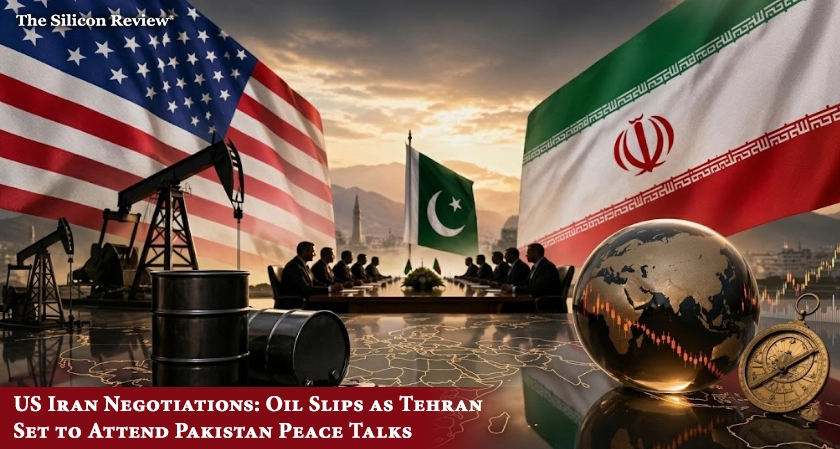
Oil prices slipped on signs Iran will attend US Iran negotiations in Islamabad ahead of the ceasefire deadline. The Silicon Review reports as crude prices retreat from Monday's 5.6% surge amid diplomatic hopes.
Oil prices slipped as growing expectations that Iran will attend a second round of US Iran negotiations in Pakistan before the current two-week ceasefire expires on Wednesday.
Brent crude futures fell as much as 1.1% to $94.44 a barrel, while West Texas Intermediate dropped 2.2% to around $86 a barrel . The declines reversed some of Monday's sharp gains, which saw Brent surge 5.6% after Iran closed the Strait of Hormuz again over the weekend.
According to people familiar with the plans, Iran is sending a team to the Pakistani capital of Islamabad, though it remains unclear who would lead the delegation. Earlier, Tehran had expressed hesitation about participating in further peace talks with the US while the naval blockade of its ports remained in place.
Vice President JD Vance is scheduled to arrive in Pakistan on Monday to resume negotiations, with talks expected to begin either Tuesday night or Wednesday morning, President Donald Trump said in a phone interview. Trump has stated it is "highly unlikely" he would extend the truce beyond Wednesday evening Washington time.
The Strait of Hormuz, through which roughly one-fifth of the world's crude normally passes, remains at a virtual standstill. The waterway has been effectively closed for most of the seven-week conflict, which began with "Operation Epic Fury" on February 28.
Citigroup analysts have warned that crude prices could rise to $110 a barrel if traffic in the strait remains disrupted for another month. The International Energy Agency has cautioned that global energy markets could remain volatile for up to two years because of the war.
"The market will be super sensitive to any headline updates in the next 24 hours," said Dilin Wu, a research strategist at Pepperstone Group.
Meanwhile, Iranian officials struck a defiant tone. Parliament Speaker Mohammad Bagher Qalibaf said on X that Tehran "does not accept negotiations under the shadow of threats" and that Iran has been "preparing to show new cards on the battlefield.”
As negotiations take center stage in Islamabad with the ceasefire deadline looming, The Silicon Review examines whether diplomatic efforts can succeed in reopening the Strait of Hormuz and why oil markets remain on edge despite Tuesday's price retreat.
About the Author
Sashindra Suresh is an experienced writer specializing in artificial intelligence, software development, and emerging technologies. With a strong ability to translate complex technical concepts into clear, engaging insights, she has contributed to a wide range of publications and platforms. Her work focuses on making cutting-edge innovations accessible to both industry professionals and curious readers alike.