>>
Industry>>
Banking and insurance>>
World Bank Uganda: Lender Obje...World Bank Uganda: Lender Objects to Controversial Foreign Agents Bill
The Silicon Review
29 April, 2026
Author:
Sashindra Suresh
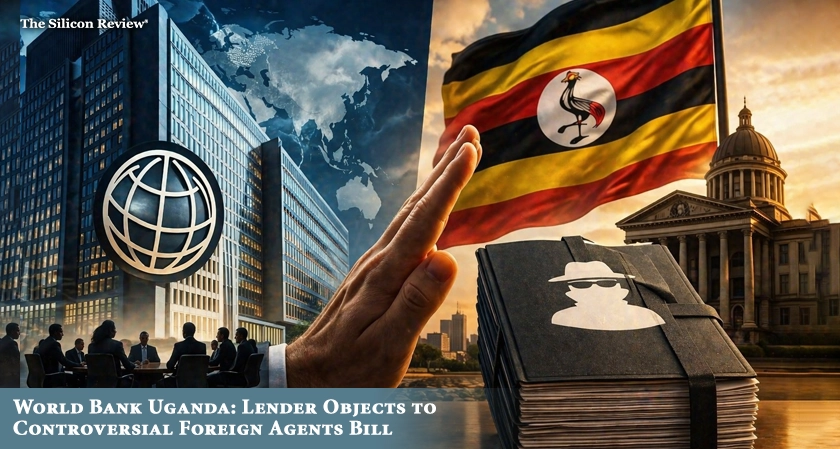
The World Bank has formally objected to Uganda's proposed Protection of Sovereignty Bill 2026, warning it could criminalize development work. The Silicon Review reports on the $4.57B portfolio at risk as the lender demands amendments.
The World Bank Uganda portfolio of $4.57 billion is at risk after the lender formally objected to President Yoweri Museveni's proposed "Protection of Sovereignty Bill 2026," warning the legislation could criminalize routine development activities.
In a letter to Parliament dated April 23, 2026, the Bank stated that the bill introduced on April 15 would require any Ugandan receiving foreign funding to register as a "foreign agent," disclose all incoming funds, and face prison sentences of up to 20 years or fines of $1.08 million for violations . The legislation also criminalizes the development or promotion of alternative public policies without government approval.
"By classifying international organizations as 'foreigners' without qualification, the bill subjects them to all of its substantive restrictions, registration requirements, financial reporting obligations, and criminal penalties," the Bank warned. It noted that routine activities including organizing meetings where alternative policy ideas are discussed could become criminal offenses.
The World Bank Uganda relationship has been strained before. The lender halted new lending in 2023 over Uganda's anti-homosexuality law but resumed funding two years later after compromises. Now, the Bank warns the Sovereignty Bill could choke off critical development finance.
Uganda's central bank has separately warned that the bill could trim foreign reserves and trigger inflation by disrupting remittances the country's second-largest foreign exchange earner after gold. Commercial banks, opposition politicians, and civil society groups have also condemned the legislation.
Information Minister Chris Baryomunsi dismissed the Bank's concerns as "unwarranted," adding: "Funds from agencies like the World Bank are protected." However, analysts warn the bill's sweeping definitions could classify Ugandans living abroad as "foreigners," potentially targeting workers' remittances worth billions annually.
The bill is currently before a parliamentary committee for review.
As the World Bank formally objects to Uganda's foreign agents bill with $4.57 billion in active projects hanging in the balance, The Silicon Review examines whether Museveni's sovereignty push will trigger a funding freeze and who will pay the price.