>>
Industry>>
Environmental sustainability>>
9 Facts About Growing Kratom T...9 Facts About Growing Kratom Trees On Tropical Farms
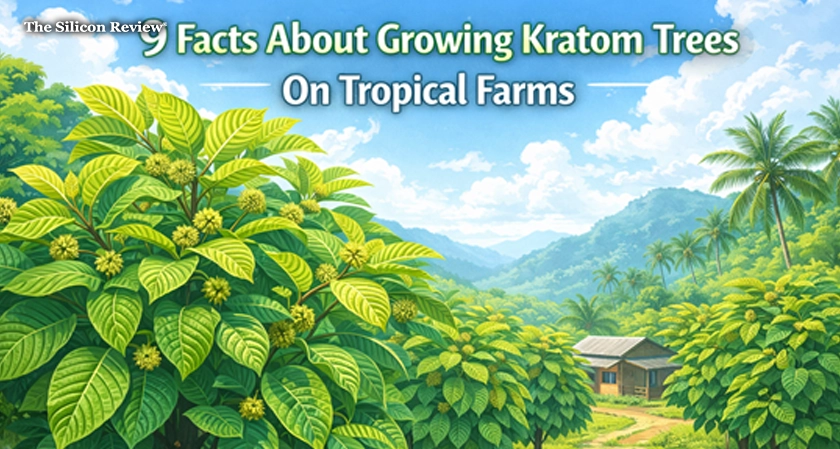
Kratom grows in warm and humid places. Thick green forests, slow rivers, and air that always feels a little damp. Farms sit right inside that landscape. Nothing forced, nothing artificial. It’s simply where growing kratom makes sense. The pace isn’t fast. Rain shows up at appropriate times. Trees push upward, then seem to pause, then push again. Farmers watch it happen day by day. When you’re growing kratom, you don’t rush the process anyway. One season might work out perfectly, the next one might behave differently.
Most of what farmers know about growing kratom never came from manuals. It came from years outside, walking the same land, noticing small things. No strict formula. No machines handling every step. Just habit, a bit of trial and error, and patience that builds slowly.
Here Are 9 Facts About Growing Kratom Trees
1. Warm temperatures support growing kratom trees
Kratom trees prefer steady warmth. Not extreme heat. Just consistent tropical weather that stays fairly stable through the year.
In places where temperatures rarely drop, trees keep growing without long pauses. The plant remains active, roots keep working in the soil, and new leaves appear regularly.
That’s one reason most kratom farms stay within tropical belts. The climate matches what the trees need.
2. Frequent rain helps maintain soil moisture
Rain shows up a lot in tropical areas. Not always on schedule either. A quick downpour, clouds gone, then another one later. Nature handles a lot of that on its own.
That steady moisture pulls the roots downward. They stretch deeper into the ground, wandering through the soil and picking up nutrients wherever they happen to find them.
But when the rain disappears for too long, the trees notice. Growth slows. Leaves stop coming in the same way. The difference is easy to spot.
3. Humid air conditions support leaf growth
Step into a tropical forest and you feel it immediately. The air is dense, almost sticky. Kratom trees seem perfectly comfortable in that kind of air.
The leaves usually stay broad and flexible. No crisp edges. You don’t really spot those curled leaf tips that show up when the air gets too dry. The air stays thick with moisture, and the leaves just… keep it. They stay full, not brittle, not shriveled. The humidity hangs around long enough that the plant rarely has to struggle for it. They keep that full, soft look.
4. Rich soil helps kratom trees develop strong roots
Many kratom farms sit on land that once supported dense forests. That matters more than people realize.
Fallen leaves, branches, and natural plant matter slowly break down over time. Roots tend to take hold pretty easily in that kind of soil.
Good soil doesn’t trap rain on the surface, but it shouldn’t dry into powder either. Somewhere between those two extremes is where kratom roots start stretching downward without much trouble. The tree stays steady, branches spreading out without much difficulty.
5. Young trees are often protected from strong sunlight
Small kratom plants cannot handle intense sun right away. Too much heat can stress them before their roots fully settle.
Young kratom trees huddle under taller neighbors or peek through a thin canopy.
Eventually, the tree reaches, leans, and finds its own space to grow. The trunk thickens, the leaves toughen up.
6. Kratom trees need time to reach full size
Kratom doesn’t hurry. For years, it just stands there, growing slowly. The trunk thickens, branches stretch out in random directions, and the roots dig deep without fuss.
If you grab the leaves too soon, the tree flinches. It loses strength. Patience is the only way it grows into a solid plant. Most experienced farmers wait until the plant clearly looks mature enough to handle repeated leaf collection.
7. Farmers pay close attention to leaf condition
Kratom leaves tell farmers a lot about what is happening with the tree. Healthy leaves usually appear wide and deep green. If something changes — yellowing edges, unusual spots, uneven growth — farmers start paying closer attention.
Sometimes older leaves are removed so new ones can develop without competition. It’s a simple habit, but an important one on many farms.
8. Tropical farms allow multiple harvest periods
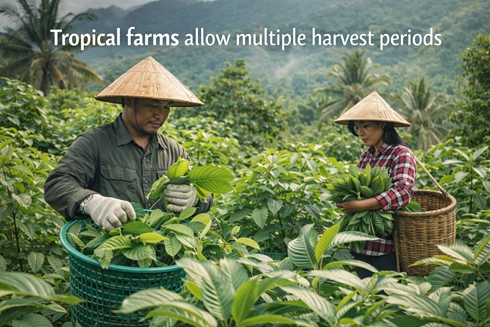
On tropical farms, kratom trees don’t really stick to a single harvest season. Leaves keep appearing throughout most of the year, so growers return to the same trees more than once.
They pick what’s ready and leave the rest alone. Then the tree just sits there doing its thing for a while. Later on, new leaves show up again, and the cycle picks back up.
9. Local farming practices influence growing methods
Every region grows kratom a little differently. Techniques often come from local habits passed through farming families over time.
One farmer may focus on spacing between trees. Another might care more about soil preparation before planting. Small adjustments like these shape how each farm operates.
No single rulebook for this. Farmers mostly watch the trees, read the land, and go with what years of hands‑on experience have taught them. A lot of the choices come down to instinct and local know‑how.
Final Words
Kratom trees don’t do well when the environment fights them. They like heat that doesn’t disappear after a week. Rain that wanders in now and then. The air is so humid it almost feels heavy. Soil that’s alive and a little unpredictable. Farmers mostly leave it alone—watch it, adjust around it, let the land do what it already knows how to do. They mostly pay attention and adjust to what nature is already doing. After a while, growers start noticing the small signals. How a tree reacts to the sun, how the soil feels after heavy rain, how leaves change when conditions shift. It’s slow work.
About The Author
Palmina Thomson writes about natural products and farming practices. She spends time examining how crops like kratom are cultivated across different regions, focusing on what actually happens in the field rather than on ideal methods on paper.
Her work leans on observation—how farmers respond to weather, soil, and changing conditions over time. Instead of following fixed systems, Palmina prefers to highlight the small, practical decisions that shape long-term growing habits. She keeps her writing simple, grounded, and easy to follow, especially for readers trying to understand how kratom grows beyond theory.