>>
Technology>>
Blockchain>>
How Blockchain Is Reducing Fri...How Blockchain Is Reducing Friction in Identity Verification in Tech
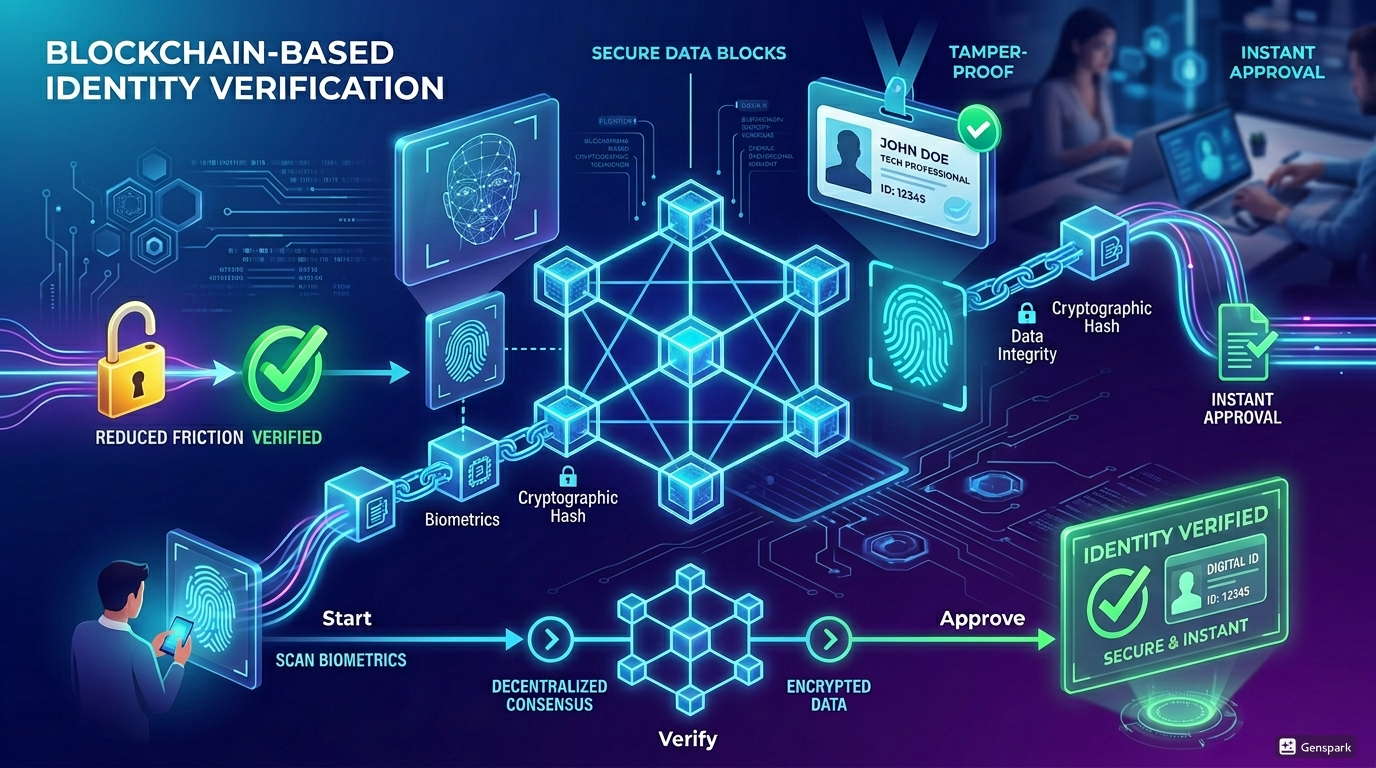
Identity verification has become one of the most contested battlegrounds in enterprise technology. Legacy KYC systems, built on centralized databases and manual document checks, are collapsing under the weight of fraud, regulatory pressure, and user demand for speed. Blockchain-based identity infrastructure isn't a distant prospect anymore. For CTOs and technology leaders, it's an architectural decision that's arriving fast.
Why Legacy KYC Systems Are Failing
Traditional KYC processes typically take between two and seven days to complete, relying on manual reviews, physical document submissions, and siloed data repositories. These centralized databases are single points of failure, attractive targets for breach events that expose millions of records simultaneously.
The deeper problem is structural. Every time a user onboards with a new institution, the same documents are re-submitted, re-verified, and re-stored. This redundancy creates compounding liability with no efficiency gain. Organizations carry the cost, and users absorb the friction.
Blockchain's Role in Self-Sovereign Identity
Self-sovereign identity (SSI) inverts the verification model. Traditional systems rely on institutions to hold and verify user credentials. Blockchain-based systems work differently. They allow individuals to store credentials in encrypted digital wallets and grant access only when needed. That reduces repeated document submissions and limits reliance on centralized storage.
This architecture matters enormously in sectors where anonymity and data minimization are competitive features. The online gaming sector offers a clear example of this shift. Online casinos, for example, show how some online services are already adopting faster onboarding systems that require less personal data from users.
Unlike traditional platforms that require identity documents, many crypto-based platforms, such as 99Bitcoins No KYC Casinos, verify transactions through blockchain wallet addresses instead of centralized personal accounts. Because blockchain systems are decentralized and publicly track wallet activity, users can move funds and confirm transactions without repeatedly submitting personal identification documents.
The broader takeaway for businesses is straightforward: many consumers increasingly prefer platforms that reduce friction and limit unnecessary data exposure.
Industries Abandoning Centralized Verification First
Financial services, healthcare, and cross-border logistics are leading the migration away from centralized KYC. The driver is consistent: reusable verified credentials issued on a blockchain ledger can cut cross-border onboarding friction dramatically. This eliminates redundant verification cycles between institutions that already trust the same cryptographic attestation.
Smart contracts are accelerating this growth. Automated compliance logic embedded directly in verification workflows means audit trails are generated in real time. This reduces human error and satisfies requirements under frameworks like FATF and AMLD6.
According to Spydra's KYC compliance analysis, blockchain verification can reduce onboarding time to under 60 seconds while supporting cross-institutional credential reuse.
Zero-Knowledge Proofs and Enterprise Privacy Standards
Zero-knowledge proofs (ZKPs) are the most technically significant development in this space. ZKPs allow a party to cryptographically prove a claim, such as being above a required age threshold or holding a valid license, without revealing the underlying data. The verifier learns only what they need to know. Nothing more.
For compliance teams navigating GDPR, this capability resolves a fundamental tension. Blockchain's immutability has historically conflicted with the regulation's right-to-erasure requirements. But ZKPs enable selective disclosure without storing personally identifiable information on-chain at all. The IDS Alliance outlines practical blockchain identity compliance strategies that address exactly this challenge for enterprise deployments.
What Frictionless Identity Means for Compliance Teams
The compliance function doesn't shrink under decentralized identity infrastructure; it transforms. Automated audit trails, cryptographic proofs of verification, and immutable credentialing records actually strengthen an organization's regulatory posture compared to manually maintained KYC files. The evidentiary quality improves substantially.
The real challenge for compliance leaders is integration. Legacy systems rarely communicate natively with decentralized identity protocols, and regulatory guidance across jurisdictions remains uneven.
Organizations that invest in middleware architecture and engage regulators early in deployment planning will hold a measurable advantage. Frictionless identity isn't just a user experience improvement; it's an operational resilience strategy that compliance teams and CTOs need to build together.