>>
Industry>>
Automotive>>
Ford Explorer Floor Mats: What...Ford Explorer Floor Mats: What to Know Before You Buy
The Silicon Review
06 May, 2026
Author:
Guest
Most Explorer owners don't think about floor mats until the carpet is already stained or the factory mat is bunching under the brake pedal.
Here we will cover everything worth knowing before buying, why fit matters, which materials hold up, what to check in a product listing, and how to maintain them once they're in.
Whether you're replacing worn-out mats or protecting a new vehicle, the right Ford Explorer floor mats make a real difference to how the interior holds up over time.
Why Ford Explorer Floor Mats Matter
The Explorer is a family SUV. It gets used like kids, dogs, groceries, sports gear, wet boots in winter, muddy shoes in spring. The factory carpet handles light use fine. Under real daily conditions, it takes a beating.
Replacing stained or worn-through carpet is expensive and time-consuming. Good floor mats prevent that by taking the damage before it reaches the carpet underneath.
There's a safety issue, too. A mat that slides forward and catches on the brake or gas pedal is a genuine hazard. It's not a worst-case scenario it happens with loose, ill-fitting mats regularly. Proper fitment and retention keep the mats exactly where they're supposed to be.
Bottom line: floor mats are a small upfront cost that prevents a much larger problem later.
Universal Mats vs. Custom-Fit Mats
This is the most important decision when shopping for Explorer mats. The two categories are not interchangeable.
Universal mats are cut to a general size meant to work across many different vehicles. They're inexpensive and easy to find. The problem is they're rarely quite right, gaps along the door sill, edges that fold up against the console, coverage that falls short in the corners. On a vehicle you're not protective of, they'll do. On an Explorer you actually want to keep in good condition, the fit gaps defeat the purpose.
Custom-fit mats are designed for a specific year, make, and model. For the Explorer, that means the mat is cut to match the exact floor contours, the wheel well shape, the footwell angle, and the area around the center console. They sit completely flat, hook into the factory anchor clips, and stay put.
The coverage difference is visible immediately. A custom mat that fills the entire footwell and locks into the OEM retainer clips is actually protecting the carpet. A universal mat that's half an inch short on the driver's side is leaving the most-used corner of the floor completely exposed.
For the 2020–2025 Explorer, specifically, this generation was a full redesign. The floor dimensions changed enough from the previous generation that older mats or cross-compatible fits don't work properly.
Best Floor Mat Materials: Rubber, TPE, and Carpet
Three main materials. Each has a different use case.
All-weather rubber is the heavy-duty option. Deep channels, rigid walls, completely waterproof. Snow, mud, and spilled drinks stay contained in the mat not in the carpet. Cleaning is straightforward: pull out, rinse off, done. The downside of cheaper rubber is odor.
A low-grade rubber mat in a hot car gets unpleasant fast. Check reviews specifically for smell complaints before buying any rubber mat.
TPE (thermoplastic elastomer) is the better all-weather choice for most people. It does everything rubber does: waterproof, easy to clean, built for real weather, but it's lighter, more flexible, and doesn't carry the chemical odor that lower-grade rubber often does.
The surface texture also tends to look more refined inside the cabin. For a daily-driven family SUV, TPE is usually the smarter pick.
Carpet mats look closest to the factory floor and feel softer underfoot. If the Explorer lives somewhere with mild weather and light use, they're a reasonable choice. For most Explorer owners, through family use, regular outdoor activity, and any kind of weather, carpet mats absorb spills and mud rather than containing them.
They're harder to clean and don't recover well from heavy soiling. All-weather material is the more honest choice for how the Explorer typically gets used.
What to Check Before Buying
Product photos don't tell the full story. Here's what to look for beyond the listing images.
- Channel depth and raised lips: Shallow channels fill up quickly and overflow. Look for mats with walls at least an inch high around the perimeter, high enough to actually contain a muddy boot or a spilled coffee without it reaching the carpet.
- Non-slip backing: The underside needs to grip carpet firmly. Raised nibs or a textured grip pattern keep the mat in place. Smooth-backed mats slide forward under pedal use regardless of how heavy they are.
- OEM clip compatibility: The 2020–2025 Explorer has factory retainer clips built into the floor. Mats with matching attachment hooks lock into these and don't move. This is the single most important feature on the driver's side mat.
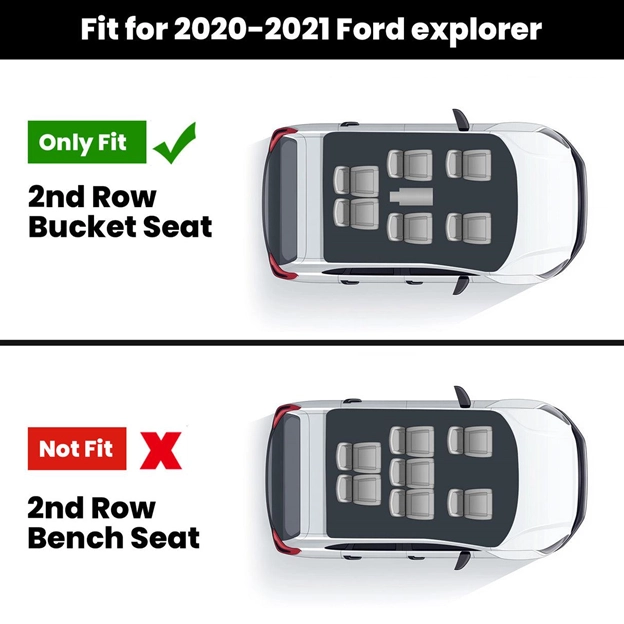
- Full-row coverage confirmation: Most product photos show the driver's mat. Confirm that second and third-row pieces are included in the set and that they cover the complete floor area, not a trimmed-down version that leaves gaps.
- Trim-level compatibility: Most XLT, Limited, and Base trims share the same floor layout for 2020–2025. Platinum and ST trims have some interior differences. Confirm trim compatibility with the seller before ordering if you're on one of those trims.
- Odor check reviews: You can't smell a mat from a product page. Search recent buyer reviews and filter for mentions of odor or smell, especially from people in warm climates or those who've had the mats in for more than a few weeks.
Front, Second, and Third-Row Coverage
Coverage needs are genuinely different across each row. A good set addresses all three.
Front row: The driver's side mat takes more abuse than any other piece in the vehicle. It's under constant foot movement, gas, brake, and dead pedal all day. This mat needs the strongest retention and the most durable material in the set. The passenger side sees less movement but should match the driver's mat in quality and height.
Second row: This is where kids sit most of the time. Food, drinks, backpacks, sports equipment, muddy cleats after practice. High channel walls matter here. Also, check whether the mat extends under the front seats, items constantly slide back there, and the carpet is exposed if the mat stops at the seat base.
Third row: Gets treated like a cargo area half the time. The seat folds down regularly, things get loaded in and out, and the floor back there gets stepped on directly. A mat that folds with the seat is much easier to live with than one that has to be removed every time. Don't overlook this row — third-row carpet damage is just as expensive to fix as the front.
Buying a complete three-row set from one manufacturer keeps the material, channel height, and color consistent throughout the interior. Mixing brands almost always results in visible mismatches in thickness and texture.
How to Clean and Maintain All-Weather Mats
All-weather mats are low maintenance, but a few habits keep them working properly long-term.
Pull them out and rinse them at least once a month under regular use. Mud and debris that sits in the channels traps moisture against the carpet underneath which defeats the whole purpose of having protective mats in the first place.
A garden hose and a stiff-bristle brush handle everything. Skip the high-pressure washer setting it's not necessary and can stress the mat material over time. Avoid harsh cleaning chemicals and don't leave mats flat on a hot driveway in direct sun for extended periods. Both can cause warping in lower-quality materials.
For carpet mats: vacuum regularly and treat spills immediately. The longer the liquid sits in the carpet fiber, the worse the stain gets. Keeping a small bottle of upholstery cleaner in the vehicle is useful if kids are regular passengers.
Inspect the retention clips periodically. If a mat starts moving during normal driving, check that the hooks are still properly seated in the OEM anchor points. A mat that's come loose from its clips is a hazard. Reset it before driving.
Why Lasfit Is a Good Option for the Explorer
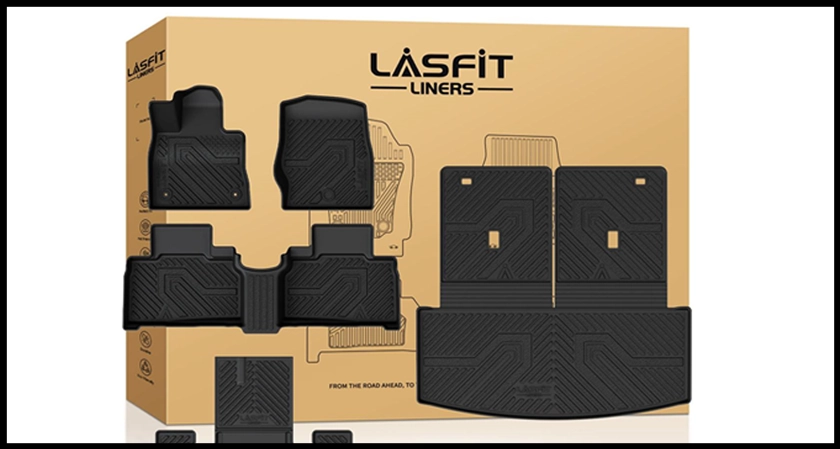
Lasfit makes custom-fit floor mats specifically for the 2020–2025 Ford Explorer. The mats are designed to match the exact floor contours of that generation, not a generic fit that's been adapted.
The material is TPE, which avoids the odor issues common with lower-grade rubber while maintaining full waterproofing and weather protection. The channel walls are high enough to contain real spills, and the backing uses a raised nib pattern that grips carpet without damaging it.
Clip compatibility with the Explorer's OEM retainer system is built into the driver's mat hooks, which directly attach to the factory anchor points and don't shift.
The full set covers all three rows with consistent material and coverage throughout. For Explorer owners looking for a fit-specific, weather-ready option, the Ford Explorer floor mats from Lasfit cover the practical requirements without overcomplicating it. For other Ford models, the broader Ford floor mats collection covers F-150, Bronco, Mustang, and more with the same approach to vehicle-specific fit.
Conclusion
Floor mats protect one of the hardest things to repair in a vehicle: the carpet. Getting the fit right from the start is cheaper and easier than dealing with stained or worn-through flooring later.
For the Explorer, custom-fit TPE mats with proper OEM clip retention cover the practical requirements for a daily-driven family SUV. The right material, the right shape, and the right retention system make the difference between a mat that actually works and one that just fills the space.
Frequently Asked Questions
Do floor mats from other Ford models fit the Explorer?
No. Floor dimensions vary between models, even within the same brand. Mats made for an Escape or F-150 won't conform to the Explorer's floor shape correctly. Always buy mats listed specifically for the Explorer and confirm the model year matches before ordering.
What's the difference between rubber and TPE floor mats?
Both are waterproof and designed for all-weather use. The main differences are weight, flexibility, and odor. TPE is lighter and more flexible than standard rubber, and it doesn't carry the chemical smell that cheaper rubber mats sometimes develop in hot conditions.