>>
Industry>>
Defense technology>>
Australia-Vanuatu Deal Bars Fo...Australia-Vanuatu Deal Bars Foreign Military Bases on Pacific Island but China's Influence Looms Large
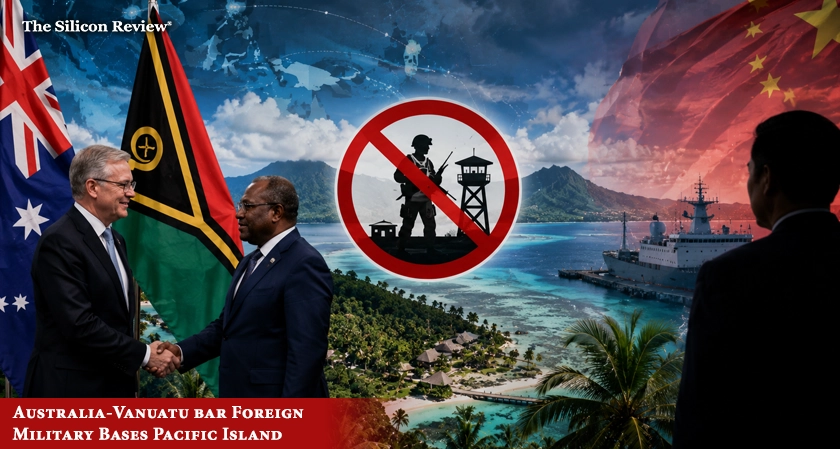
Australia and Vanuatu have signed the landmark Nakamal Agreement, barring any foreign military base on the Pacific island nation as Canberra seeks to counter China's growing influence in the region. Prime Minister Anthony Albanese hailed the deal as providing "certainty" for Australia, while Vanuatu's leader insisted his country remains sovereign and transparent.
The Pacific has new security architecture. Australia and Vanuatu signed the Nakamal Agreement in Canberra on Monday, a landmark treaty that bars any foreign military base from being established on the Pacific island nation.
"To reinforce Pacific collective security and sovereignty, Vanuatu shall not permit its territory to be used for any foreign military base or infrastructure," the agreement states.
The deal, named after the traditional Vanuatu meeting place where community leaders consult and make decisions with mutual respect, ends months of tense negotiations that saw an earlier draft collapse in September 2025 over Vanuatu's sovereignty concerns.
The watered-down agreement removes Australia's proposed veto power over Chinese investment in Vanuatu's critical infrastructure. Instead, Vanuatu has committed to consulting Australia on third-party engagement in its ports, telecommunications, digital, aviation and energy sectors but Canberra has no right to block any deal.
"What this does do is to provide certainty for Australia that there will be no foreign military base,” Prime Minister Anthony Albanese told reporters after signing the deal with his Vanuatu counterpart Jotham Napat. We have concluded a balanced agreement that will protect our collective and individual security and our sovereignty."
Vanuatu had feared the original draft would limit its ability to attract infrastructure investment from Beijing. China is Vanuatu's largest external creditor and has funded the expansion of a wharf in Luganville once the largest US military base in the South Pacific fuelling concerns in Canberra and Washington that Beijing wanted a navy base.
Napat said the deal "reaffirms our shared commitment to continuing and strengthening the comprehensive partnership between our two countries, founded on mutual respect, trust and our common vision for a peaceful, stable and prosperous Pacific."
The agreement recognises Australia as Vanuatu's "long-standing primary policing partner," and commits Vanuatu to prioritising policing cooperation with Pacific Islands Forum members. But it does not exclude China which has donated police equipment including drones and patrol boats to Vanuatu since 2023.
Australia will provide A$500 million in economic support to Vanuatu, though over a longer period than the originally planned 10 years. In return, Vanuatu must first request aid from the FRANZ humanitarian coalition Australia, New Zealand and France in response to natural disasters.
The deal also includes "enhanced" visa arrangements for Vanuatu citizens, but requires Port Vila to differentiate between natural-born citizens and those who have purchased so-called "golden passports" such as controversial influencer Andrew Tate.
Vanuatu is also negotiating a separate agreement with China, known as the Namele Agreement, which Napat described as a "comprehensive development cooperation" deal, not a security pact. He said it would be made public once it receives "clearance from Beijing."
Here is the question this deal raises. Australia has signed security pacts with Tuvalu, Nauru and Papua New Guinea, and now Vanuatu. But China still has police ties with Solomon Islands, and Beijing is still pursuing its own agreement with Vanuatu. When Australia says it has provided "certainty" over military bases, has it really locked China out or just made the contest for influence more subtle?
Former Australian diplomat in the Pacific James Batley said the strategic rivalry would continue. "Vanuatu's long tradition of non-alignment means that it won't simply abandon its relationship with China. Nor will China abandon its attempts to undermine Australia's interests in Vanuatu."
The Nakamal Agreement has been ratified by the Vanuatu government and will now go through Australia's parliamentary process.
As Australia and Vanuatu sign a deal barring foreign military bases on the Pacific island, The Silicon Review asks a final question. When a deal secures a ban on foreign military bases but leaves the door open for Chinese police, development aid, and critical infrastructure investment who really won?
FAQ:
Q: What is the Nakamal Agreement between Australia and Vanuatu?
A: The Nakamal Agreement is a landmark security and economic treaty signed on June 29, 2026, that bars any foreign military base from being established on Vanuatu's territory and recognises Australia as Vanuatu's primary policing partner.
Q: Does the Australia-Vanuatu deal ban all foreign military bases?
A: Yes, Vanuatu "shall not permit its territory to be used for any foreign military base or infrastructure."
Q: Can China still invest in Vanuatu under the Nakamal Agreement?
A: Yes. The deal removes Australia's proposed veto power. Vanuatu must consult Australia on third-party engagement in critical infrastructure, but Australia cannot block any deal.
Q: What is the Namele Agreement between Vanuatu and China?
A: The Namele Agreement is a separate "comprehensive development cooperation" deal that Vanuatu is negotiating with China. Prime Minister Napat says it is not a security pact and will be made public once Beijing gives clearance.
Q: How much aid will Australia provide under the Nakamal Agreement?
A: Australia will provide $500 million in economic support to Vanuatu, though over a longer period than the originally planned 10 years.
Q: Does the Australia-Vanuatu deal affect China's police presence in Vanuatu?
A: No. The agreement does not exclude China. Vanuatu must prioritise Pacific Islands Forum members for policing requests, but China has previously donated police equipment to Vanuatu.













Comments