>>
Industry>>
Automobile>>
How Automotive Electronics Are...How Automotive Electronics Are Shaping Software-Defined Vehicles

The Silicon Review
12 June, 2026
Author:
The Silicon Review Team
Source: Magnific
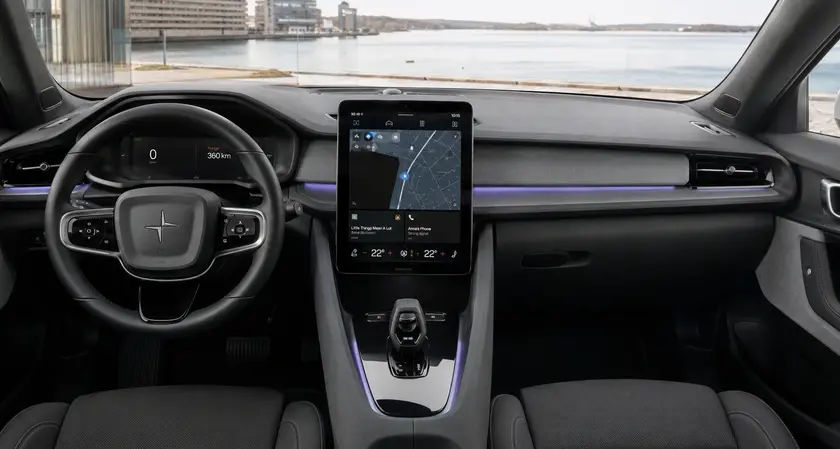
The car in your driveway is no longer just a machine with an engine and a steering wheel. It is a rolling computer, and it’s all thanks to automotive electronics. They control the screen you touch, the safety systems that watch the road, the battery in an EV, and the updates that arrive after you buy the car.
In a software-defined vehicle, the car is built so software can keep adding value long after it leaves the factory. That shift is already reshaping the industry. The automotive software market is projected to grow from about $19 billion in 2019 to $32.3 billion by 2030.
Older cars had many small control units that each did one job. A software-defined vehicle still uses hardware, but the hardware is organized so software can control more of the car from a central brain. That means it’s easier to update features, fix bugs, and add new services without replacing any parts of the car.
What Do Software-Defined Vehicles Really Mean?
A software-defined vehicle, or SDV, is a car where software does more than run the infotainment screen. It helps shape how the vehicle works, feels, and improves over time. That can mean a better navigation system, a new driver-assist feature, a smarter charging plan, or a quieter cabin mode sent through an update.
Vehicles are becoming software platforms, and some makers are already using subscription-based premium features and automotive-grade operating systems.
This is where automotive electronics matter most. Sensors collect data. ECUs and central computers process it. Power electronics manage energy flow and displays, and then control modules turn it into something the driver can use.
When those parts are designed well, software can move fast. When they are scattered across old systems, every change takes longer and costs more. That’s why the market for automotive software and electronics is growing faster than the broader car market, which shows how much value is shifting into the electronic side of the vehicle.
Why Does This Matter for Drivers?
This is not just an engineering story. It changes daily driving.
A software-defined car can improve after purchase. It can get bug fixes, feature updates, and better performance without a trip to the dealer. It can also be personalized. Seat settings, route preferences, charging habits, and cabin controls can follow the driver from one trip to the next. That is why the interface matters so much.
If the software feels confusing, the car feels less useful, no matter how advanced the hardware is. There is another side to this. More software also means more risk. If the electronics stack is weak, updates can fail, cyber security risks grow, and the driver may lose trust.
That is why makers need clean architecture, strong testing, and clear rules for updates. Deloitte’s SDV research says cloud-based platforms and OTA updates are becoming standard, but companies need robust architectures to handle the growing complexity.
Cars That Keep Improving After Purchase
What makes software-defined vehicles so interesting is that they change the car’s life after it is sold. A driver no longer has to treat the day of purchase as the finish line. The car can keep getting better through software updates, and that changes how people think about ownership.
The cabin feature can be improved. A navigation tool can get smarter. Even small updates can make a car feel newer without swapping out major parts.
That is a big shift for both drivers and car makers. It means the value of the vehicle is not locked in at the factory. It keeps growing, or falling, based on how well the electronics and software work together.
For that reason, the best SDVs are built with care from the start. They need strong chips, clean wiring, reliable sensors, and software that can grow without breaking what already works.
Drivers may never think about those details while they are on the road, but they feel the result every day. That is the real power of automotive electronics in this shift.
Practical Tips for Brands and Teams Building SDVs
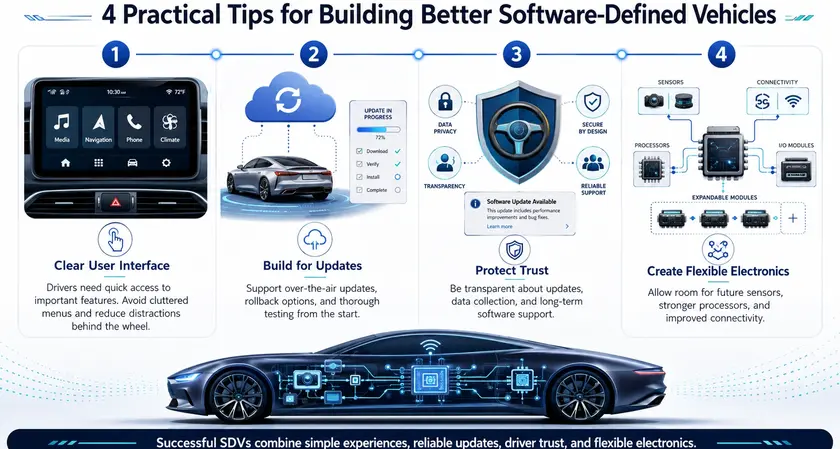
First, keep the user interface clear. Drivers do not want a maze of menus just because the car is smarter. They want fast access to the features that matter most. That is especially true in a moving car, where attention is limited.
Second, design for updates from day one. An SDV is not finished at launch. It needs a clean update path, rollback support, and good test coverage before any new software goes out. If the update system is weak, the whole promise of software-defined mobility gets shaky.
Third, protect trust. Drivers will accept more software if it feels helpful, safe, and fair. They should know what an update changes, what data is collected, and how long core functions will stay supported. That trust matters just as much as feature count.
Fourth, create electronics that can grow. The vehicle should have room for new sensors, stronger computers, and better connectivity as the platform gets older. If the electronics stack is too rigid, the car ages badly. If it is modular, the car can stay fresh much longer.
The Bottom Line
Automotive electronics are not just supporting software-defined vehicles. They are making them possible.
They are the bridge between the physical car and the digital features drivers now expect. As vehicles move toward central compute, connected services, and over-the-air updates, the winners will be the teams that keep the hardware solid and the software easy to use.