>>
Technology>>
Artificial intelligence>>
AI Scaling Is China's Religion...AI Scaling Is China's Religion. Beijing Is Spending Billions on Tokens. But Is Anyone Asking What Happens When the Model Eats Itself?
The Silicon Review
15 June, 2026
Author:
The Silicon Review Team
China is betting billions on AI scaling, building larger models with more tokens and more compute. The Silicon Review asks: when every country chases the same strategy, who wins and who just burns cash?
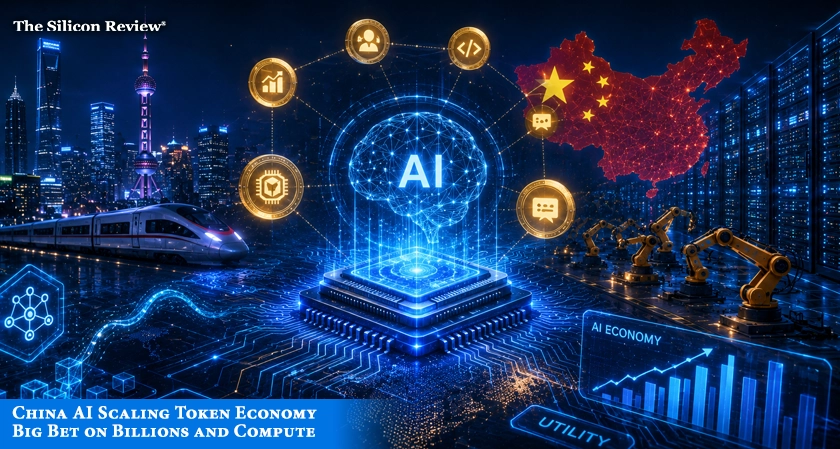
China has found its religion. It is called AI scaling. Bigger models. More tokens. More compute. More data. The government is spending billions. Private investors are spending billions more. Everyone believes that scale equals intelligence.
The token economy is booming. Every word, every image, every video is a token. More tokens train better models. Better models win the AI race. That is the theory. That is the bet. That is also the problem.
Let us be honest about what AI scaling actually means. It means throwing more electricity at a math problem and hoping the answer gets smarter. Sometimes it works. Sometimes it just gets bigger. China is betting that bigger is always better. History suggests diminishing returns are real.
China has advantages. It has data. Lots of data. Hundreds of millions of users generating billions of tokens every day. It has compute. Domestic chipmakers are catching up. It has capital. The government treats AI as a national priority.
But AI scaling has limits. Models eventually stop improving. They memorize instead of learn. They replicate biases instead of reasoning. They consume all available data and start training on their own outputs. That way lays madness. Or at least diminishing returns.
The United States is chasing the same strategy. So is Europe. So is every country with a research budget. Everyone is scaling. Everyone is spending. Everyone is convinced they will win. Basic arithmetic says most of them will lose.
China's big bet on scale could pay off. A model trained on more data than any competitor could achieve breakthroughs no one else can match. That is the hope. The fear is that China spends billions to build a slightly better version of what everyone else already has.
Here is the question no one in Beijing is asking. When every country has scaled as far as physics allows what then? The models will all be similar. The capabilities will all be comparable. The billions spent on AI scaling will have produced a commodity, not a competitive advantage.
As China bets big on the AI token economy and scales its models to unprecedented size, The Silicon Review asks a final question. Is China building the smartest machine in the world, or just the most expensive way to prove that scaling has limits?
FAQ:
Q: What is AI scaling in China's strategy?
A: AI scaling means building larger models with more tokens and more computing power to achieve better intelligence.
Q: Why is China betting billions on the token economy?
A: China believes that more tokens and larger models will give it a competitive advantage in the global AI race.
Q: What are the limits of AI scaling?
A: AI scaling faces diminishing returns where models stop improving, memorize instead of learn, and consume all available data.
Q: Is the United States also pursuing AI scaling?
A: Yes, the United States and other countries are also chasing AI scaling with similar investments and strategies.
Q: Could China's AI scaling bet fail?
A: Yes, if scaling reaches diminishing returns, China could spend billions building a model only slightly better than competitors.