>>
Industry>>
Energy and Utility>>
Japan to Rebuild Aging Japanâ€...Japan to Rebuild Aging Japan’s Nuclear power Plants to Feed AI's Growing Appetite for Power
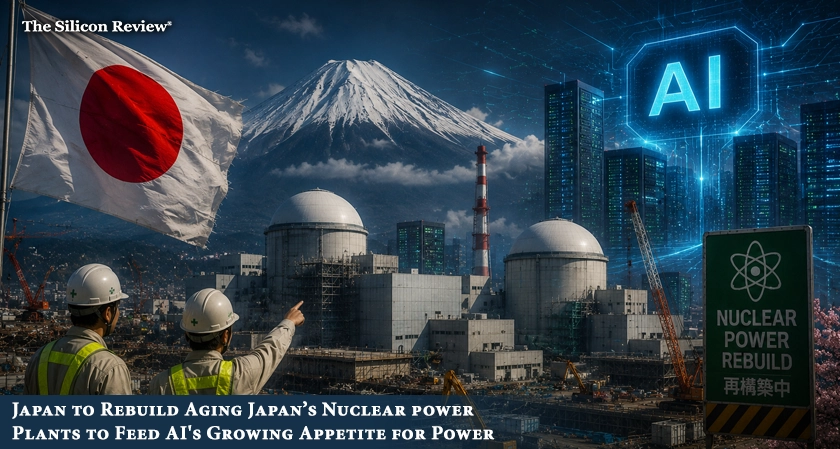
Japan’s Nuclear power Plants news: Japan is rebuilding aging nuclear reactors for the first time since Fukushima to meet surging electricity demand from AI data centers. The Silicon Review reports on the energy policy reversal.
Japan has set its first numerical targets for replacing aging nuclear reactors since the 2011 Fukushima disaster. The Ministry of Economy, Trade and Industry proposed rebuilding two to five reactors by the 2040s and 11 to 14 by the 2050s.
The government's basic energy plan, revised in 2025, aims for nuclear power to supply 20 percent of Japan's electricity by fiscal 2040, up from just 9.4 percent in fiscal 2024. This marks a complete reversal of the post-Fukushima policy to reduce dependence on atomic energy.
Why the shift? Artificial intelligence.
Japan expects electricity demand to rise sharply, driven by power-hungry AI data centers and semiconductor plants. The government has been promoting the construction of next-generation nuclear reactors and developing high-temperature gas-cooled reactors for hydrogen production.
The proposal is the first time Japan has compiled numerical targets for replacing aging reactors. It outlines the construction of up to 14 new reactors by the 2050s. The government also aims to keep the number of reactors currently in use about 20 operating beyond their 60-year lifespan.
The move aligns with the global nuclear energy revival. The Trump administration aims to triple nuclear capacity by 2050, and at COP29, six countries including France and the UK pledged to support nuclear expansion.
But Japan's path is uniquely challenging. Nuclear remains deeply unpopular after the 2011 triple meltdown at the Fukushima Daiichi plant. Polls have consistently shown a majority opposed to restarting reactors.
The government is trying to build public acceptance through safety improvements and compensation packages for host communities. But the timeline is long. New reactors take 15 to 20 years to build. The AI power crunch is happening now.
Japan imported a record 2.3 million tonnes of LNG in March. It is the world's second-largest importer of coal. The country's greenhouse gas emissions rose 2.1 percent in fiscal 2024. Without nuclear, Japan cannot meet its net-zero goals.
As Japan sets its first numerical targets for rebuilding aging nuclear reactors since Fukushima, The Silicon Review examines why AI's growing appetite for electricity is driving a policy reversal that would have been unthinkable a decade ago.
Q: How many nuclear reactors does Japan plan to rebuild?
A: Japan's METI has proposed rebuilding two to five reactors by the 2040s and 11 to 14 reactors by the 2050s. The government also aims to keep currently operating reactors running beyond their 60-year lifespan.
Q: What percentage of Japan's electricity will come from nuclear by 2040?
A: Japan aims for nuclear power to supply 20 percent of its electricity by fiscal 2040, up from 9.4 percent in fiscal 2024 and just 6 percent in 2022.
Q: Why is Japan rebuilding nuclear plants now?
A: Japan expects a sharp rise in electricity demand driven by power-hungry AI data centers and semiconductor plants. The government has been promoting next-generation reactor construction to meet this demand.
Q: Is nuclear power unpopular in Japan after Fukushima?
A: Yes. Nuclear remains deeply unpopular after the 2011 triple meltdown at the Fukushima Daiichi plant, which forced the evacuation of over 150,000 people. Polls have consistently shown a majority opposed to restarting reactors.
Q: How long does it take to build a new nuclear reactor in Japan?
A: New reactors typically take 15 to 20 years to build. The first new reactors under this proposal would come online in the 2040s, with full buildout by the 2050s.
Q: What is Japan doing about energy demand in the meantime?
A: Japan imported a record 2.3 million tonnes of LNG in March and is the world's second-largest importer of coal. Greenhouse gas emissions rose 2.1 percent in fiscal 2024 as the country relies on fossil fuels while nuclear capacity remains limited.