>>
Industry>>
Environmental sustainability>>
'Pacific Ashtray' plan Rejecte...'Pacific Ashtray' plan Rejected: If Australia Won't Burn Its Waste, Why Should Fiji?
The Silicon Review
04 June, 2026
Author:
The Silicon Review Team
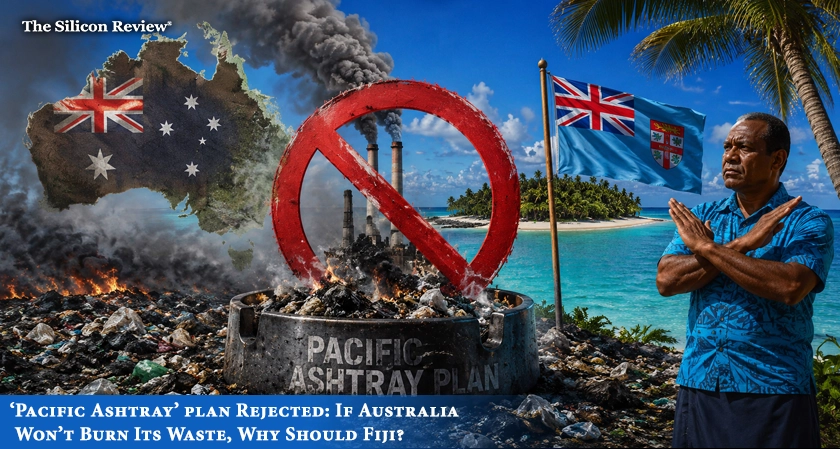
Fiji rejected an Australian billionaire's 'Pacific Ashtray' plan. The Silicon Review asks: if incinerators aren't safe for Australia, why are they safe for Fiji?
An Australian billionaire Ian Malouf spent seven years trying to build a waste-to-energy incinerator ('Pacific Ashtray' plan) in Sydney. He failed. The technology was deemed too dangerous. Too risky for human health. Too close to homes and schools.
So he took the same plan to Fiji.
Ian Malouf, the founder of Dial a Dump, teamed up with fashion billionaire Rob Cromb. Their proposal? A massive incinerator in Vuda, on Fiji's main island. It would burn 900,000 tonnes of waste every year. Not just local rubbish. Waste imported from across the Pacific. From Australia. From New Zealand. From wherever would send it. The plan had a name. The Vuda Waste-to-Energy Project. The locals had another name. The Pacific Ashtray.
Fiji's UN ambassador said it best: "The Vuda coast must not become the Pacific's ashtray." That's not diplomacy. That's a country begging not to be treated like a rubbish bin.
On June 3, 2026, Fiji's environment ministry said no. The reasons were clear. The scale was too big. The imported waste was a red flag. The hazardous ash left behind had nowhere safe to go. And the health risks? Unacceptable.
Fiji's entire carbon emissions would have risen by 25 percent just to burn Australia's garbage. Twenty-five percent. For what? So Australian billionaires could profit from a technology that their own country rejected.
Here is the one single right question that no one is asking. If incinerators are safe, why aren't they in Sydney? If they are dangerous, why would they be acceptable for Fiji?
Malouf spent seven years trying to get approval in Australia. Seven years. He faced opposition from environmental groups, from local councils, from residents who did not want to breathe the air near a waste incinerator. In 2018, the plan was rejected.
But the same man, with the same technology, thought Fiji would say yes.
This is not a story about one rejected proposal. This is a story about a pattern. Wealthy countries send their waste to poorer nations because it's cheaper. Because the environmental laws are weaker. Because the voices of local communities are easier to ignore.
Fiji said no this time. But how many times have Pacific islands said yes? How much waste from rich countries is already being burned, buried, or dumped across the region?
The Fijian government made the right call. But it should never have had to make that call in the first place.
As Fiji rejects the 'Pacific Ashtray' plan while Australia won't burn its own waste, The Silicon Review asks: what does it say about a country when its billionaires search for poorer nations to do what they cannot do at home?
Q: What was the 'Pacific Ashtray' plan?
A: Australian billionaires Ian Malouf and Rob Cromb proposed building a massive waste incinerator in Vuda, Fiji, that would burn 900,000 tonnes of rubbish annually, including waste imported from Australia and other Pacific nations.
Q: Did Australia ever consider this type of incinerator?
A: Yes. Malouf spent seven years trying to get approval for a similar waste-to-energy incinerator in Sydney. It was rejected in 2018 due to health and environmental concerns.
Q: Why did Fiji reject the incinerator?
A: Fiji's environment ministry cited the project's massive scale, the dangers of importing waste, the lack of safe disposal for hazardous ash, and unacceptable health risks to local communities.
Q: How would the incinerator have affected Fiji's carbon emissions?
A: The project would have increased Fiji's national greenhouse gas emissions by approximately 25 percent.
Q: What does 'Pacific Ashtray' mean?
A: Fiji's UN ambassador coined the phrase, saying "the Vuda coast must not become the Pacific's ashtray," referring to the danger of turning Pacific islands into dumping grounds for foreign waste.
Q: Is this the first time Australia has tried to send waste to the Pacific?
A: No. Wealthy countries have a long history of exporting waste to poorer nations with weaker environmental regulations. This pattern is often called "waste colonialism."