>>
Women-in-Power>>
Women in Power>>
Ngozi Okonjo-Iweala: The WTO C...Ngozi Okonjo-Iweala: The WTO Chief Steering Global Trade through an Era of Economic Upheaval
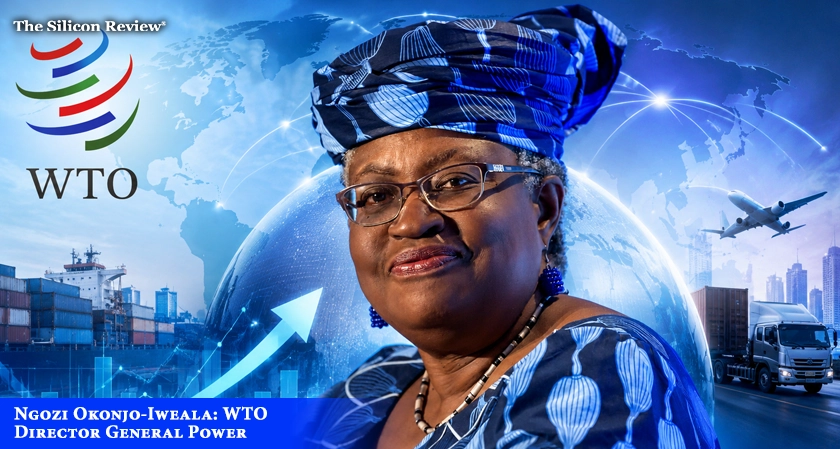
In the high-stakes arena of global governance, where economic tsunamis are triggered by policy decisions made in a single capital, one woman stands as the unshakeable pillar of the multilateral trading system. Dr. Ngozi Okonjo-Iweala is not merely the Director-General of the World Trade Organization (WTO); she is the architect of a resilient new world order, navigating through the most significant disruptions in 80 years with a blend of intellectual force, diplomatic finesse, and an unyielding determination to uplift developing nations. As the first woman and first African to lead this pivotal institution, she embodies the very definition of power in the 21st century power defined not by political rhetoric, but by the tangible ability to keep 72% of global trade flowing on Most Favoured Nation terms even amid rising unilateral actions. Her power is the power of stability in an unstable equilibrium, a force that ensures trade remains a bridge to peace and prosperity, not a weapon of fragmentation. She stands as a beacon for women and girls worldwide, proving that authentic leadership and courage can indeed crack the highest glass ceilings.
The Making of a Global Leader: From Nigeria's Civil War to the World's Stage
The story of Ngozi Okonjo-Iweala is not one of privilege, but of profound resilience forged in the crucible of adversity. Born in 1954 in Ogwashi-Ukwu, Delta State, Nigeria, to academic parents, her formative years were marked by the brutal realities of the Nigerian Civil War. Her father, a Brigadier in the Biafran army, and her mother lost everything. During this period, a teenage Ngozi displayed the sheer grit that would define her career. When her sister fell critically ill with malaria, she walked an astonishing 10 kilometres to a clinic. Facing a massive crowd, she crawled through the legs of the waiting patients with her sister on her back and climbed through a window to reach a doctor. "I knew if she didn't get help she'd die," she recalled. This was not just a story of survival; it was a preview of the relentless determination she would bring to the negotiation tables of the world. Her parents, both academics, instilled in her the belief that education is a privilege meant to enrich others. This guiding philosophy took her from Harvard University to a PhD in Regional Economics and Development from MIT, setting the stage for a 25-year career at the World Bank, where she rose to the Number 2 position of Managing Director, Operations.
Defying the Odds: A Legacy of Reforms and Sacrifice
Returning to Nigeria, she shattered gender norms to become the country's first female Finance Minister, and later Foreign Minister. Her legacy as a technocrat is defined by an unflinching battle against corruption and inefficiency. In a landmark achievement, she led the negotiation with the Paris Club that resulted in the cancellation of $18 billion of Nigeria's debt and the restructuring of a further $30 billion, a feat that earned her global recognition as Finance Minister of the Year. She also pioneered revolutionary transparency measures like the Treasury Single Account (TSA) to curb the hemorrhage of public funds. This courageous stance, however, came at a great personal cost. Her fight against oil sector corruption, where billions were being siphoned, drew the ire of powerful cartels. In a chilling reminder of the dangers of her work, her elderly mother was kidnapped and held for five days. While admitting she felt immense guilt, Okonjo-Iweala did not retreat. Instead, she continued to strengthen institutions against graft, even as she questioned the value of her work weighed against a human life.
A Symbol of Authentic Power at the WTO
When she took the helm of the WTO in March 2021, the world took notice not just of her mind, but of her presence. In a corporate world dominated by suits and ties, Okonjo-Iweala chose to wear the vibrant Ankara fabrics of her Nigerian heritage, often accessorised with a signature gele. This became a powerful global statement, sparking the #BeLikeNgoziChallenge and redefining what leadership looks like. "As I started getting up in leadership," she explained, "as a woman leader making your way, people look at your appearance so much. They don't look at men as much... but a woman is put up for scrutiny." By owning her narrative and her appearance, she liberated women leaders from the burden of conforming to Western aesthetics to be taken seriously. She used her platform to champion women's inclusion, insisting on an equal number of Deputy Directors-General and pushing for the creation of a $50 million fund to support women in digital trade through the International Trade Centre's WEIDE Fund, empowering entrepreneurs globally. Her goal is to make the "first woman" milestone irrelevant, because, as she states, "I don’t derive tremendous pleasure from being the first woman to do this because I don’t think it should be that way."
Dr. Ngozi Okonjo-Iweala journey is the ultimate masterclass in power. It teaches us that true power is not about the title you hold, but the barriers you break, the lives you touch, and the principles you refuse to compromise. She navigates a world rocked by geopolitical tensions, steering the global trade ship with a steady hand, armed with the belief that trade is the most potent tool to lift developing countries out of poverty. Her story is a resounding call to every woman: to be unapologetically you, to fight for what is right, and to understand that your power is not in fitting in, but in standing out with your heritage, your intellect, and your humanity intact. This is the essence of a woman in power.
- Who is Ngozi Okonjo-Iweala?
She is the Director-General of the World Trade Organization (WTO) and the first woman and first African to hold this position.
- What does the WTO Director-General do?
She leads the global trade organization that oversees international trade rules and resolves disputes between 164 member nations.
- Where is Ngozi Okonjo-Iweala from?
She is from Nigeria, born in Ogwashi-Ukwu, Delta State.
- When did Ngozi Okonjo-Iweala become WTO Director-General?
She assumed office on March 1, 2021.
- What is Ngozi Okonjo-Iweala famous for?
She is famous for negotiating Nigeria's $18 billion debt cancellation with the Paris Club and her historic appointment as the first female WTO chief.
- What did Ngozi Okonjo-Iweala study?
She studied Economics at Harvard University and earned her PhD in Regional Economics and Development from MIT.
- Has Ngozi Okonjo-Iweala been a Finance Minister?
Yes, she served as Nigeria's Finance Minister twice and also as the Foreign Affairs Minister.
- Why is Ngozi Okonjo-Iweala powerful?
She wields immense global influence by shaping international trade policies affecting billions of people worldwide and breaking multiple glass ceilings.
- What challenges did Ngozi Okonjo-Iweala face?
She faced corruption battles, her mother's kidnapping, resistance as a woman in male-dominated spaces, and leading the WTO during a global pandemic.
- What is Ngozi Okonjo-Iweala doing for women?
She champions gender equality, created a $50 million WEIDE Fund for women in digital trade, and insists on equal representation of women in leadership roles.












Comments