>>
Industry>>
Compliance and governance>>
Dock Workers Demand 28-Hour We...Dock Workers Demand 28-Hour Week in AI Talks 'If DP World Wants Automation, They Must Pay the Social Dividend'
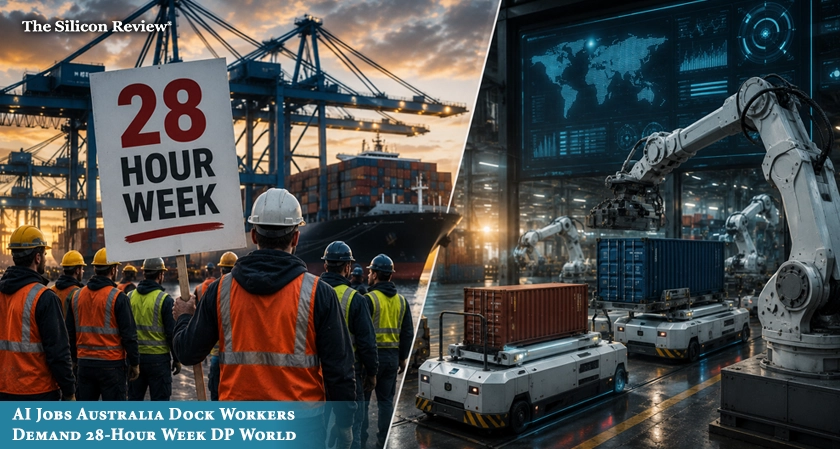
Australian dock workers are demanding a 28-hour work week with no loss of pay as port logistics giant DP World pushes ahead with AI and automation plans that the Maritime Union of Australia says threaten up to 1,000 jobs more than 60% of the dock and maintenance workforce.
The battle lines are drawn. Australian dock workers are demanding a shorter week as the price of AI. The Maritime Union of Australia has made a 28-hour work week with no loss of pay its bottom line in negotiations with DP World, the Dubai-based port operator that handles around 40% of Australia's container trade.
DP World currently employs around 1,800 workers in Australia, who work between 32 and 35 hours a week depending on location. The union wants to cut that to 28 hours as AI and automation are introduced.
"If DP World wants AI and automation, then they must pay the social dividend," the union said in a statement on July 3." The new technology doesn't have to cost our members their jobs or put their livelihoods at risk just so a terminal operator can boost profits. It should be used to improve workers' lives, not destroy them."
The AI push has been in the works for 18 months. DP World notified the union in October 2024 of its intention to introduce automation, with proposed changes including driverless container vehicles, AI-assisted remote-controlled cranes, and automated systems capable of scanning and managing container movements. Brisbane is currently the only site where implementation has been scheduled, beginning in February 2027.
A study commissioned by the MUA and conducted by the Centre for International Corporate Tax Accountability and Research found the automation program could threaten up to 1,000 jobs more than 60% of DP World's dock and maintenance workforce. The union also claims DP World has pushed AI into operations "without genuine consultation."
DP World has disputed the job loss claims. The BBC has contacted the company for comment.
The dispute is part of a broader national debate about how the benefits of AI should be shared. According to a speech in the Australian Senate, the share of DP World's revenue going to workers has dropped from 54% to 35% in just a six-year period.
MUA National Secretary Jake Field said, "If they can operate these machines from a data centre in Sydney, they will seek to operate them from a data centre somewhere else in the world at the lowest possible cost." The union is also calling for the right to reopen bargaining when AI is introduced, expanded arbitration rights, and greater union access to audit automated workplace systems.
The union has held up DP World's automation plans for 18 months as the plans go through safety approvals and a nine-month consultation process.
Here is the question this standoff raises. A union is demanding a 28-hour week at the same pay in exchange for allowing AI and automation onto the waterfront. The company wants to cut costs and boost efficiency. The workers want to share in the gains. When the choice is between jobs lost to machines and shorter hours for the same pay, which is really protecting the future of work?
As DP World dock workers push for a 28-hour week in exchange for AI, The Silicon Review asks a final question. When a machine can do the work, should the human be paid the same for less time, or paid less for the same time?
FAQ:
Q: Why are Australian dock workers demanding a 28-hour week?
A: The Maritime Union of Australia is demanding a 28-hour week with no loss of pay as a condition for allowing DP World to introduce AI and automation, arguing workers should share in productivity gains rather than bear the cost of job losses .
Q: How many jobs could be lost at DP World terminals?
A: A study commissioned by the MUA found DP World's automation plans could threaten up to 1,000 jobs, more than 60% of its dock and maintenance workforce. DP World has disputed these claims .
Q: What is DP World's position on the 28-hour week demand?
A: DP World has not publicly responded to the union's 28-hour week demand. The company has told the union its automation plans include driverless vehicles, remote-controlled cranes, and automated container management systems.
Q: When will DP World's automation begin?
A: Brisbane is currently the only site where implementation has been scheduled, beginning in February 2027. The union has held up the automation plans for 18 months through a consultation process.
Q: What is DP World's presence in Australia?
A: DP World handles around 40% of Australia's container trade and employs approximately 1,800 workers at terminals in Sydney, Melbourne, Brisbane, and Fremantle.
Q: Has this happened in other industries?
A: A similar outcome was reached at Victoria International Container Terminal, where the union secured pay rises, permanent roles, and restrictions on AI introduction without agreement. Casuals there received a 46% pay increase.













Comments