>>
Industry>>
Cryptocurrency>>
Beyond Plastic: How Digital Gi...Beyond Plastic: How Digital Gift Cards Became the Silent Utility Layer of the Global Economy
The Silicon Review
14 July, 2026
Author:
The Silicon Review Team
For decades, the plastic gift card was viewed through a narrow, consumer-centric lens. It was the ultimate "last-minute gift"—a colorful piece of branded PVC to be tucked into a birthday card when the giver was out of ideas.
Today, that physical artifact is rapidly disappearing. In its place, a sophisticated, API-driven digital gift card infrastructure has emerged. It is no longer just a retail product; it has evolved into a silent, universal payment layer operating under the hood of the global digital economy.
From bypassing the friction of cross-border banking to acting as a bridge between fiat currencies and Web3, digital gift cards are quietly solving some of the internet's most complex transactional challenges.
Bridging the Unbanked and Underbanked Worlds
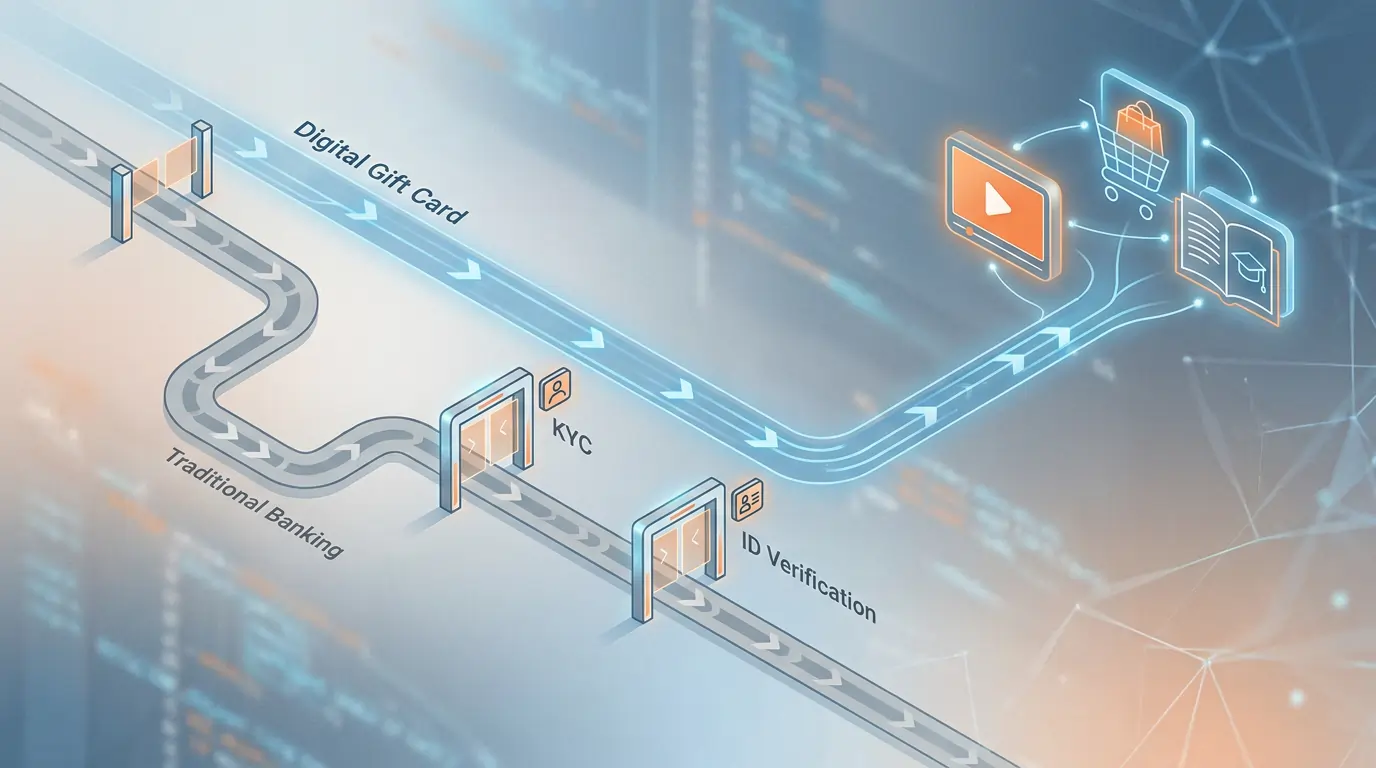
The global digital economy assumes that everyone has seamless access to credit cards, mobile wallets, and stable banking infrastructure. However, the reality is far different. According to World Bank data, approximately 1.4 billion adults worldwide remain unbanked. Even in developed nations, millions of "underbanked" individuals rely primarily on cash or lack access to international payment networks.
Digital gift cards have emerged as an elegant bypass to this financial exclusion.
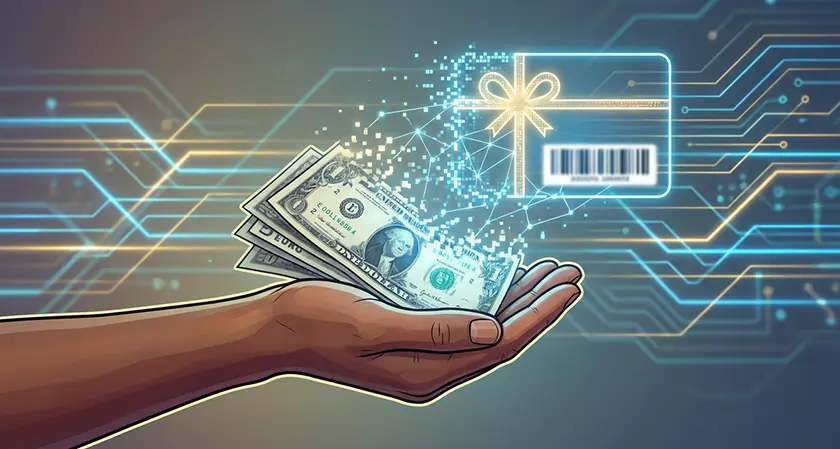
By purchasing a digital gift card (often referred to as an "e-gift card" or "digital voucher") via cash at local kiosks, users can immediately convert physical currency into digital purchasing power. A consumer in an emerging market can purchase a Netflix, Steam, or Apple voucher locally and instantly unlock access to global SaaS platforms, entertainment, and digital tools—all without ever needing to open a traditional bank account or undergo intensive credit checks.
The Rise of Crypto-to-Fiat "Off-Ramps" and "On-Ramps"
One of the most profound shifts in modern finance is the intersection of cryptocurrency and daily commerce. While blockchain technology has made massive leaps forward, "paying for lunch" or subscribing to a streaming service with raw crypto remains slow, highly taxed, and poorly integrated at traditional merchant Points of Sale (POS).
Instead of waiting for every coffee shop and SaaS provider to build native Web3 payment gateways, the digital asset community found a workaround: the digital gift card.
Platforms like Coinsbee have turned digital gift cards into the ultimate functional bridge. By making it incredibly simple to buy gift cards with bitcoin, Ethereum, and over 200 other digital assets, consumers can instantly exchange their crypto holdings for mainstream spending power.
Whether a user needs to book a flight, purchase groceries, or top up their mobile plan, they can find what they need on Coinsbee's gift card catalog and spend it immediately at thousands of major global brands. This ecosystem effectively bypasses the high fees and friction of converting crypto back to fiat through traditional bank transfers, turning digital gift cards into a practical, real-time utility.

Microtransactions, Gig Work, and the Global Payout Engine
The gig economy is inherently global, but global payroll is a logistical nightmare. When platforms need to pay thousands of micro-task workers, freelance writers, or survey participants scattered across 150 countries, traditional wire transfers or platforms like PayPal become prohibitively expensive due to high flat-rate fees and unfavorable currency conversion spreads.
For these platforms, digital gift cards have become the payout mechanism of choice.
Using developer-friendly APIs, enterprises can automate payouts by distributing digital vouchers. An online platform can instantly send a $5 Amazon, Uber, or local supermarket voucher to a worker in Eastern Europe, Southeast Asia, or South America. The worker receives full value with virtually zero transaction fees, and the enterprise avoids the compliance and banking hurdles associated with cross-border cash remittances.
Microtransactions, Gig Work, and the Global Payout Engine
The gig economy is inherently global, but global payroll is a logistical nightmare. When platforms need to pay thousands of micro-task workers, freelance writers, or survey participants scattered across 150 countries, traditional wire transfers or platforms like PayPal become prohibitively expensive due to high flat-rate fees and unfavorable currency conversion spreads.
For these platforms, digital gift cards have become the payout mechanism of choice.
Using developer-friendly APIs, enterprises can automate payouts by distributing digital vouchers. An online platform can instantly send a $5 Amazon, Uber, or local supermarket voucher to a worker in Eastern Europe, Southeast Asia, or South America. The worker receives full value with virtually zero transaction fees, and the enterprise avoids the compliance and banking hurdles associated with cross-border cash remittances.
Looking Ahead: The Future of Autonomous, Fragmented Payments
As we move deeper into an era of decentralized apps, AI agents, and autonomous machine-to-machine commerce, payment mechanisms must become more modular.
Traditional credit card networks, designed in the mid-20th century, struggle to adapt to these hyper-fragmented, instant, and borderless transactions. Digital gift cards—with their instant API delivery, native compatibility with both fiat and cryptocurrency, and universal brand recognition—are uniquely positioned to fill this gap. They have transitioned from a simple consumer convenience to an essential, high-utility infrastructure layer driving the next phase of global commerce.






















Comments