>>
Industry>>
Environmental sustainability>>
First Nations Clean Energy Pil...First Nations Clean Energy Pilot Locks In 500MW Set-Aside: 'A Clear Signal' That Equity and Revenue Sharing Are Now Non-Negotiable
The Silicon Review
07 July, 2026
Author:
Sashindra Suresh
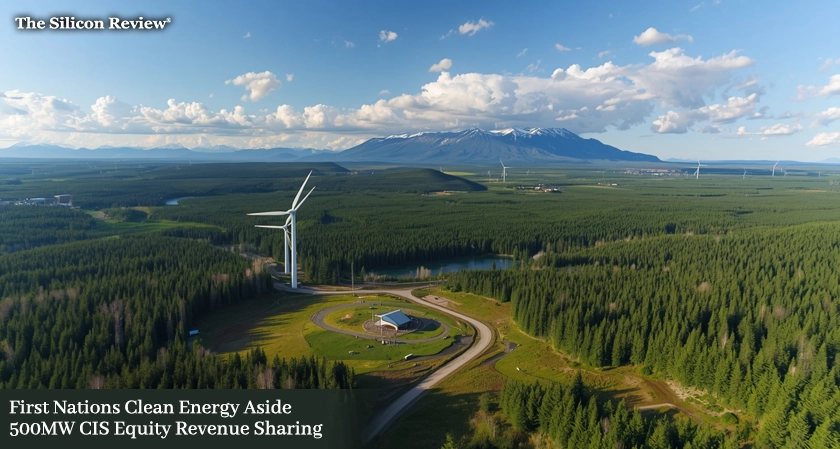
The federal government's Capacity Investment Scheme has introduced a 500MW set-aside for projects that bake in equity or revenue sharing with First Nations groups. The move follows a landmark co-ownership deal that could be worth $20-30 million to a community over two decades, and receive $11 million in ARENA funding.
The federal government is making First Nations ownership a non-negotiable part of Australia's renewable energy future. A new 500-megawatt "Set Aside" pilot has been introduced in the next two Capacity Investment Scheme tenders, carving out dedicated capacity for projects that share real financial power with Traditional Owners.
In CIS Tender 9, 500 MW is set aside from the 5 GW generation takrget. In Tender 10, 500 MW and 2 GWh of battery storage is reserved from the 16 GWh dispatchable targets. To qualify, developers must partner with First Nations groups through minimum five per cent equity stake, revenue sharing equivalent to five per cent equity, or a combination that reaches that threshold.
The new model was developed in response to feedback from First Nations stakeholders, according to the Department of Climate Change, Energy, the Environment and Water." The initiative is designed to help deliver lasting economic and social benefits for Traditional Owners and First Nations communities," the department said in a statement.
The policy is not theoretical. A landmark deal has already shown what is possible. Last year, Ampyr Australia struck a co-ownership agreement with the Wambal Bila Indigenous community corporation for its 300 MW, 600 MWh Wellington batteries, now called Bulbul, being built next to existing solar farms in NSW. Under the deal, Wambal Bila has an option to take a five per cent equity stake in the project.
It is believed to be the first co-ownership deal in the sector that does not involve Native Title or other legal rights. Ampyr CEO Alex Wonhas estimated it could be worth $20-30 million to Wambal Bila over the two-decade life of the project.
Wambal Bila's Gavin Brown told a First Nations Clean Energy Network webinar that the arrangement came about because there aren't many jobs that come out of battery development. They were both looking for a "commercial win-win" that wasn't just benefit or revenue sharing.
"It wasn't entirely by design. We had to move pretty quickly, and we got it done in six months. That's not recommended... we had to build up trust quickly and that was done through a really transparent operating style of the proponent," Brown said.
Ampyr's head of First Nations and community partnerships, Will Story, said the Set Aside is a "clear signal" that it is time for developers to seriously look at this. "It's a clear signal from government that the energy transition needs to include First Nations communities, it's as simple as that," Story told Renew Economy.
"I don't pretend that every community wants the same thing or that every partnership should look the same, but this is a clear signal that long term economic empowerment is an opportunity that we need to look at seriously."
The pilot comes as the Yindjibarndi Energy Corporation reached financial close on the Jinbi Solar Project in the Pilbara, one of Australia's largest Indigenous-led renewable energy initiatives. The project will supply 100 per cent of its electricity to Rio Tinto under a 30-year power purchase agreement, with Stage 1 comprising a 75 MW solar facility and an option to expand to 150 MW.
YEC Chief Executive Officer Craig Ricato said the milestone demonstrates "that a Yindjibarndi-led project, grounded in Country and culture, can meet the rigorous commercial requirements of the energy market while staying true to our values and governance responsibilities."
In remote Northern Territory communities, ARENA has committed $11 million to support First Nations-led microgrid projects at Borroloola and Santa Teresa (Ltyentye Apurte). The Ngardara Project in Borroloola, being developed by Original Power and the Ngardara Cooperative, aims to become Australia's first utility-scale solar microgrid led by a First Nations cooperative.
The CIS has already delivered substantial First Nations benefits. Across Tender 7, 19 projects committed nearly $1.2 billion in social licence commitments, including First Nations benefits such as revenue sharing agreements, subcontracting, training, and workforce development.
Here is the question this Set Aside raises. A pilot program that reserves 500 MW for First Nations equity deals is a significant step. But with billions of dollars in renewable investment flowing across the country, why is this only a pilot? And when a battery project can deliver $20-30 million to a community over its lifetime, why isn't this the standard, not the exception?
As the CIS bakes First Nations equity and revenue sharing into its next tenders, The Silicon Review asks a final question. When the land is the most valuable asset in the energy transition, shouldn't the people who have cared for it for millennia be more than just stakeholders in the profits?
FAQ:
Q: What is the First Nations Set Aside pilot in the CIS?
A: The federal government has set aside 500 MW in each of the next two CIS tenders for projects that include equity or revenue sharing deals with First Nations groups. Developers must partner with Traditional Owners through a minimum five per cent equity stake or equivalent revenue sharing.
Q: What is the Wambal Bila-Ampyr deal?
A: Ampyr Australia struck a co-ownership agreement with the Wambal Bila Indigenous community corporation for the 300 MW Bulbul battery project in NSW. Wambal Bila has an option to take a five per cent equity stake, estimated to be worth $20-30 million over the project's life.
Q: How much capacity is set aside for First Nations projects?
A: Tender 9 has 500 MW set aside from 5 GW generation target. Tender 10 has 500 MW and 2 GWh set aside from 16 GWh dispatchable targets.
Q: What other First Nations clean energy projects are underway?
A: The Yindjibarndi Energy Corporation is building the Jinbi Solar Project in the Pilbara, and ARENA is funding microgrid projects in Borroloola and Santa Teresa.
Q: What First Nations benefits has the CIS already delivered?
A: Tender 7 projects committed nearly $1.2 billion in social licence commitments, including First Nations benefits. Tender 4 projects committed $348 million in First Nations benefits.

















Comments