>>
Industry>>
Environmental sustainability>>
Australia Races to Shield Litt...Australia Races to Shield Little Penguins from H5N1 Bird Flu in Unprecedented Mass Vaccination Drive
The Silicon Review
20 August, 2026
Author:
Sashindra Suresh
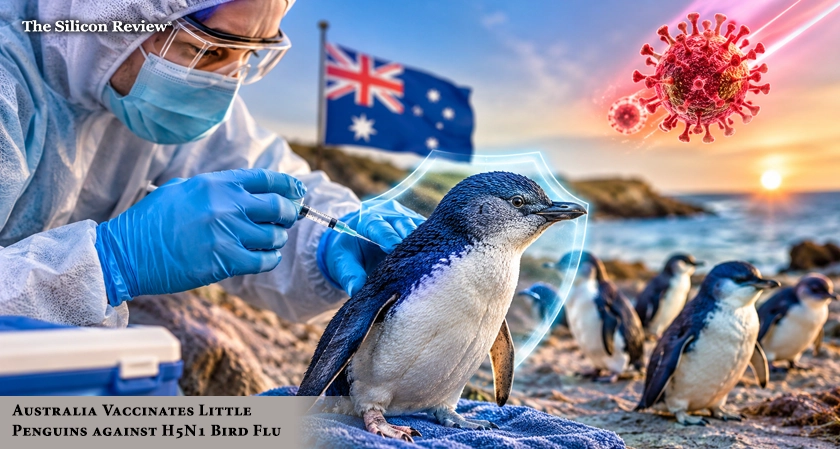
Australian wildlife workers have launched an unprecedented program to vaccinate more than 5,000 little penguins against H5N1 bird flu, following the first confirmed death of the species from the virus.
Australian wildlife workers have launched an unprecedented effort to protect the nation's beloved little penguins from the deadly H5N1 bird flu. The virus, which breached the Australian mainland for the first time in June, has now reached the world-famous Phillip Island colony, home to up to 40,000 little penguins.
"This is unprecedented. There has been no vaccination of this scale in a wild population anywhere in the world," said James Todd, Victoria's Chief Biodiversity Officer.
The First Penguin Death
The vaccination drive was given added urgency after a little penguin on Phillip Island was confirmed to have died from H5N1, the first recorded death of the species from the virus in Australia. The bird was found in a different part of the island, away from the nightly tourist "penguin parade" site. The Phillip Island colony is one of the largest in the world, and a state government study predicted that, in a worst-case scenario, between 8,000 and 16,000 penguins could die from the virus.
How the Vaccination Works
The vaccination program, which also covers a popular little penguin population at St Kilda in Melbourne, is a logistical challenge. The vaccine requires two doses, administered three to four weeks apart, which is "almost impossible" for most wild populations. However, the little penguins' predictable habits returning to the same burrows each night and their tolerance of humans, especially the "penguin parade" birds make them a rare candidate for this approach.
"It's a night-time operation. As the penguins come to shore, they'll essentially be corralled into an area where they're administered with a first dose of the vaccine and also microchipped, and then they'll be able to proceed back to their nesting burrows," Dr Todd explained.
Vaccination teams aim to inoculate about 5,000 birds. The program is not a silver bullet; it is expected to reduce the impact of the virus alongside existing biosecurity measures. The federal government recently authorised the use of H5N1 vaccines for priority native bird species, with the inactivated viral vaccine having been trialled on little penguins with no observed health impacts.
Here is the question this unprecedented effort raises. Australia is racing to vaccinate 5,000 little penguins against H5N1 in a world-first program. When a deadly virus threatens one of the nation’s most beloved and economically important wildlife populations, what does it take to mount a response that is both scientifically sound and logistically feasible?
As the vaccination teams work through the nights to protect the little penguins, The Silicon Review asks a final question. When a country's unique biodiversity faces an existential threat from a global pathogen, what is the true cost of inaction?
FAQ:
Q: Why are little penguins being vaccinated against bird flu?
A: Little penguins are being vaccinated to protect them from the highly contagious H5N1 strain of avian influenza, which has been detected in the species for the first time in Australia and poses a significant threat to their populations.
Q: How many little penguins are being vaccinated?
A: Wildlife teams aim to vaccinate more than 5,000 little penguins across the Phillip Island and St Kilda colonies in Victoria.
Q: Is this the first time wild birds have been vaccinated against bird flu on this scale?
A: Yes, Victoria's Chief Biodiversity Officer has called the program "unprecedented," stating that "there has been no vaccination of this scale in a wild population anywhere in the world."
Q: What is the Phillip Island "penguin parade"?
A: The "penguin parade" is major ecotourism attractions where hundreds of thousands of tourists each year watch little penguins waddle ashore and return to their burrows at night. The colony is a significant contributor to the local economy.
Q: Does the vaccine guarantee the penguins won't get bird flu?
A: No, the vaccine is not a silver bullet. It is expected to reduce the impact of the virus but will not fully stop it from circulating. It is being used in conjunction with other biosecurity and wildlife response measures.

















Comments