>>
Industry>>
Art and Music>>
Digital Pianos and the Reality...Digital Pianos and the Reality of Modern Living
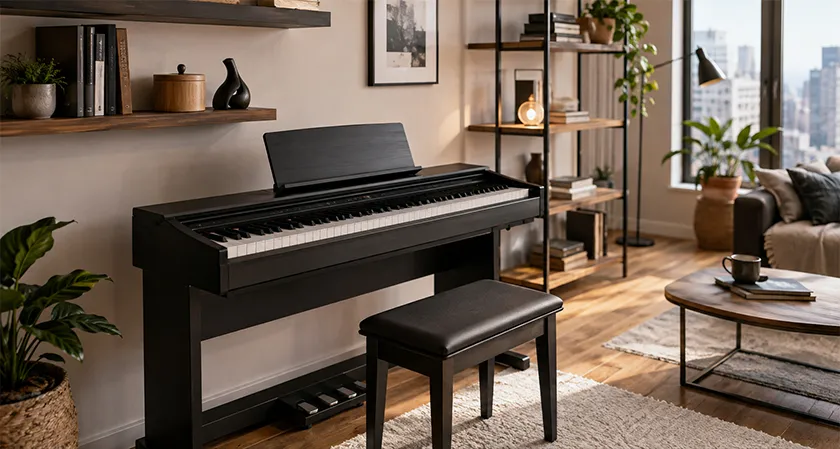
The way people live has changed, and the instruments they bring into their homes have had to keep up. Smaller living spaces, shared walls, unpredictable schedules, and a general expectation that technology should fit around our lives rather than the reverse have all reshaped what many people want from a piano. Digital instruments have risen to meet exactly this moment, and today's best examples offer a playing experience that would have astonished skeptics not long ago. For a great many households, a digital piano is not a compromise but the genuinely sensible choice.
This article looks at why digital pianos suit contemporary life so well, what they do particularly well, and how to think about choosing one. The perspective is practical, aimed at helping people match an instrument to the realities of how they actually live rather than to an idealized picture that ignores space, neighbors, and time.
How Modern Life Reshaped the Piano
Consider the constraints that shape so many homes today. Apartments and smaller houses leave little room for a large acoustic instrument, and the walls people share with neighbors make unrestricted volume a genuine problem. These are not edge cases but the everyday reality for millions, and they have pushed instrument makers to rethink what a home piano needs to be. The market has responded to how people genuinely live, not to how they lived generations ago.
Schedules have shifted too, in ways that matter for something as time-dependent as practice. People work irregular hours, juggle demanding lives, and often find that the only time to play is late at night or early in the morning. An instrument that can only be played at socially acceptable hours simply does not fit those lives, which is a limitation acoustic pianos cannot escape.
Expectations around technology have changed as well. People are accustomed to devices that connect, record, and integrate with the rest of their digital lives, and they increasingly expect an instrument to do the same. This convergence of smaller spaces, tighter schedules, and technological expectation is exactly the environment in which digital pianos thrive, addressing each pressure directly. Where an acoustic instrument runs up against each of these realities, a digital one tends to answer them, which is why the category has grown so quickly in recent years.
The Sound Has Come a Long Way
The old knock against digital pianos was the sound, and for early instruments the criticism was fair. Those days are behind us. A modern yamaha electronic piano and instruments like it capture the tone and nuance of acoustic pianos with a fidelity that surprises people who last heard a digital instrument years ago. The gap that once justified skepticism has narrowed dramatically.
Advances in how sound is captured and reproduced drive this improvement. Sophisticated sampling records the actual sound of fine acoustic instruments in detail, while improved speaker systems reproduce it convincingly in the room. The result is an instrument that not only sounds good through headphones but fills a space with genuine, satisfying tone, which was long the hardest thing for digital instruments to achieve.
None of this claims that a digital piano is indistinguishable from a fine acoustic grand in every respect. The physical resonance of a large vibrating soundboard remains its own experience. But the point is that the sound of a good digital instrument is now genuinely enjoyable and musically satisfying in its own right, which is a completely different situation from the thin, artificial tones that gave the category its early reputation.
Playing Any Hour Without Apology
Perhaps the single most life-changing feature of a digital piano is silent practice through headphones. This one capability solves a problem that constrains acoustic players constantly, letting someone play fully at any hour without disturbing a sleeping household or an irritated neighbor. For anyone whose free time falls outside polite hours, it can be the deciding factor all on its own.
The freedom this provides changes how much people actually play. When practice no longer depends on the right time of day and the tolerance of everyone nearby, an instrument becomes available whenever inspiration or a spare moment strikes. That accessibility tends to translate directly into more time at the keys, which is ultimately what drives enjoyment and progress for players at every level. The instrument that is always available, at any hour and without disturbing anyone, is simply the one that gets played the most.
Volume control extends this flexibility even without headphones. Being able to play softly enough not to dominate a home, or to adjust to the moment, makes a digital instrument a considerate housemate in a way an acoustic piano cannot be. An instrument such as the yamaha clavinova clp pairs this kind of adjustable output with a weighted action that keeps the playing experience genuine even at low volume. For shared living situations of every kind, this adaptability removes a source of friction that might otherwise discourage playing altogether.
Compact Options for Tight Spaces
Space is the constraint that rules out acoustic instruments for many people, and here digital pianos shine. A yamaha piano small or similarly compact instrument brings a satisfying playing experience into homes where a full-size acoustic piano would be impossible. The range of sizes means nearly any living situation can accommodate an instrument of some kind.
Compact does not have to mean compromised, which is the pleasant surprise for many buyers. Well-designed smaller instruments preserve a genuine playing feel and sound within a modest footprint, so a tight space no longer means giving up on a real musical experience. For apartment dwellers and anyone short on room, this opens a door that once seemed firmly closed.
The portability of some instruments adds further flexibility that suits mobile lives. An instrument that can be moved between rooms, or that travels reasonably when someone relocates, adapts to a life that is not fixed in one place. For renters, students, and anyone whose living situation may change, that mobility is a practical advantage that a heavy, permanent acoustic piano simply cannot offer.
Technology That Supports Learning
Beyond the core experience of playing, digital instruments bring capabilities that genuinely support musical growth. Connectivity with learning apps, the ability to record and play back, and integration with other tools all create opportunities that acoustic instruments do not provide. For students and self-teachers especially, these features can accelerate progress and sustain motivation.
Recording is a quietly powerful learning tool that many players come to rely on. Hearing yourself play back reveals things you cannot notice in the moment, from timing to dynamics, and it lets you track improvement over time in a concrete way. That objective mirror is something teachers have long valued, and having it built into the instrument puts it within every player's reach. This simple capability, built into many digital instruments, turns practice into a more reflective and productive process than it would otherwise be.
The connection to broader learning resources meets people where they already are. With so much instruction now available digitally, an instrument that integrates with those tools fits naturally into how people learn today. The lessons, the feedback, and the practice tools now live in the same digital space, and an instrument that joins that space becomes a hub for the whole process. For a beginner navigating the early stages, or a returning player rebuilding skills, that integration makes the whole journey more approachable and better supported than it once was.
The Cost Equation for Digital Instruments
Price is part of any instrument decision, and digital pianos present a cost picture worth understanding on its own terms. Beyond the purchase price, these instruments carry lower ongoing costs than acoustic pianos, since they require no tuning and little maintenance over their lives. Factoring in that reduced upkeep often makes a digital instrument more economical than the sticker price alone suggests.
The range of prices within the digital category is wide, which works in a buyer's favor. From accessible entry-level instruments to sophisticated models, there is something at nearly every budget, and the key is matching spend to genuine needs rather than overreaching for features that will go unused. A clear sense of what you actually require keeps the decision grounded and the cost reasonable.
Value, in the end, comes from an instrument that fits and gets played. A modestly priced digital piano that suits a household perfectly delivers far more real value than an expensive one that never quite matches the way people live. Judging cost against genuine fit, rather than against features or prestige, leads to a purchase that feels worthwhile every time someone sits down to play.
Choosing What Fits Your Life
Selecting the right digital piano comes down to matching the instrument to your actual life rather than to abstract specifications. Thinking honestly about your space, your schedule, who else shares your home, and how you intend to play points toward the right choice far more reliably than chasing the longest feature list. The best instrument is the one that fits the life you actually lead. No feature list can outweigh that basic fit, and chasing capabilities you will never use only distracts from finding it.
Trying instruments in person, when possible, remains valuable even in a digital world. How an instrument feels under the fingers and sounds in a room is something specifications cannot fully convey, and a short time playing several options reveals preferences you might not have anticipated. Pairing that hands-on impression with knowledgeable guidance leads to a confident, well-matched decision. A short visit to try a few instruments, guided by someone who understands them, is time very well spent before committing.
Ultimately, a digital piano suited to modern living is one that removes barriers rather than creating them. When an instrument fits your space, respects your household, plays at any hour, and supports how you want to learn, it becomes something you actually use rather than something you admire from a distance. Use, in the end, is the only test that matters. That fit between instrument and life is what turns a purchase into years of music, which is the entire point of bringing a piano home.














Comments