>>
Leadership>>
Ceo review>>
What Leadership Qualities Do I...What Leadership Qualities Do India's Top CEOs Have in Common? The Uncomfortable Truth
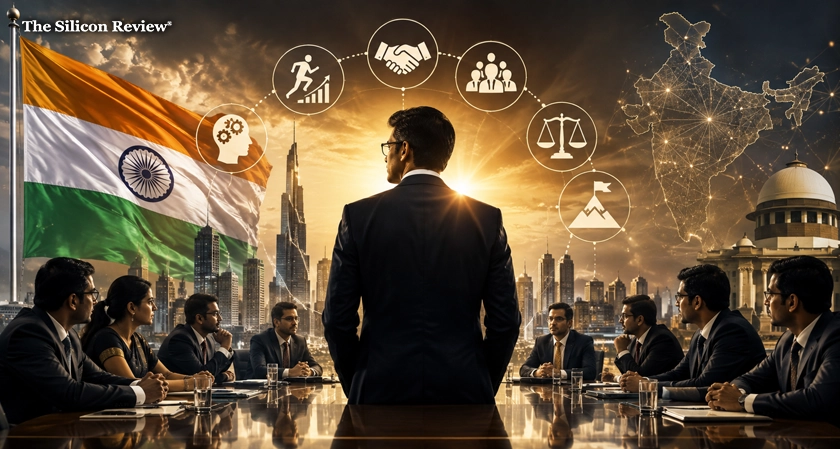
Let's be honest. The usual answers empathy, resilience, human-centric leadership is generic. You'll find those in any leadership book anywhere in the world. They're not uniquely Indian. What actually distinguishes Indian CEOs? It's something far more uncomfortable and raw: the ability to navigate rigorous institutional chaos without losing control, combined with a "get it done" mindset that borders on obsessive. Global leaders have pointed to two specific qualities: the ability to work without a playbook in completely uncharted territory, and an extreme focus on execution. At a World Economic Forum roundtable, this was the consensus not empathy, not resilience. Execution and adaptability to chaos. But there's a sixth quality one that is rarely discussed publicly but accounts for nearly 90% of the ground reality for Indian-origin CEOs. It's the generational boundary-breaking that happens when you grow up watching your parents break barriers, only to realize that the new boundaries are set by those who have already climbed higher. This is the uncomfortable truth that no leadership book talks about.
The Raw Qualities That Actually Matter
1. Chaotic Adaptability: Thriving in Unpredictability
Indian CEOs grew up in an environment where change was the default state. Power cuts during exams. Train cancellations without notice. Government policies that shifted overnight. Festival crowds that turned a 20-minute commute into a four-hour burden. This was daily life.
"Their success wasn't despite India's chaos it was because they had learned to thrive within it".
Traditional American CEOs struggled with accelerating change cycles; many Indian executives had already spent their formative years navigating constant disruption strikes, floods, bureaucratic dead-ends, and supply chains that collapsed without warning.
What this looks like in practice: Satish Pai of Hindalco advises: "Do not read the headlines…run safe operations, and take care of your customers and employees, and over the periods of ups and downs, you will outperform". It's the mindset of someone who has seen too many crises to panic at one more.
Visualize this: A young Satya Nadella navigating Mumbai's local trains during peak hour arriving sweaty but on time. A teenage Sundar Pichai managing without a computer at home, walking to a neighbor's house to practice coding. A young Leena Nair taking a night shift on a factory floor, the only woman there, surrounded by machinery and male stares. These weren't hardships they overcame once. They were daily calibrations that rewired their nervous systems to treat uncertainty as normal.
When you've grown up making a plan B, C, and D before breakfast, you don't freeze when the market crashes or a supply chain snaps. You've been preparing for that moment your whole life.
2. The "Get It Done" Obsession
NITI Aayog's Bagla emphasized that the ability to "get the job done" is a default mindset of Indian-origin CEOs globally. Not with perfect resources. Not with ideal conditions. Just get it done.
This isn't about efficiency. It's about an almost uncomfortable refusal to accept "we can't" as an answer. When resources are scarce, you improvise. When systems fail, you build workarounds. When people say no, you find another way. The mindset was forged in environments where waiting for perfect conditions meant waiting forever.
What this looks like in practice: Rajesh Gopinathan, former CEO of Tata Consultancy Services (TCS), was known for his relentless focus on execution during the COVID-19 pandemic. When the world shut down and clients were panicking, TCS didn't pause it transitioned 98% of its 500,000+ employees to work from home within weeks. Gopinathan didn't wait for perfect infrastructure or government guidance. He got it done. That’s THE POWER of EXPOSURE.
Suresh Narayanan, Chairman and Managing Director of Nestlé India, faced one of the most challenging moments in corporate history when Maggi noodles were banned in 2015. Instead of retreating, he personally led the rebuilding of the brand from scratch testing, retesting, reassuring retailers, and winning back consumer trust. It wasn't a crisis he asked for. But he got it done.
Chandrasekaran, when he took over Tata Sons, inherited a conglomerate in turmoil boardroom battle, a struggling telecom business, and a need for modernization. He didn't wait for the dust to settle. He moved decisively, simplifying the group structure, selling non-core businesses, and placing big bets on semiconductors, electric vehicles, and aviation. The job was messy. But he got it done.
Visualize this: A manager at TCS during the pandemic receiving an email at 2 AM. By morning, a solution is ready. That culture was set from the top. When you lead with a "get it done" obsession, the entire organization stops making excuses and starts making progress.
This is the difference between waiting for the perfect moment and creating it. Indian CEOs don't wait. They manufacture success.
3. Institutional Loyalty (And Why It's Misunderstood)
A recent analysis pointed out a pattern that many celebrate but few interrogate: Indian CEOs are often seen as "safe pairs of hands". One LinkedIn post put it bluntly: "Many Indian CEOs tend to be docile and servile toward Western boards, rarely pushing back against dominant US interests."
Zoho founder Sridhar Vembu recently commented that Indians have risen in global corporations due to organizational loyalty long tenures giving them the edge. But executive search firm Russel Reynolds found that nearly 68% of new CEO appointments in 2025 across major global indices were internal promotions. Indians actually had to stay longer with their employers before becoming CEO, whereas non-immigrants had shorter tenures.
This is not a criticism. It's a recognition of a distinct quality: patient coalition-building. As one analysis noted, Indian-origin executives succeeded through "patient coalition-building" that "may have lacked theatrical flair, but it proved more effective for navigating global brands' complex stakeholder environments."
4. Comfort with Institutional Friction
Indian CEOs have navigated systems where nothing works smoothly bureaucracy that moves at glacial speed, infrastructure that fails when you need it most, and supply chains that collapse without warning. This isn't theoretical. It's lived experience.
They grew up watching their parents stand in endless queues for a phone connection, a gas cylinder, a railway ticket. They learned early that the system doesn't serve; you have to work around it. This shapes a distinct kind of patience: not passive endurance, but active problem-solving within broken frameworks.
What this looks like in practice: When Kiran Mazumdar-Shaw founded Biocon in 1978; she was a young woman starting a biotech company in India when the industry didn't exist. Banks wouldn't lend to her. Landlords refused to rent to a "woman entrepreneur." She had to import enzymes from Europe, navigate customs nightmares, and build a company in a country that had no biotech ecosystem. She didn't wait for the time to come or system to change. She worked around it, decade after decade until Biocon became a multi-billion-dollar pharmaceutical powerhouse.
Visualize this: A young Kiran Mazumdar-Shaw standing at a customs office, pleading for clearance of imported enzymes. A 30-year-old entrepreneur being told "women don't run factories." A CEO watching a supplier in another state go bankrupt overnight, and having to source raw materials from three different countries before the week ends. This isn't a story of occasional hardship. It's a story of daily friction; it starts from almost every Indian household while few start with generational wealth. The ability to keep moving when everything is against you gives you the ability to lead.
Ravi Venkatesan, former Chairman of Microsoft India and Cummins India, often speaks about the "friction coefficient" of doing business in India. He didn't see it as a disadvantage he saw it as a training ground.
“If you can navigate India, you can navigate anywhere.”
This is the quality that global boards value most without naming it. When they say Indian CEOs are "safe pairs of hands," what they really mean is: these leaders have been tested by fire. They don't panic. They don't freeze. They've seen worse. And they still delivered.
5. The Uncomfortable Truth: "Benevolent Authority"
The academic literature on Indian leadership points to a "benevolent-authoritative" model leaders who are caring and supportive, but also maintain distance and authority. This isn't the flat, everyone-is-a-friend model of Western startups. It's a distinct blend of warmth and hierarchy. Academic research using the Leadership Practices Inventory found that Indian CEOs rated higher than their US counterparts on challenging, modelling, inspiring, and enabling, but lower on encouraging. This is not a deficit; it's a different paradigm. They lead through example, authority, and hardships not through praise.
6. Generational Boundary-Breaking: The 90% Ground Reality
Here's the uncomfortable truth that no leadership book talks about.
Indian CEOs didn't just break barriers. They grew up watching their parents break barriers only to realize that the new barriers were now set by those who had already climbed higher. This accounts for nearly 90% of the ground reality for Indian-origin CEOs.
What this actually means: Your childhood and early adulthood were shaped by limits and boundaries set by people who had already "made it." These were people who had fought their own battles, broken their own ceilings, and now stood at the top but also became the new gatekeepers. The only way to break through was to shatter their expectations, not just meet them.
This is a uniquely Indian experience. You grew up with elders who had already achieved what seemed impossible earning engineering degrees, getting government jobs, building businesses, emigrating to the West. But their success came with an unspoken rulebook. They had broken the ceiling for their generation but now they were the ones defining the ceiling for yours.
What this looks like in practice: Must read
Sundar Pichai grew up in a two-room house in Chennai with a father who was an electrical engineer and a mother who typed medical notes before computers existed. His family had already broken barriers education, technical work, entry into the professional class. But the unspoken pressure was immense: You have to go higher than we did. But you have to do it within the boundaries we've set for you. Pichai didn't just go higher. He went to Stanford. He joined Google. He became the CEO of Alphabet. He broke not just his family's boundaries but the boundaries they had inadvertently placed on him.
Satya Nadella's father was a civil servant, a man who had climbed the bureaucratic ladder in a country where government jobs were the ultimate achievement. But Nadella didn't take the safe path. He left for the U.S., joined Microsoft, and eventually became its CEO. He didn't just fulfill his father's aspirations he redefined what success could look like in his own dashing way.
Leena Nair's father was an engineer at a time when most women were expected to marry young and stay home. He enrolled her in a boarding school, pushing her toward a different future. But Nair didn't just follow the path her father set she redefined it. She became the first woman to work a night shift on a Unilever factory floor, breaking a stereotype her father's generation couldn't have imagined. She later became the first Indian-origin CEO of Chanel.
The pattern is clear. These leaders had parents who had already broken through the ceilings of their era. But once those parents reached the top, they became the new gatekeepers, unintentionally setting boundaries for the next generation. The children had to break not just the old ceilings, but the new ones erected by their own success stories.
Why it matters for leadership: This cuts both ways:
The first way: You grew up with elders who had already achieved what seemed impossible for their era earning engineering degrees, getting government jobs, building businesses, emigrating to the West. But their success came with an unspoken rulebook. They had broken the ceiling for their generation but now they were the ones defining the ceiling for yours. You had to honor their legacy while also shattering the new boundaries they inadvertently set.
The second way: You grew up with parents who weren't educated, who worked blue-collar jobs, who never had the opportunity to dream beyond survival. But they pushed you harder than anyone else to go where they couldn't. They didn't set boundaries. They set expectations. You weren't just breaking ceilings for yourself. You were breaking them for them. Every promotion, every degree, every milestone was a gift back to the people who gave up everything.
The 6 Raw Leadership Qualities of India's Top CEOs
|
Quality |
What It Actually Means |
Who Embodies It |
|
1. Chaotic Adaptability |
Thriving in unpredictability because you grew up in it |
Satish Pai, Hindalco |
|
2. "Get It Done" Obsession |
Manufacturing success with whatever resources you have |
Satya Nadella, Microsoft |
|
3. Institutional Loyalty |
Patient coalition-building, not theatrical leadership |
Leena Nair, Chanel; Raj Subramaniam, FedEx |
|
4. Comfort with Friction |
Navigating broken systems without losing focus |
C.K. Venkataraman, Titan |
|
5. Benevolent Authority |
Caring and supportive, but maintaining hierarchy and distance |
Tata Group leaders |
|
6. Generational Boundary-Breaking |
Breaking limitations set by people who themselves broke barriers to reach the top |
Sundar Pichai, Google; Satya Nadella, Microsoft |
The Colonial Legacy Question
"Are Indian CEOs shaping the future of global business or simply managing it well within boundaries set by others?" The argument is that the colonial legacy created a culture of compliance, caution, and service that makes Indian executives attractive to Western boards they get top talent "without the headache of dealing with pushback." This is uncomfortable to discuss. But ignoring it doesn't make it less true. The criticism is that Indian CEOs bring humility, adaptability, and cautious decision-making shaped by social conditioning. This makes them exceptional at navigating complex global organizations without rocking the boat. Leaders like Sundar Pichai and Satya Nadella are respected for vision, but the question remains: are they disruptors or managers?
What This Means for Aspiring Leaders
If you want to lead like India's top CEOs:
- Stop expecting perfect conditions. The world doesn't give you perfect resources. Manufacture success with what you have.
- Get comfortable with chaos. Adaptability isn't a soft skill it's a survival mechanism.
- Stay longer, build deeper. Institutional loyalty isn't outdated. It's how you build trust and navigate complexity.
- Lead with authority and care. The benevolent-authoritative model isn't a contradiction. It's a distinct leadership philosophy that has proven effective.
- Be honest about the trade-offs. Indian CEOs are often seen as managers, not disruptors. If you want to be a disruptor, you'll need to unlearn some of the caution that the system rewards.
- Break the boundaries set by those who broke them before you. The generation that climbed higher will set new ceilings. Your job is to break them again, not getting comfortable.
Conclusion
The leadership qualities that define India's top CEOs are not the generic ones you'll find in any leadership book. They are raw, uncomfortable, and forged in chaos: adaptability to unpredictability, an obsession with execution, patient institutional loyalty, and comfort with friction, benevolent authority, and generational boundary-breaking. The way forward is simple. Stop looking for the "soft skills" that everyone talks about. Start developing the raw capabilities that actually matter: the ability to get things done in imperfect conditions, the patience to build coalitions over decades, the authority to lead with both care and discipline and the courage to break the boundaries set by those who broke them before you.
Frequently Asked Questions (FAQs)
- What are the unique leadership qualities of Indian CEOs?
Chaotic adaptability, the "get it done" obsession, institutional loyalty, comfort with friction, benevolent authority, and generational boundary-breaking. - Why are Indian CEOs so successful globally?
They've learned to thrive in chaos and uncertainty skills forged in India's complex environment. - What is generational boundary-breaking?
Growing up watching parents break barriers, only to realize the new boundaries are set by those who already climbed higher and breaking them again. - Are Indian CEOs just managers, not disruptors?
Some analysts argue this is a valid criticism Indian CEOs are often seen as safe pairs of hands who manage within boundaries rather than break them. - What is the "benevolent-authoritative" leadership style?
A distinct model where leaders are caring and supportive, but maintain hierarchy and authority a blend of warmth and distance.


















Comments