>>
Industry>>
Banking and insurance>>
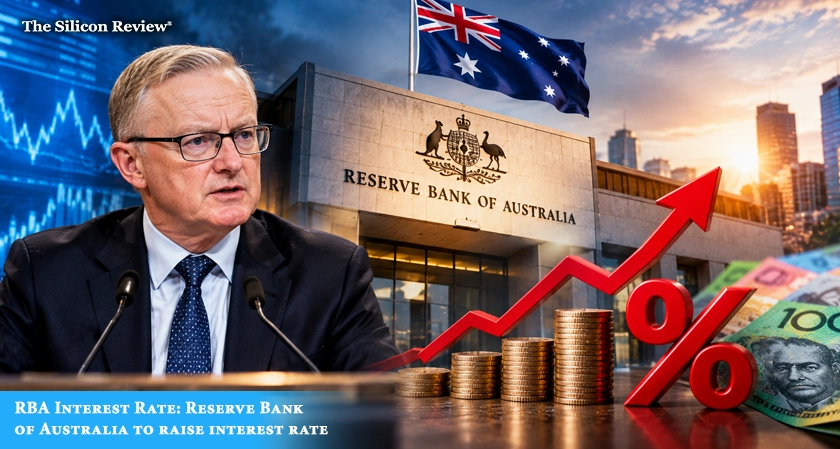
RBA Interest Rate: Reserve Ban...RBA Interest Rate: Reserve Bank of Australia is likely to raise interest rate aggressively, taking cash rate to 4.60%.
News Source: https://www.abc.net.au/
The Reserve Bank of Australia (RBA) has been driven into a highly aggressive interest rate hike, raising the cash rate to 4.60%, the highest level since the start of November 2011.
Financial markets and economists believe it is highly likely that the Reserve Bank will hike interest rates for the fourth time during its sixth meeting of the year, which takes place tomorrow. The RBA's cash rate goal would rise from 4.35 percent to 4.6 percent, the highest level since the beginning of November 2011, with another typical 25 basis point rate hike tomorrow. As unstable global oil crisis collides with domestic monetary policy, Australian consumer’s needs to be prepared for an aggressive double financial strike.
The increasing conflict in the Middle East and drone attacks on refineries has caused the price of crude oil to rise above $100 US per barrel, pushing local bowser rates into a painful $2.70 per liter. Expectations of a prolonged halt in rates have been crushed by this strong gasoline shock. In order to reduce rising inflation, it is widely expected that the Reserve Bank of Australia (RBA) will respond by raising the official cash rate from 4.35% to a 15-year high of 4.6%.
All four of Australia's major trade banks, Commonwealth Bank (CBA), Westpac, National Australia Bank (NAB), and ANZ, are predicting a 0.25 percent increase for the first time in this cycle. To be clear, the decision to raise the cash rate to 4.6% is set for tomorrow afternoon (Tuesday, September 29 at 2:30 PM AEST).
In the end, ordinary Australians are left with nowhere to escape due to this dual economic squeeze. The Reserve Bank of Australia (RBA) rate hikes will have a chain reaction on the whole domestic economy as gas stations lock in higher pricing at the bowser. For homeowners, it means making additional mortgage payments of hundreds of dollars each month from a budget that is already extremely tight. It ensures that landlords will pass on their own higher borrowing costs to tenants.
In a very difficult financial environment where budget is a question of plain economic survival, Australian families are left to face the full brunt of a crisis generated externally by US and Middle East war.
RBA governor Michele Bullock hinted last week in the event of Committee for Economic Development of Australia in Sydney, that Australia’s job market putting pressure on inflation as the major banks suggested a rise in interest rates next week. She said “Between 4.5% and 5% will probably take enough heat out of the labour market that eases pressure on inflation.”
FAQs:
Q: What is the current official cash rate in Australia?
A: The official cash rate of the Reserve Bank of Australia (RBA) is now 4.35%.
Q: Why does global oil conflict affect interest rates in Australia?
A: Due to Australia's heavy reliance on imported refined fuel, delays in the Middle East's supply directly raise the price of gasoline and diesel locally.
Q: Exactly How much increase will be in the cash rate?
A: The official cash rate of the Reserve Bank of Australia (RBA) is now 4.35%. And RBA is planning to push it by 4.6%.
Q Is Australia going to fall into a recession?
A: The danger has increased dramatically. Prominent institutional economists warn that there is now a 50/50 likelihood of a technical recession or significant economic slowdown.
Q: How this impact varies across different states in Australia?
A: Because of widely disparate housing markets, geographical distances, and industry structures at the state level.













Comments