>>
Industry>>
Marketing and advertising>>
Unlikely Industries and Advert...Unlikely Industries and Advertising Formats with Shane Ginsberg of Street Poller Media
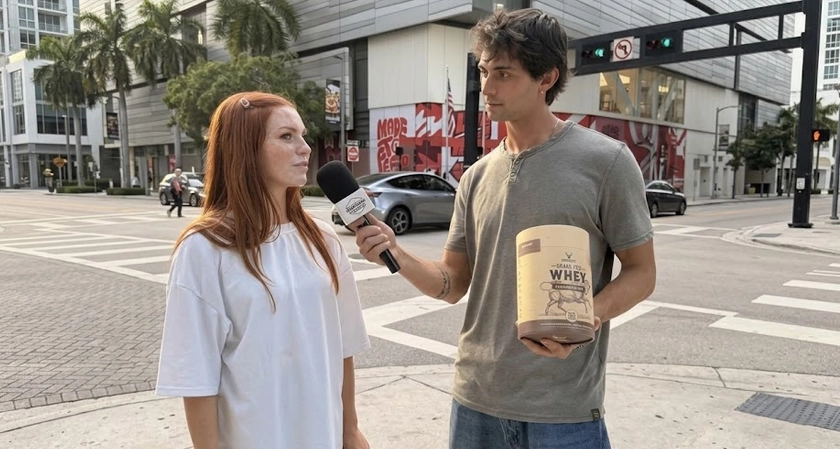
Advertising formats accumulate reputations that outlast their actual constraints. Video is understood to belong to e-commerce, display to retargeting, long-form to considered business purchases. Those associations reflect where a format was adopted first rather than where it could function, and they tend to persist long after the underlying limitation has disappeared.
Street interview advertising currently carries an association with consumer products, mobile applications, and culture-driven brands, which reflects the categories that adopted it earliest. Examining the format's actual mechanics suggests the applicable range is considerably wider.
The clearest evidence comes from what the category's largest operator already does. Street Poller Media has run campaigns across crypto, fintech, GLP-1, pharmaceutical, consumer packaged goods, and cannabis-adjacent brands, alongside the consumer categories the format is usually associated with. That mix already spans budget lines most agencies treat as unrelated, which suggests the format tolerates more variation than its reputation implies.
Consider the underlying mechanism rather than the typical application. A street interview establishes that ordinary people hold a particular view, react a particular way, or recognize a particular problem. That demonstration functions identically whether the receiving audience numbers in millions or in dozens, which decouples the format from the mass-market assumption attached to it.
Business-to-business marketing represents the clearest underexplored case. B2B advertising has traditionally depended on white papers, case studies, and conference presence, all expensive, slow, and easily disregarded. Footage demonstrating that ordinary consumers hold a particular view about an industry could function as a reputational instrument aimed at a small group of decision-makers, distributed through professional networks rather than paid social, reaching an audience small enough to fit in a conference room. The format's cost structure makes that viable in a way conventional production never did.
Hospitality presents unusually favorable economics. Hotels already have their subjects on premises, already having the relevant experience, requiring no casting, scheduling, or talent fees. Interviews with departing guests produce testimonial footage usable simultaneously as paid advertising, retargeting content, and organic social material. The industry currently outsources that credibility function to review platforms it does not control and cannot influence.
Real estate follows comparable logic. A new development competing against established properties faces an inherently comparative sales problem, and interviews with residents of the surrounding area, comparing current amenities against what a new property offers, generate market research and advertising from identical footage. The objections raised on camera are the objections a leasing team encounters in person.
None of these represent campaigns run at scale, and the distinction matters. They are extrapolations from how the format operates rather than documented results, and the gap between theoretical applicability and actual category adoption has absorbed a great many confident predictions.
Several structural obstacles deserve naming. Regulated professional services face advertising restrictions constraining what any format can say. Enterprise sales cycles run long enough that attributing a closed transaction to specific creative remains genuinely difficult, which undercuts the measurability that makes the format attractive elsewhere. Industries without a natural public-facing consumer touchpoint have no obvious location to conduct interviews at all.
What the format actually requires is narrower than most marketers assume. A question worth asking strangers, and a reason their answer should matter to whoever is watching. It does not require a mass consumer audience, substantial media budget, existing social following, or a product explicable in fifteen seconds.
The pattern is familiar from other formats that outgrew their original category. Direct-response television was understood for years to belong to a narrow band of consumer products before financial services and insurance became among its largest spenders. The constraint was never structural. It was that nobody in those industries had tested it yet.
By that standard the addressable set extends well past the consumer categories currently absorbing most of the spend, into any business with a customer, guest, resident, or decision-maker capable of reacting honestly on camera.




















Comments