>>
Industry>>
Capital Market>>
Futures and Options Aren’t G...Futures and Options Aren’t Gambling If You Understand These 5 Numbers
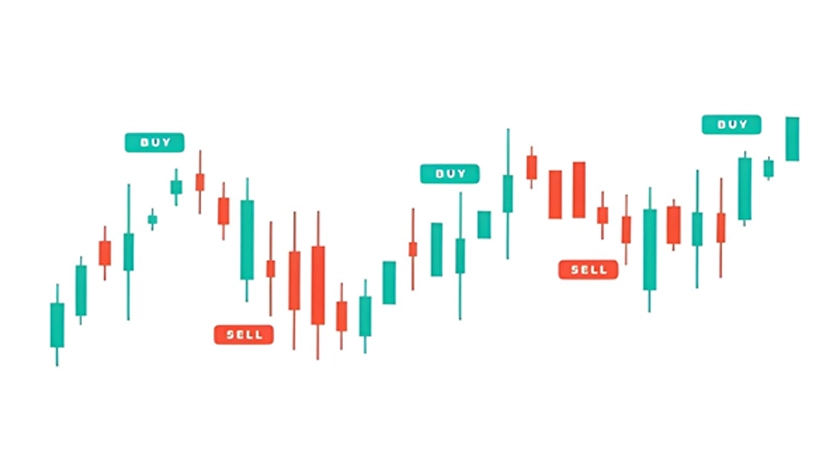
Futures and options often get lumped into the gambling bucket because money can move quickly and losses can look dramatic. But there is a major difference between taking a trade without understanding it and taking a calculated position after knowing exactly what is at stake.
The numbers on an F&O contract tell you much more than the price flashing on your screen. They show your exposure, the cash required, the price level at which a trade starts making sense, and the risks attached to the position.
1. Contract Value
The first number is the contract's total value. A futures and options trade is usually based on a lot, not a single share. Contract value can therefore be calculated as:
Contract value = Futures price or strike price × Lot size
Suppose a futures contract is trading at ₹22,000 and its lot size is 75. The total contract value would be ₹16.5 lakh, even though you don’t necessarily need ₹16.5 lakh sitting in your account to initiate the position.
That distinction matters. A trader looking only at the amount required to enter a trade may underestimate the actual market exposure. Index derivatives lot sizes have also changed over time, so assuming an old lot size can lead to incorrect calculations.
2. Margin Required
For futures, you generally don’t pay the entire contract value upfront. Instead, you must maintain a margin to keep the position open. This is one reason derivatives can create substantial exposure with comparatively less capital. But lower upfront capital does not mean lower risk.
If a ₹16.5 lakh futures position requires a fraction of that amount as margin, a relatively small movement in the underlying can translate into a meaningful gain or loss on the money you’ve put up.
SEBI’s risk disclosure specifically highlights this leverage effect. A futures position can generate large gains when prices move favourably, but losses can also become large relative to the initial margin and may exceed the original margin amount.
3. Premium
For an options buyer, the premium is one of the most important numbers on the screen.
If you buy an option at a premium of ₹120 and the lot size is 75:
Premium paid = ₹120 × 75 = ₹9,000
That ₹9,000 is the cost of buying the option contract. Unlike a futures position, where gains and losses move broadly with the underlying, an option’s value depends on several factors. These include the underlying price, strike price, time remaining until expiry, and volatility.
This is also why an option that looks “cheap” isn’t automatically attractive. A ₹20 option can still lose its entire premium. A ₹200 option can also fall sharply if the expected price movement doesn’t happen quickly enough.
For an option buyer, the premium paid generally represents the maximum loss on the option position, excluding transaction-related costs. For an option seller, however, the risk can be substantially larger.
4. Break-Even Price
The fourth number answers a very practical question:
How far does the underlying need to move before my option trade starts making money at expiry?
For a call option buyer:
Break-even = Strike price + Premium paid
For a put option buyer:
Break-even = Strike price − Premium paid
Imagine you buy a ₹22,000 call for a premium of ₹150.
Your expiry break-even would be:
₹22,000 + ₹150 = ₹22,150
So merely seeing the underlying move above ₹22,000 doesn’t mean the position is profitable at expiry. The premium you paid must be accounted for.
This is one of the easiest numbers to overlook when traders focus only on whether their market view was “right.”
You can correctly predict the direction and still lose money if the move isn’t large enough to cover the premium and associated trading costs.
5. Days to Expiry
An option has a limited lifespan. As expiry approaches, the time available for the expected price movement shrinks. Time value can therefore decline as the contract nears expiry.
That creates an interesting situation. You could buy a call expecting the market to rise. The market does rise, but if the move is too small or happens too late, the option may still lose value.
SEBI’s investor material also flags time decay as a risk for options strategies. If the anticipated price movement doesn’t happen within the option’s lifespan, the position can become unprofitable.
This is why two options with the same strike can behave differently simply because they have different expiry dates.
The number to remember: days remaining, because an option isn’t just a price bet. It’s a price-and-time position.
Put the Five Numbers Together
Looking at these numbers individually is useful. Looking at them together clarifies the picture.
Suppose you’re considering an index option. Before placing the order, ask:
|
Number |
What it tells you |
|
Contract value |
How much market exposure the lot represents |
|
Margin |
How much capital is required to maintain the position |
|
Premium |
What an option buyer pays for the contract |
|
Break-even |
The price needed for profitability at expiry |
|
Days to expiry |
How much time remains for the expected move |
None of these numbers can tell you whether a particular trade will make money. They can, however, tell you what the trade actually involves.
And that is an important distinction.
F&O trading does carry significant risk. SEBI notes that derivatives can amplify both gains and losses because the amount paid upfront can be considerably smaller than the value of the underlying exposure.
The goal, therefore, isn’t to make F&O look harmless. It isn’t. The goal is to understand the mechanics before putting money behind a market view.
A trading app can make placing an order take only a few taps. Understanding the five numbers behind that order takes a little longer. That second part is the one worth doing.




















Comments