>>
Industry>>
Construction>>
Goldman Sachs Sees US Data Cen...Goldman Sachs Sees US Data Center Growth Intact Despite Rising Local Opposition
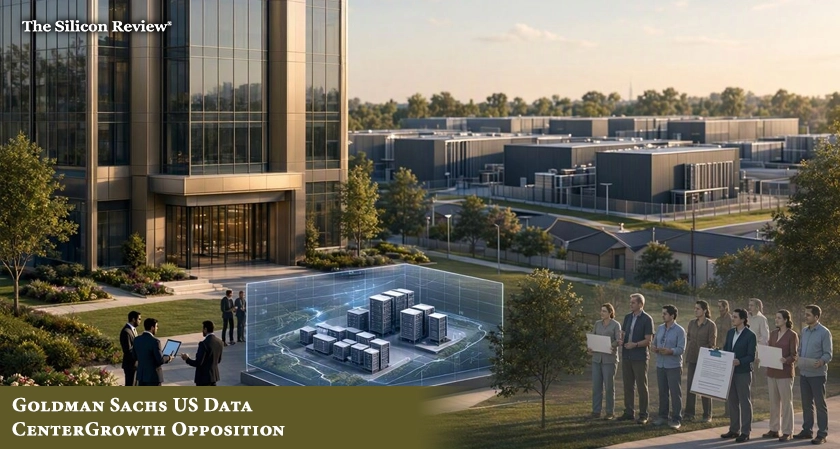
Goldman Sachs says the US data center construction boom remains intact despite growing local opposition, noting that the pipeline of planned capacity is vast enough to absorb near-term headwinds from community resistance.
News source: Google / Reuters: https://www.reuters.com/
Goldman Sachs has pushed back against concerns that rising local opposition to data centers could derail the US construction boom, arguing that the pipeline of planned projects is large enough to absorb near-term disruptions.
"We see the build-out continuing despite local opposition, with the pipeline of planned capacity providing significant cushion," Goldman Sachs analysts wrote in a research note.
The Opposition Challenge
Data centers have become a flashpoint in communities across the United States. Local residents have raised concerns about electricity consumption, water usage, noise from cooling systems, and the strain on local infrastructure. Some municipalities have imposed moratoriums or rejected proposed projects outright.
The opposition has grown as the scale of data center construction has accelerated. Hyperscalers including Amazon, Microsoft, Google, and Meta are building at unprecedented rates to meet demand for AI computing power. Nvidia has announced multi-gigawatt buildouts in Ohio and Texas, while Microsoft, OpenAI, and Oracle have committed to massive new campuses.
"The concerns are real and they are not going away, but the economics of AI infrastructure are too compelling for developers to slow down materially," the analysts added.
The Pipeline Still Overwhelms Headwinds
Goldman noted that the volume of planned data center capacity far exceeds what is needed to meet near-term AI demand, meaning that even if some projects are delayed or cancelled due to local opposition, the overall buildout will continue. Developers are already shifting focus to more receptive jurisdictions, including states with abundant land, lower energy costs, and fewer regulatory hurdles. Texas, Virginia, Ohio, and Indiana have emerged as favored destinations for data center investment, while some California and Pacific Northwest municipalities have become harder places to build.
Demand Remains Insatiable
Goldman's assessment comes amid continued growth in AI demand. OpenAI has forecast $280 billion in cash burn by 2030, driven largely by infrastructure spending. Microsoft has committed to spending tens of billions on AI data centers. Google is investing €13 billion in Finland alone. The investment bank noted that the demand side of the equation remains stronger than the supply side, with hyperscalers competing for limited land and power capacity.
"The bottleneck is power and land, not community opposition. Developers are simply going where the power is," the analysts said.
The Bigger Picture
The data center boom has become a key driver of US construction demand, with investment in computing infrastructure projected to reach hundreds of billions of dollars over the next decade. The International Energy Agency estimates that data centers could account for a significant share of new electricity demand, prompting utilities to invest in grid upgrades and new generation capacity. Some analysts have warned of a potential bubble in AI infrastructure spending, but Goldman's view is that the demand is real and the buildout will continue regardless of local pushback.
Here is the question The Silicon Review raises regarding this assessment. Goldman Sachs says the data center boom will continue despite local opposition, with developers simply moving to more receptive jurisdictions. When the economics of AI infrastructure are so compelling that communities become mere variables rather than decision-makers, what does it mean for local democracy and the people who live where these facilities are built?
FAQ:
Q: What does Goldman Sachs say about US data center growth?
A: Goldman Sachs says the US data center construction boom remains intact despite local opposition, with the pipeline of planned capacity large enough to absorb near-term disruptions.
Q: Why are communities opposing data centers?
A: Communities have raised concerns about electricity consumption, water usage, noise, and strain on local infrastructure.
Q: Which states are favored for data center construction?
A: Texas, Virginia, Ohio, and Indiana have emerged as favored destinations, while some California and Pacific Northwest municipalities have become harder places to build.
Q: What does Goldman say is the real bottleneck for data center growth?
A: Goldman says the bottleneck is power and land, not community opposition, with developers going where the power is.
Q: How does data center growth affect US construction demand?
A: Data centers and mega projects are reshaping US construction demand, with $150 billion in investment driving a fundamental shift in how and where America builds.




















Comments