>>
Industry>>
EdTech>>
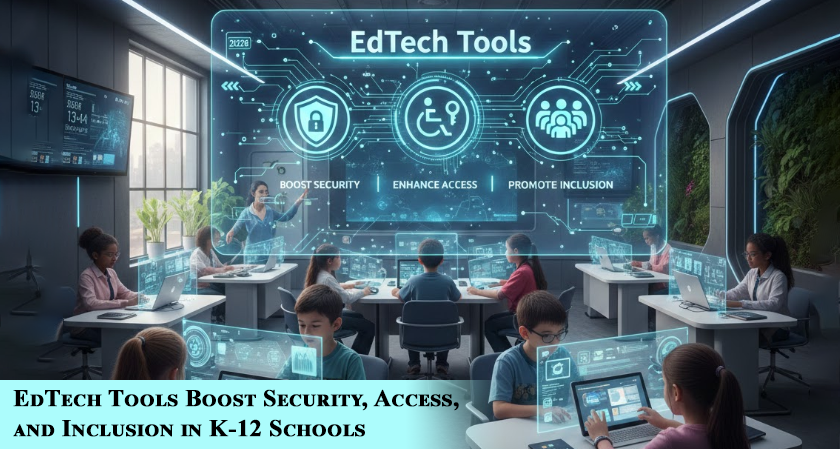
EdTech Tools Boost Security, A...EdTech Tools Boost Security, Access, and Inclusion in K-12 Schools
The Silicon Review
29 January, 2026
Author:
The Silicon Review Team
Modern EdTech tools are reshaping K-12 schools, using AI and IoT to enhance physical security, digital inclusion, and campus-wide connectivity.
School districts nationwide are deploying integrated technology platforms to optimize access and safety across K-12 campuses. These systems combine AI-powered surveillance, smart entry systems, and universal connectivity tools to create environments that are simultaneously more secure and more inclusive. The shift moves beyond simple monitoring to intelligent systems that manage physical entry, digital resource access, and emergency response, aiming to address both safety concerns and the digital equity gap.
Districts are investing in unified platforms that use IoT sensors and data analytics to monitor building occupancy, control door access, and alert staff to anomalies in real-time. Concurrently, the same networks provide robust, filtered Wi-Fi and loaner device programs to ensure all students have reliable educational connectivity. This dual focus allows technology to serve as both a safeguard and an equalizer, streamlining administrative tasks for staff while creating a more consistent learning environment.
"Technology should remove barriers, not create them. Our new system allows us to secure our perimeter while guaranteeing every student can access digital learning tools from anywhere on campus," said a district technology director. A school safety consultant added, "The next generation of school safety is proactive and data-informed, not just reactive. These integrated systems are a game-changer."
This trend responds to increased pressures on schools to harden security after national incidents while also meeting the heightened need for digital inclusion, especially for students without reliable home internet. The pandemic accelerated the adoption of 1:1 device programs, making seamless, secure campus-wide connectivity a foundational requirement rather than a luxury.
As these systems become more widespread, their effectiveness in preventing incidents and supporting student outcomes will be closely studied. Districts are expected to share best practices and interoperability standards in the coming year to help guide future investments in smart school infrastructure.